

Compare models
iPhone 17 Pro Vs iPhone 17e
- 1-year minimum warranty
- Free delivery on all orders
- Free 30-day returns
Differences at a glance
The iPhone 17 Pro (2025) and the iPhone 17e (2026) are contemporary additions to Apple's smartphone lineup, targeting distinct user preferences. While both run on the iOS operating system and share modern connective standards, they differ significantly in hardware configurations, camera versatility, and specialized capabilities. This comparison explores how these differences translate into everyday practicality.
Available Models
Colour
Storage (GB)
Scores
Durability
Both devices benefit from Apple's standard multi-year support lifecycle, though their release dates separated by several months mean slight variations in their overall update windows.
- Software Longevity: Both models receive regular iOS updates concurrently, ensuring matching security standards and feature additions throughout their operational lives.
- Build Resilience: The iPhone 17 Pro utilizes reinforced frame materials and extensive front-and-back glass protection, whereas the iPhone 17e employs a lightweight, streamlined chassis with standard water and dust resistance.
- Repairability and Lifespan: Both smartphones feature modular internal layouts supported by widespread component availability, helping technicians perform repairs efficiently to extend functional lifespans.
Year of Release
2025
2026
Performance
Daily operation speeds and multitasking capabilities vary based on internal hardware tiers, storage allocations, and thermal designs built into each device.
- Multitasking and Memory: The iPhone 17 Pro incorporates higher RAM capacity to handle resource-heavy professional applications and extensive background tasks smoothly, while the iPhone 17e comfortably manages standard daily navigation and media streaming.
- Thermal Efficiency: The iPhone 17 Pro includes dedicated internal cooling structures to sustain high processing output during demanding activities like gaming or rendering, whereas the iPhone 17e relies on passive cooling suited for standard workflows.
- Battery Endurance: Both models provide sufficient power to reach the end of a typical day under moderate use, though heavier sustained workloads deplete the iPhone 17 Pro faster despite its optimized energy consumption.
Screen quality
Viewing experiences differ across display sizes, panel technologies, and maximum brightness thresholds designed for varying lighting environments.
- Panel Technology: Both devices feature OLED display technology that delivers deep contrast levels and sharp text rendering, while the iPhone 17 Pro adds an adaptive high refresh rate for smoother scrolling.
- Outdoor Visibility: The iPhone 17 Pro achieves a higher peak brightness threshold for direct sunlight legibility, whereas the iPhone 17e remains clear and comfortable to read under normal daylight conditions.
- Dimensions: The iPhone 17 Pro offers a slightly larger screen real estate suited for media consumption, compared to the compact form factor of the iPhone 17e.
Audiovisual
Photography and audio capabilities span single-lens setups and versatile multi-lens arrays tailored to different capture requirements.
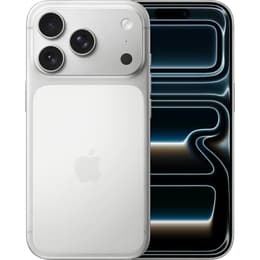
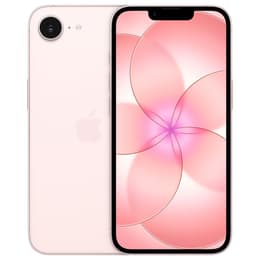
- Lens Versatility: The iPhone 17 Pro features a triple-lens system including dedicated wide, ultra-wide, and telephoto options for flexible framing, while the iPhone 17e focuses on a single primary high-resolution main sensor.
- Low-Light and Video: The iPhone 17 Pro supports advanced professional video formats and extended optical zoom levels, whereas the iPhone 17e captures clear everyday snapshots and standard high-definition video.
- Audio Output: Both models integrate stereo speaker arrays that deliver balanced sound output for hands-free calls and casual media playback.
Miscellaneous
Physical dimensions, weight distribution, and connectivity features dictate how each phone handles during daily travel and transport.
- Handling and Weight: The iPhone 17e is noticeably lighter and slimmer, making it comfortable for single-handed use, while the iPhone 17 Pro carries a heavier footprint due to its complex camera hardware and internal cooling.
- Connectivity: Both models support modern wireless standards, dual-SIM configurations via eSIM technology, and universal USB-C charging ports.
- Biometric Security: Both smartphones utilize secure facial recognition systems for device unlocking and secure authentication.
Screen size (in)
6.3
6.1
Network
5G
5G
SIM card
eSIM
eSIM
Carrier compatibility
Unlocked
Unlocked
Connector
USB-C
USB-C (USB 2)
What the community thinks
Users evaluating these two smartphones often note that the iPhone 17 Pro excels in demanding tasks like multi-lens photography, prolonged gaming, and intensive creative workflows. At the same time, community discussions highlight the iPhone 17e as a practical, lightweight choice for everyday messaging, media streaming, and general productivity without superfluous hardware extras.
Users prioritizing maximum camera flexibility, high sustained performance, and advanced display fluidity will find the iPhone 17 Pro well-suited to their needs. Conversely, users prioritizing a lighter physical footprint, simpler operation, and core smartphone essentials may lean toward the iPhone 17e. Exploring a quality-assured refurbished option through Back Market can also provide an eco-friendly alternative for acquiring either model while minimizing environmental impact.