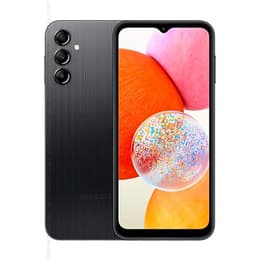
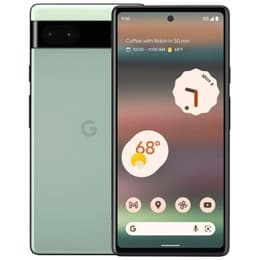


Galaxy A14 Vs Google Pixel 6A

Galaxy A14
Galaxy A14
Starting at

Refurbished price:97.00

Versus €269.00 new

See options
Google Pixel 6A
Google Pixel 6A
Starting at

Refurbished price:143.00

Versus €459.00 new

See options

Ratings

The Samsung Galaxy A14, released in January 2023, and the Google Pixel 6a, launched in July 2022, are both Android smartphones designed to offer a balanced experience. While the Galaxy A14 focuses on a larger display and expandable storage, the Pixel 6a emphasizes advanced computational photography and a more powerful processor. Both devices run on the Android operating system, but they offer distinct user experiences through their respective software interfaces and hardware philosophies.

Scores

Durability

When considering the long-term usability of these devices, their release timelines and software support policies are key factors.

  • Release and Age: The Google Pixel 6a was released in July 2022, making it slightly older than the Samsung Galaxy A14, which launched in January 2023. This difference in release date impacts their remaining software support cycles.
  • Software Longevity: The Pixel 6a was originally promised three years of OS updates and five years of security updates. This has been extended, with OS updates expected until at least July 2025 and security updates until at least July 2027. Some reports even suggest OS updates might extend further. The Galaxy A14 is slated to receive two major Android OS updates and four years of security updates from its release. This means the Pixel 6a generally offers a longer period of guaranteed software support.
  • Repairability: The Galaxy A14 boasts a repairability score of 8 out of 10, making it relatively easy to disassemble. Its battery is held with an adhesive pull pouch, simplifying replacement, and camera lenses can be replaced without a full phone teardown. The Pixel 6a has a repairability score of 7 out of 10, noted for its display being attached with clips and an easily removable battery. However, its USB-C port is soldered to the mainboard, which can complicate repairs for that specific component.

Year of Release

2023

2022

Compatible with latest Update

No

Yes

OS

Android

Android

Foldable

No

No

Performance

The performance of a smartphone is largely determined by its internal components and how efficiently its software utilizes them.

  • Processor Capabilities: The Google Pixel 6a features a powerful current-generation processor, which is the same as found in its higher-end siblings. This allows it to handle demanding applications and multitasking smoothly, contributing to a fluid user experience. In contrast, the Galaxy A14 is equipped with a processor that provides satisfactory performance for everyday tasks, though some users have noted occasional lags and stutters in app animations.
  • Memory and Storage: The Pixel 6a comes with 6GB of RAM and 128GB of internal storage, without an option for expansion. The Galaxy A14 offers more flexibility with RAM options (4GB, 6GB, or 8GB) and storage (64GB or 128GB), crucially including a microSDXC slot for expandable storage up to 1TB.
  • Battery Behavior: Both devices offer substantial battery capacities. The Galaxy A14 houses a 5000 mAh battery, with users reporting very good battery life that can last through extended use. The Pixel 6a has a 4410 mAh battery, and it is generally reported to last a full day with typical usage. Both support fast charging, with the Pixel 6a at 18W and the Galaxy A14 at 15W.

Memory (GB)

4 GB

6 GB

Screen quality

The visual experience on a smartphone is heavily influenced by its display technology and specifications.

  • Display Technology and Clarity: The Google Pixel 6a features a 6.1-inch OLED display, which is known for producing deep blacks and vibrant colors, offering a rich viewing experience. The Samsung Galaxy A14 comes with a larger 6.6-inch PLS LCD screen. While it provides ample screen real estate, LCD technology typically offers less contrast compared to OLED. Both displays offer Full HD+ resolution (1080x2408 for A14, 2400x1080 for 6a), ensuring clear visuals.
  • Refresh Rate and Brightness: The Galaxy A14 offers a smoother scrolling experience with its 90Hz refresh rate. The Pixel 6a, however, is limited to a standard 60Hz refresh rate. In terms of brightness, the Pixel 6a's OLED panel can reach an average of 767.2 cd/m² and peak at nearly 998 cd/m² with adaptive brightness, making it quite visible outdoors. The Galaxy A14's display peaks at around 500 nits, which can be challenging to view under bright sunlight.
  • Screen Protection: The Pixel 6a's display is protected by Corning Gorilla Glass 3, offering a degree of scratch and drop resistance. Information on specific screen protection for the Galaxy A14 is less prominent, but it features a plastic build.

Resolution

1080 x 2408

1080 x 2400

Screen type

PLS LCD

OLED

Audiovisual

Both smartphones offer capable camera systems, but they approach photography with different strengths.

  • Rear Camera Systems: The Google Pixel 6a features a dual-camera setup on the rear, consisting of a 12.2MP main sensor with optical image stabilization (OIS) and a 12MP ultrawide lens. This system is highly praised for its computational photography, delivering excellent image quality, especially in challenging conditions like low light. The Samsung Galaxy A14 (5G model) comes with a triple camera array, including a 50MP main sensor, a 2MP macro lens, and a 2MP depth sensor. Notably, the 5G variant lacks an ultrawide camera. Its main camera performs well in good lighting for still subjects but struggles with movement and in darker environments.
  • Front Camera Performance: For selfies, the Pixel 6a includes an 8MP front-facing camera. While it performs adequately in good lighting, some users find its low-light selfie performance to be less impressive. The Galaxy A14 features a 13MP front camera, which captures good detail and skin tones in well-lit conditions.
  • Video Recording: The Pixel 6a offers versatile video recording capabilities, supporting 4K resolution at both 30 and 60 frames per second, along with various slow-motion options. The Galaxy A14 is limited to 1080p video recording at 30 frames per second for both its front and rear cameras.
  • Audio Experience: The Pixel 6a provides decent speaker output for media consumption, though some users desire more bass. It lacks a 3.5mm headphone jack. The Galaxy A14 includes a 3.5mm headphone jack and a mono speaker.

Main camera

50 megapixels

12.2 megapixels

Front camera

13 megapixels

8 megapixels

Miscellaneous

Beyond core performance and display, several practical features contribute to the overall user experience.

  • Connectivity: Both devices support 5G connectivity. The Pixel 6a features Wi-Fi 6E and Bluetooth 5.2, offering advanced wireless capabilities. The Galaxy A14 supports Wi-Fi 5 (802.11 a/b/g/n/ac) and Bluetooth 5.2 (for the 5G model). Both include NFC for contactless payments.
  • Ports and Sensors: The Galaxy A14 retains a 3.5mm headphone jack and uses a USB-C 2.0 port for charging and data transfer. It features a side-mounted fingerprint scanner. The Pixel 6a omits the headphone jack and uses a faster USB-C 3.1 port. It incorporates an in-display fingerprint sensor.
  • Build Materials and Dimensions: The Pixel 6a has a more compact form factor, measuring 152.2 x 71.8 x 8.7 mm and weighing 178g. It features a plastic back, an aluminum frame, and Gorilla Glass 3 on the front, along with an IP67 water protection rating. The Galaxy A14 is larger and heavier at 167.7 x 78 x 9.1 mm and 202g, with a plastic polycarbonate back and frame.

Weight

201 g

178 g

Screen size (in)

6.6

6.1

Network

4G

5G

SIM card

Dual Physical SIM

Physical SIM + eSIM

Carrier compatibility

Unlocked

Unlocked

The Samsung Galaxy A14 and Google Pixel 6a cater to different user priorities, each excelling in specific areas. User feedback often praises the Pixel 6a for its exceptional camera performance, often considered among the best in its class, and its powerful processor that ensures smooth operation. Criticisms sometimes point to its 60Hz display and the absence of a headphone jack or expandable storage. Conversely, the Galaxy A14 is frequently lauded for its large display with a 90Hz refresh rate, its substantial battery life, and the inclusion of expandable storage and a 3.5mm headphone jack. However, its camera performance in challenging conditions and overall system responsiveness are areas where it receives more moderate reviews.

Users prioritizing a highly capable camera, consistent software updates, and robust performance for demanding applications may find the Google Pixel 6a to be a more suitable choice. Its compact size and water resistance also appeal to those seeking a durable and portable device. On the other hand, individuals who value a larger, smoother display, extended battery life, and the flexibility of expandable storage and a traditional headphone jack might lean towards the Samsung Galaxy A14. Its repairability score also makes it an appealing option for those who prefer easier maintenance. Both devices represent solid options within the Android ecosystem, and considering a quality-assured refurbished option for either model can be an eco-friendly alternative.


See all articles

Our recent comparisons