

Google Pixel 6A Vs iPhone 13 mini

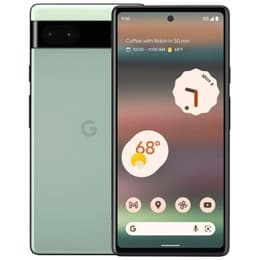
Google Pixel 6A
Google Pixel 6A
Starting at

Refurbished price:143.00

Versus €459.00 new

See options
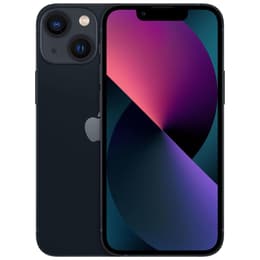
iPhone 13 mini
iPhone 13 mini
Starting at

Refurbished price:228.00

Versus €829.00 new

See options

Ratings

The Google Pixel 6A (released July 2022) and the iPhone 13 Mini (released September 2021) represent distinct approaches to compact smartphone design. While both offer capable performance in smaller packages, they differ significantly in their operating systems, display technologies, and camera philosophies. The Pixel 6A runs on Android, featuring Google's Tensor chip and a focus on computational photography, whereas the iPhone 13 Mini operates on iOS, powered by Apple's A15 Bionic chip, emphasizing a premium experience in a small form factor.

Scores

Durability

These two devices offer different timelines for software support and expected practical lifespan, largely influenced by their respective ecosystems and release schedules.

  • Release Timeline and Software Longevity: The iPhone 13 Mini, released in September 2021, is expected to receive major iOS updates until approximately 2028, followed by security updates. This typically translates to 5-6 years of full software support from its release. The Google Pixel 6A, launched in July 2022, is promised five years of security updates from its release date, which is a strong offering within the Android ecosystem.
  • Repairability and Durability: The iPhone 13 Mini features a Ceramic Shield front and an aluminum frame, contributing to its overall durability, and boasts an IP68 rating for water and dust resistance. The Pixel 6A has Gorilla Glass 3 on its display and an IP67 rating for water and dust resistance. In terms of repairability, the Pixel 6A received a score of 7 out of 10, indicating it is relatively easier to repair compared to some other devices, partly due to its design and Google's partnership with iFixit for spare parts.
  • Practical Lifespan: Both devices are built to last several years, with their respective software support timelines being a key factor in their usable lifespan. The iPhone 13 Mini's extended software support from Apple generally means a longer period of receiving new features and security patches. The Pixel 6A's five years of security updates ensure it remains secure and functional for a considerable duration.

Year of Release

2022

2021

Compatible with latest Update

Yes

Yes

OS

Android

iOS

Foldable

No

No

Performance

Both smartphones deliver responsive performance for daily tasks, though their underlying hardware and real-world usage characteristics present some distinctions.

  • Processing Power and Responsiveness: The iPhone 13 Mini is equipped with a powerful current-generation processor that handles demanding applications and multitasking with ease, ensuring smooth operation and efficient performance for a variety of tasks, including gaming and video editing. The Google Pixel 6A features a processor designed by Google, which provides strong performance for everyday use, including quick app loading and fluid navigation, and is particularly optimized for Google's AI-driven features.
  • Battery Behavior: The iPhone 13 Mini, despite its compact size, offers improved battery life compared to its predecessor, often lasting a full day for moderate users. However, intensive activities like prolonged gaming or video streaming may require more frequent charging. The Pixel 6A, with its larger battery capacity, generally provides a full day of use even for heavier users, with some reports indicating up to a day and a half with regular usage.
  • Storage and Multitasking: The iPhone 13 Mini offers multiple storage configurations, providing flexibility for users with varying needs for apps, photos, and videos. It also features sufficient memory to manage numerous applications running simultaneously without significant slowdowns. The Pixel 6A comes with a single storage option and ample memory, allowing for smooth multitasking and efficient handling of various applications.

Memory (GB)

6 GB

4 GB

Screen quality

The display experience on these two devices offers different characteristics, primarily in size, refresh rate, and overall visual presentation.

  • Display Technology and Clarity: The iPhone 13 Mini features a 5.4-inch Super Retina XDR OLED display, known for its deep blacks, vibrant colors, and high pixel density, resulting in sharp and clear visuals. The Google Pixel 6A comes with a 6.1-inch OLED display, which also provides good contrast and color reproduction, offering a visually engaging experience for media consumption and daily use.
  • Brightness and Outdoor Visibility: The iPhone 13 Mini's display can reach high brightness levels, making it easy to view content even in bright outdoor conditions. The Pixel 6A's screen also offers good brightness, which is generally sufficient for outdoor use, though some users note it might be less optimal in the harshest direct sunlight.
  • Refresh Rate and Smoothness: Both the iPhone 13 Mini and the Google Pixel 6A feature a standard 60Hz refresh rate. This provides a consistent visual experience, though users accustomed to higher refresh rate displays might notice a difference in scrolling smoothness.

Resolution

1080 x 2400

1080 x 2340

Screen type

OLED

Super Retina XDR OLED

Audiovisual

Both devices offer capable camera systems, but they approach image processing and feature sets with distinct philosophies.

  • Main Camera Performance: The iPhone 13 Mini features a dual 12-megapixel camera system with a wide lens that includes sensor-shift optical image stabilization, contributing to clear photos and improved low-light performance. The Google Pixel 6A also has a dual 12-megapixel main camera with optical image stabilization, and it leverages Google's advanced computational photography to produce detailed images with accurate colors and excellent dynamic range, particularly excelling in skin tone reproduction.
  • Ultra-Wide and Video Capabilities: Both phones include a 12-megapixel ultra-wide lens, allowing for broader landscape shots and group photos. The iPhone 13 Mini offers Cinematic Mode for video, which provides a shallow depth of field effect, and records 4K video at up to 60 frames per second. The Pixel 6A also records 4K video at up to 60 frames per second and includes features like Magic Eraser and Night Sight, enhancing its versatility in various shooting conditions.
  • Front Camera and Audio: Both devices feature a 12-megapixel front-facing camera for clear selfies and video calls. The iPhone 13 Mini includes stereo speakers for an immersive audio experience. The Pixel 6A also provides good stereo speaker output, making media consumption enjoyable.

Main camera

12.2 megapixels

12 megapixels

Front camera

8 megapixels

12 megapixels

Miscellaneous

Beyond core features, several practical elements differentiate the user experience between the Pixel 6A and the iPhone 13 Mini.

  • Connectivity and Ports: Both devices support 5G connectivity for fast mobile data speeds and include Wi-Fi 6 for efficient wireless networking. The iPhone 13 Mini uses a Lightning port for charging and data transfer, while the Google Pixel 6A features a USB-C port. The Pixel 6A also supports dual SIM functionality (nano SIM + eSIM), similar to the iPhone 13 Mini.
  • Biometrics and Design: The iPhone 13 Mini utilizes Face ID for secure facial recognition and unlocking. The Pixel 6A incorporates an in-display fingerprint sensor for biometric authentication. The iPhone 13 Mini is notably compact and lightweight, making it easy for one-handed use and pocketability. The Pixel 6A, while larger than the Mini, is still considered a relatively compact Android phone, featuring a distinct design with a camera bar on the back.
  • Build Materials and Other Features: The iPhone 13 Mini combines a Ceramic Shield front with a glass back and an aluminum frame. The Pixel 6A features a Gorilla Glass 3 front and a plastic back, held together by an aluminum frame. The iPhone 13 Mini supports MagSafe wireless charging, offering convenient magnetic attachment for accessories and charging. The Pixel 6A does not include wireless charging.

Weight

178 g

140 g

Screen size (in)

6.1

5.4

Network

5G

5G

SIM card

Physical SIM + eSIM

Physical SIM + eSIM

Carrier compatibility

Unlocked

Unlocked

Connector

USB-C

Lightning

The Google Pixel 6A and the iPhone 13 Mini cater to users with distinct priorities, each offering a compelling experience within their respective ecosystems. Users frequently praise the iPhone 13 Mini for its exceptional performance in a remarkably compact form factor, its high-quality camera, and the long-term software support provided by Apple. Common criticisms often revolve around its smaller screen size, which can be limiting for media consumption or gaming, and the continued use of the Lightning port.

The Google Pixel 6A is often lauded for its outstanding camera capabilities, particularly its computational photography features that deliver impressive image quality, and its strong overall performance thanks to its custom-designed processor. Some users note the 60Hz display and the absence of wireless charging as areas where it could be improved, along with slower charging speeds compared to some competitors.

Users prioritizing a highly portable device with a premium build, robust performance, and extensive software longevity within the Apple ecosystem will find the iPhone 13 Mini well-suited to their needs. Conversely, those who value a strong camera experience, a clean Android interface, and solid performance in a slightly larger but still manageable form factor may lean toward the Google Pixel 6A. Both devices offer a quality-assured refurbished option, providing an eco-friendly alternative for consumers seeking to make informed and sustainable choices.
See all articles

Our recent comparisons