

Huawei P30 Pro Vs iPhone 14 Pro Max

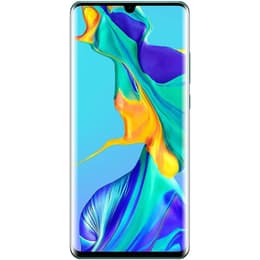
Huawei P30 Pro
Huawei P30 Pro
Starting at

Refurbished price:186.00

Versus €849.00 new

See options
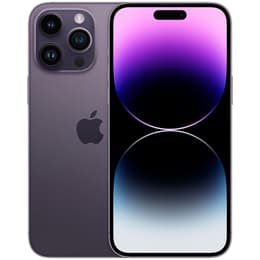
iPhone 14 Pro Max
iPhone 14 Pro Max
Starting at

Refurbished price:446.00

Versus €1,489.00 new

See options

Ratings

The Huawei P30 Pro, released in March 2019, and the iPhone 14 Pro Max, launched in September 2022, represent flagship smartphones from their respective manufacturers. While both devices offer advanced mobile experiences, they differ significantly in their operating systems, release timelines, and core hardware philosophies. The P30 Pro operates on Android with Huawei's EMUI, while the iPhone 14 Pro Max runs on Apple's iOS platform.

Scores

Durability

The practical lifespan of a smartphone is influenced by its release age, software support, and physical resilience.

  • Release Timeline: The Huawei P30 Pro was released in March 2019, making it an older device compared to the iPhone 14 Pro Max, which launched in September 2022. This age difference impacts the duration of ongoing software support and the availability of the latest features.
  • Software Longevity: The P30 Pro, originally on Android 9.0, received updates up to EMUI 12 globally, with some regions transitioning to HarmonyOS. Global Huawei phones typically run on an Android 12 base, and Huawei's update policy generally promises two OS updates and three years of security patches. The iPhone 14 Pro Max, launching with iOS 16, benefits from Apple's longer software support cycle, ensuring several more years of major iOS updates and security patches.
  • Repairability and Durability: Both devices carry an IP68 rating for dust and water resistance, indicating protection against immersion. However, the iPhone 14 Pro Max features a Ceramic Shield front cover for enhanced drop performance. The P30 Pro received an iFixit repairability score of 4 out of 10, indicating it is difficult to repair due to heavy use of glue. The iPhone 14 Pro Max initially received a 6/10 score, later downgraded to 4/10, primarily due to software restrictions on parts, making independent repairs challenging.

Year of Release

2019

2022

Compatible with latest Update

No

Yes

OS

Android

iOS

Foldable

No

No

Performance

Performance in smartphones is determined by the internal processing unit, memory, and how efficiently the software utilizes these resources for daily tasks and demanding applications.

  • Processing Power: The iPhone 14 Pro Max is equipped with a more recent-generation processor, which provides substantial improvements in overall speed and efficiency. This translates to faster app loading times, smoother transitions between applications, and more capable handling of intensive tasks like high-fidelity gaming and video editing. The Huawei P30 Pro, with its older processor, still offers capable performance for everyday use, but may show limitations with the most demanding modern applications or extensive multitasking.
  • Multitasking and Responsiveness: The iPhone 14 Pro Max's combination of its powerful processor and optimized operating system ensures a highly responsive user experience, even with multiple applications running simultaneously. The P30 Pro, while generally smooth, may exhibit occasional delays when switching between numerous active apps or when processing complex operations.
  • Storage Options: The iPhone 14 Pro Max offers a wider range of internal storage configurations, including options up to 1TB, catering to users with extensive digital content. The P30 Pro provides storage options up to 512GB and includes expandable storage via Huawei's Nano Memory cards, offering flexibility for users who prefer physical storage expansion.
  • Battery Behavior: Both devices are known for strong battery performance. The Huawei P30 Pro, with its 4200 mAh battery, was widely praised for its ability to last through a full day of heavy use, often extending to two days for moderate users. The iPhone 14 Pro Max, with a 4323 mAh battery, also delivers excellent endurance, with users reporting over 13 hours of continuous web browsing.

Memory (GB)

8 GB

6 GB

Screen quality

The display is a primary interface for smartphone interaction, and differences in technology, resolution, and refresh rate significantly impact the visual experience.

  • Display Technology and Clarity: Both devices feature OLED displays, known for deep blacks and vibrant colors. The iPhone 14 Pro Max boasts a Super Retina XDR OLED display with a higher resolution of 2796x1290 pixels at 460 ppi, providing a sharper and more detailed image. The Huawei P30 Pro has a 1080x2340 pixel resolution at 398 ppi, which is clear for most content but less pixel-dense.
  • Brightness and Outdoor Visibility: The iPhone 14 Pro Max offers significantly higher peak brightness, reaching up to 2000 nits outdoors, which greatly enhances visibility in direct sunlight. The P30 Pro's OLED display provides good brightness for indoor and typical outdoor use, but may be less legible under very bright conditions.
  • Refresh Rate and Smoothness: A key differentiator is the refresh rate. The iPhone 14 Pro Max features ProMotion technology, offering an adaptive refresh rate up to 120Hz. This results in noticeably smoother scrolling, more fluid animations, and a more responsive feel during interactions. The Huawei P30 Pro has a standard 60Hz refresh rate, which is sufficient for most users but lacks the enhanced fluidity of a higher refresh rate display.
  • Screen Size and Features: The iPhone 14 Pro Max has a 6.7-inch display, slightly larger than the P30 Pro's 6.47-inch screen. The iPhone also introduces the Dynamic Island, an interactive area around the front camera cutout that displays alerts and background activities.

Resolution

1080 x 2340

1290 x 2796

Screen type

OLED

LTPO Super Retina XDR OLED

Audiovisual

Both smartphones prioritize camera capabilities, but they approach mobile photography with different hardware and software enhancements.

  • Rear Camera System: The Huawei P30 Pro features a Leica-branded quad-camera system, including a 40MP main sensor, a 20MP ultrawide, an 8MP periscope telephoto lens offering 5x optical zoom, and a Time-of-Flight (ToF) sensor for depth sensing. The iPhone 14 Pro Max boasts a Pro camera system with a 48MP main sensor, a 12MP ultrawide, and two 12MP telephoto lenses (2x and 3x optical zoom), providing a 6x optical zoom range.
  • Low-Light and Zoom Performance: The P30 Pro was renowned for its exceptional low-light performance, capable of capturing bright and detailed images in very dark conditions, often without needing a dedicated night mode. Its 5x optical periscope zoom was also a standout feature, allowing for significant magnification. The iPhone 14 Pro Max also excels in low-light photography with its larger sensor and Photonic Engine, and offers strong zoom capabilities, though its optical zoom range is slightly less than the P30 Pro's periscope lens.
  • Video Recording and Features: The iPhone 14 Pro Max offers advanced video features like Cinematic Mode for shallow depth of field effects and Action Mode for stabilized handheld video, supporting up to 4K at 60 frames per second. The P30 Pro records video up to 4K at 30 frames per second.
  • Front Camera: The P30 Pro has a 32MP front camera, capable of capturing detailed selfies. The iPhone 14 Pro Max features a 12MP TrueDepth front camera with autofocus, which also supports Face ID.

Main camera

40 megapixels

48 megapixels

Front camera

32 megapixels

12 megapixels

Miscellaneous

Beyond core performance and display, several practical elements contribute to the overall user experience and device utility.

  • Connectivity: A significant difference lies in network capabilities. The iPhone 14 Pro Max supports 5G connectivity, offering faster mobile data speeds where available, along with Wi-Fi 6 and Bluetooth 5.3 LE. It also includes Emergency SOS via satellite for communication in areas without cellular or Wi-Fi coverage. The Huawei P30 Pro supports 4G LTE, Wi-Fi 802.11 ac, and Bluetooth 5 LE, but lacks 5G.
  • Ports and Biometrics: The P30 Pro features a USB-C port for charging and data transfer, and an in-display optical fingerprint sensor for secure unlocking. The iPhone 14 Pro Max uses a Lightning port and relies on Face ID for biometric authentication, utilizing its TrueDepth camera system.
  • Design and Build Materials: The iPhone 14 Pro Max is constructed with surgical-grade stainless steel and a Ceramic Shield front cover, contributing to its robust feel. The P30 Pro features an aluminum alloy frame with a glass front and back. The iPhone 14 Pro Max is slightly heavier at 240g compared to the P30 Pro's 192g.
  • Additional Features: The iPhone 14 Pro Max includes features like Crash Detection and an Always-On display. The P30 Pro offered reverse wireless charging, allowing it to charge other compatible devices.

Weight

192 g

120 g

Screen size (in)

6.47

6.7

Network

4G

5G

SIM card

Dual Physical SIM

Physical SIM + eSIM

Carrier compatibility

Unlocked

Unlocked

User sentiment for the Huawei P30 Pro often highlights its exceptional camera system, particularly its low-light performance and periscope zoom, which were groundbreaking at its release. Many users also praised its long battery life, often extending beyond a single day of use. Criticisms sometimes focused on Huawei's EMUI software interface, which some found less intuitive than stock Android, and the lack of a high refresh rate display.

For the iPhone 14 Pro Max, common praise points include its powerful performance, the vibrant and smooth 120Hz ProMotion display, and the advanced camera capabilities, especially for video recording and overall image quality. The Dynamic Island was also noted as an innovative interface element. Some users expressed concerns about the device's weight and size, and the continued use of the Lightning port.

Users prioritizing an advanced camera system with strong optical zoom and exceptional battery life, and who are comfortable with the Android ecosystem, may find the Huawei P30 Pro well-suited to their needs. Conversely, users who value cutting-edge processing power, a highly fluid display, extensive software support, and the iOS ecosystem, particularly for its video capabilities and integrated features like Face ID, may lean toward the iPhone 14 Pro Max. Both devices offer robust performance for their respective generations, and considering a quality-assured refurbished option for either model can be a sustainable choice for consumers.

See all articles

Our recent comparisons