

Galaxy A13 Vs Xiaomi 14

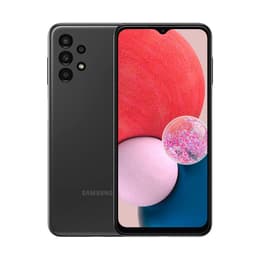
Galaxy A13
Galaxy A13
Starting at

Refurbished price:97.00

Versus €249.00 new

See options
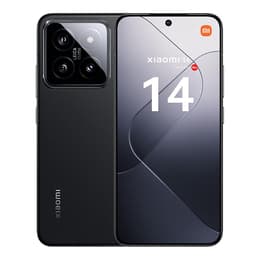
Xiaomi 14
Xiaomi 14
Starting at

Refurbished price:384.00

Versus €1,099.00 new

See options

Ratings

The Samsung Galaxy A13 (released March 2022) and the Xiaomi 14 (globally released February/March 2024) are both Android smartphones, yet they cater to distinctly different user expectations and needs. The Galaxy A13 is positioned as an entry-level device, focusing on core smartphone functionalities, while the Xiaomi 14 is a compact flagship, offering advanced performance, camera capabilities, and a premium user experience. Both devices run on the Android operating system, but with different custom interfaces: Samsung's One UI for the A13 and Xiaomi's HyperOS for the Xiaomi 14.

Scores

Durability

The practical lifespan and software support differ significantly between these two devices, reflecting their respective market segments and release timelines.

  • Software Longevity: The Xiaomi 14, being a more recent flagship device, is expected to receive a longer period of major Android updates and security patches compared to the Galaxy A13. The Galaxy A13 launched with Android 12 and is upgradable to Android 14, but its update cycle will conclude sooner than the Xiaomi 14, which launched with Android 14 and Xiaomi's HyperOS.
  • Build and Materials: The Galaxy A13 features a plastic construction with a Corning Gorilla Glass 5 front, offering a functional level of durability for everyday use. In contrast, the Xiaomi 14 boasts a more robust build with a glass front protected by Gorilla Glass Victus, a glass back, and an aluminum frame, along with an IP68 rating for dust and water resistance, suggesting greater resilience to environmental factors.
  • Repairability Considerations: While specific repairability scores for the Galaxy A13 are not widely published, budget devices often present challenges due to construction methods. The Xiaomi 14 has a reported repairability score of 8.0 out of 10, indicating a moderate ease of repair, with components like the screen and battery being accessible, though some adhesive use is noted.

Year of Release

2022

2023

Compatible with latest Update

No

Yes

OS

Android

Android

Foldable

No

No

Performance

The performance capabilities of the Galaxy A13 and Xiaomi 14 are tailored to very different usage scenarios, stemming from their internal hardware.

  • Everyday Responsiveness: The Galaxy A13 handles daily tasks such as browsing, messaging, and light social media use adequately. However, users may experience noticeable slowdowns, occasional stutters, and longer app loading times, particularly with more demanding applications or after extended use. The Xiaomi 14, equipped with a current-generation high-end processor, delivers a consistently smooth and responsive experience, excelling in multitasking, graphic-intensive gaming, and running demanding applications without significant lag.
  • Multitasking and Storage: The Galaxy A13 offers various RAM configurations, typically starting from 3GB or 4GB, which can limit the number of applications that can run simultaneously in the background without refreshing. It also provides expandable storage via microSD. The Xiaomi 14 comes with more substantial RAM options, starting from 8GB and going up to 16GB, paired with faster UFS 4.0 storage, enabling seamless multitasking and quicker data access for large files and applications.
  • Battery Endurance: The Galaxy A13 features a large 5000mAh battery, which, combined with its less power-intensive components, often provides a full day of use and potentially up to two days with moderate usage. The Xiaomi 14, with a 4610mAh battery, also offers strong battery life, typically lasting 1.5 days or around 43 hours of usage, and supports very fast 90W wired charging and 50W wireless charging for quick power replenishment.

Memory (GB)

4 GB

16 GB

Screen quality

The visual experience offered by these two smartphones differs considerably due to their display technologies and specifications.

  • Display Technology and Clarity: The Galaxy A13 features a 6.6-inch PLS TFT LCD panel with a resolution of 1080x2408 pixels, providing decent clarity for general content consumption. The Xiaomi 14 sports a 6.36-inch LTPO OLED display with a higher resolution of 2670x1200 pixels, resulting in sharper images, deeper blacks, and more vibrant colors.
  • Brightness and Refresh Rate: The Galaxy A13's display operates at a standard 60Hz refresh rate, and its brightness levels are suitable for indoor use but may struggle in direct sunlight. The Xiaomi 14 offers a highly adaptive refresh rate ranging from 1Hz to 120Hz, ensuring smoother scrolling and more fluid animations while conserving battery life. It also boasts a significantly higher peak brightness of 3000 nits, making it exceptionally legible even in bright outdoor conditions.
  • Viewing Experience: While the Galaxy A13 provides a large screen for its segment, the Xiaomi 14's OLED panel with HDR10+ and Dolby Vision support delivers a more immersive and dynamic viewing experience for multimedia content.

Resolution

1080 x 2408

1200 x 2670

Screen type

PLS LCD

LTPO OLED

Audiovisual

The camera systems on the Galaxy A13 and Xiaomi 14 are designed for different photographic ambitions, with the latter offering a more advanced setup.

  • Rear Camera Capabilities: The Galaxy A13 includes a quad-camera setup with a 50MP main sensor, a 5MP ultrawide, and two 2MP sensors for macro and depth. The main camera performs reasonably well in good lighting conditions, capturing acceptable detail and colors. However, the ultrawide camera and low-light performance are generally considered weak, and the macro and depth sensors offer limited utility. The Xiaomi 14 features a sophisticated triple 50MP camera system co-engineered with Leica, comprising a main sensor with optical image stabilization (OIS), an ultrawide lens, and a telephoto lens with 3.2x optical zoom. This setup delivers impressive image quality across various lighting conditions, with strong detail, accurate colors, and excellent dynamic range.
  • Video Recording and Front Camera: The Galaxy A13 supports video recording up to 1080p at 30 frames per second, and its 8MP front camera is suitable for basic selfies and video calls. The Xiaomi 14 offers significantly more advanced video capabilities, including up to 8K resolution at 24 frames per second and 4K at 60 frames per second for the rear cameras, along with a 32MP front camera capable of high-quality selfies and video recording.
  • Specialized Features: The Xiaomi 14's camera system benefits from Leica's imaging expertise, offering distinct color profiles and advanced computational photography features that enhance image quality and versatility.

Main camera

50 megapixels

50 megapixels

Front camera

8 megapixels

32 megapixels

Miscellaneous

Beyond core performance and display, several other features contribute to the overall user experience and practical utility of these devices.

  • Connectivity and Ports: The Galaxy A13 supports 4G LTE connectivity (with some regional variants offering 5G), Wi-Fi 5, and Bluetooth 5. It notably includes a 3.5mm headphone jack and a USB-C port for charging and data transfer. The Xiaomi 14 is equipped with 5G connectivity, newer Wi-Fi standards (Wi-Fi 6E/7), and Bluetooth 5.4, offering faster and more reliable wireless connections. It features a USB-C port but omits the traditional headphone jack.
  • Biometric Security: Both devices incorporate fingerprint sensors for secure unlocking. The Galaxy A13 typically features a side-mounted fingerprint sensor. The Xiaomi 14 integrates an optical fingerprint sensor directly into its display, providing a seamless unlocking experience.
  • Design and Handling: The Galaxy A13, with its plastic build, measures around 165 x 76 x 8.8mm and weighs approximately 195g, making it a larger and somewhat heavier device for its class. The Xiaomi 14, despite its premium materials, is designed as a compact flagship, measuring around 152.8 x 71.5 x 8.2mm and weighing 188g (glass variant), offering a more manageable and pocket-friendly form factor.

Weight

195 g

188 g

Screen size (in)

6.6

6.36

Network

4G

5G

SIM card

Dual Physical SIM

Dual Physical SIM

Carrier compatibility

Unlocked

Unlocked

The Samsung Galaxy A13 and Xiaomi 14 serve distinct user bases, with their strengths and weaknesses aligning with their respective market positions.

Users often praise the Galaxy A13 for its large battery capacity, which provides extended usage on a single charge, and its inclusion of a 3.5mm headphone jack. However, common criticisms include its sluggish performance, especially over time, and the generally underwhelming quality of its cameras, particularly the ultrawide and in low-light conditions. It is often seen as a suitable device for basic communication, web browsing, and light social media use, particularly for those who prioritize battery life and a larger screen without needing high-end performance.

The Xiaomi 14 receives widespread acclaim for its powerful performance, vibrant and smooth LTPO OLED display, and its highly capable Leica-tuned camera system, which excels in various photographic scenarios. Its fast wired and wireless charging capabilities are also frequently highlighted as significant advantages. Some users, particularly heavy users, have noted that while battery life is good, it might not be exceptional compared to some larger devices. The Xiaomi 14 is well-suited for users who demand top-tier performance for gaming, demanding applications, and advanced photography, all within a compact and premium design.

Users prioritizing a long-lasting battery for essential daily tasks and who are less concerned with high-performance applications or advanced photography may find the Galaxy A13 to be a practical choice. Conversely, those who value a fluid user experience, superior camera quality, a stunning display, and rapid charging will likely find the Xiaomi 14 to be a more fitting option. For consumers looking for an eco-friendly alternative, both models are available as quality-assured refurbished options, offering a sustainable choice for their next smartphone.


See all articles

Our recent comparisons