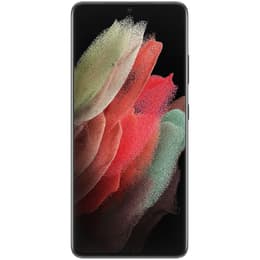
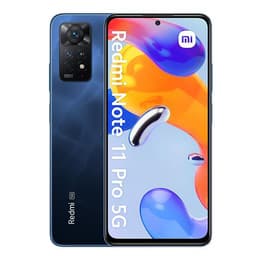


Galaxy S21 Ultra 5G Vs Xiaomi Redmi Note 11 Pro 5G

Galaxy S21 Ultra 5G
Galaxy S21 Ultra 5G
Starting at

Refurbished price:229.00

Versus €1,297.00 new

See options
Xiaomi Redmi Note 11 Pro 5G
Starting at

Refurbished price:126.00

Versus €699.00 new

See options

Ratings

The Samsung Galaxy S21 Ultra 5G, released in January 2021, and the Xiaomi Redmi Note 11 Pro 5G, launched in February 2022, represent distinct offerings within the smartphone market. While both operate on the Android platform, the Galaxy S21 Ultra 5G was positioned as a premium flagship device, emphasizing advanced camera capabilities and a high-end user experience. In contrast, the Redmi Note 11 Pro 5G entered the market as a mid-range option, focusing on delivering a balanced set of features for everyday use.

Scores

Durability

When considering the long-term usability of these devices, their release timelines and software support policies are key factors.

  • Software Longevity: The Galaxy S21 Ultra 5G, as a former Samsung flagship, received four major Android OS updates, concluding with Android 15 (One UI 7) in May 2025. Its official security update support ended in February 2026. The Redmi Note 11 Pro 5G, a mid-range device, typically receives fewer major OS updates and security patches, generally around two to three major OS updates and three to four years of security patches. It launched with Android 11.
  • Practical Lifespan: While official updates may cease, both phones can remain functional for everyday tasks beyond their support window. The Galaxy S21 Ultra 5G's more robust internal components may offer a slightly longer period of smooth performance for demanding applications.
  • Repairability: Both devices feature glass construction, making them susceptible to damage from drops. Repairability scores generally indicate that screen and battery replacements are possible, though the Galaxy S21 Ultra 5G's more complex design might lead to higher repair costs. The Galaxy S21 Ultra 5G has an IP68 rating for dust and water resistance, offering a higher level of protection compared to the Redmi Note 11 Pro 5G's IP53 splash resistance.

Year of Release

2021

2022

Compatible with latest Update

Yes

No

OS

Android

Android

Foldable

No

No

Performance

The performance capabilities of these two smartphones cater to different user expectations, reflecting their original market positioning.

  • Everyday Responsiveness: The Galaxy S21 Ultra 5G, equipped with a high-end processor, handles demanding applications, complex multitasking, and graphic-intensive games with fluidity. Users can expect quick app loading and smooth transitions. The Redmi Note 11 Pro 5G, featuring a mid-range processor, provides capable performance for daily tasks, social media, and moderate gaming.
  • Multitasking and Storage: The Galaxy S21 Ultra 5G offers higher RAM configurations, typically 12GB or 16GB, which supports extensive multitasking and keeps numerous applications open in the background without slowdowns. It comes with storage options up to 512GB. The Redmi Note 11 Pro 5G typically comes with 6GB or 8GB of RAM and 128GB of internal storage, which is expandable via a microSD card slot.
  • Battery Behavior: Both devices feature a 5000 mAh battery capacity. The Galaxy S21 Ultra 5G's more powerful processor and higher-resolution display can lead to faster battery drain under heavy use. The Redmi Note 11 Pro 5G's more efficient processor and lower-resolution screen often translate to reliable all-day battery life for average users. The Redmi Note 11 Pro 5G also supports significantly faster wired charging speeds.

Memory (GB)

12 GB

6 GB

Screen quality

The display experience on these two devices presents notable differences in clarity, brightness, and overall visual fidelity.

  • Display Technology and Resolution: The Galaxy S21 Ultra 5G features a 6.8-inch Dynamic AMOLED 2X display with a resolution of 1440 x 3200 pixels, resulting in a high pixel density of 515 ppi. This provides exceptionally sharp images and text. The Redmi Note 11 Pro 5G has a 6.67-inch Super AMOLED display with a resolution of 1080 x 2400 pixels, offering a pixel density of 395 ppi.
  • Brightness and Refresh Rate: Both phones offer a 120Hz adaptive refresh rate, contributing to smoother scrolling and more responsive interactions. The Galaxy S21 Ultra 5G's display can achieve higher peak brightness levels, enhancing visibility in bright outdoor conditions and improving HDR content viewing. The Redmi Note 11 Pro 5G also offers a bright display with good outdoor visibility.
  • Viewing Experience: The Galaxy S21 Ultra 5G's larger, higher-resolution display provides a more immersive viewing experience, particularly for high-definition video content and detailed imagery. The Redmi Note 11 Pro 5G's screen offers vibrant colors and good contrast, suitable for general media consumption and daily use.

Resolution

1440 x 3200

1080 x 2400

Screen type

Dynamic AMOLED 2X

Super AMOLED

Audiovisual

The camera systems on these smartphones offer different capabilities, catering to varied photography and videography needs.

  • Rear Camera System: The Galaxy S21 Ultra 5G features a versatile quad-camera setup, including a 108MP main sensor, a 12MP ultrawide lens, and two 10MP telephoto lenses (one with 3x optical zoom and another with 10x optical zoom). This configuration allows for significant optical zoom capabilities and detailed shots across various focal lengths. The Redmi Note 11 Pro 5G has a triple-camera system with a 108MP main sensor, an 8MP ultrawide lens, and a 2MP macro sensor.
  • Photography Performance: The Galaxy S21 Ultra 5G excels in capturing detailed images, especially with its advanced zoom features and strong low-light performance. The Redmi Note 11 Pro 5G's main 108MP camera can produce good daytime photos, but its secondary ultrawide and macro lenses may offer less detail and dynamic range compared to the Galaxy S21 Ultra 5G.
  • Video Recording and Front Camera: The Galaxy S21 Ultra 5G supports 8K video recording and offers advanced stabilization and features for video creators. It also has a high-resolution 40MP front camera. The Redmi Note 11 Pro 5G is limited to 1080p video recording at 30 frames per second, which is a notable difference for users who prioritize higher resolution video. Its front camera is 16MP.

Main camera

108 megapixels

108 megapixels

Front camera

40 megapixels

16 megapixels

Miscellaneous

Beyond core performance and camera capabilities, several practical features and design elements distinguish these two devices.

  • Connectivity and Ports: Both devices support 5G connectivity for faster mobile data speeds. The Galaxy S21 Ultra 5G uses a USB-C port for charging and data transfer. The Redmi Note 11 Pro 5G also features a USB-C port but uniquely includes a 3.5mm headphone jack, which is absent on the Galaxy S21 Ultra 5G.
  • Biometric Security and Other Features: The Galaxy S21 Ultra 5G utilizes an ultrasonic under-display fingerprint sensor for secure unlocking. It also supports the S-Pen, offering additional functionality for note-taking and drawing, though the stylus is sold separately. The Redmi Note 11 Pro 5G opts for a side-mounted fingerprint sensor integrated into the power button. It also includes an IR blaster, which can be used to control household appliances.
  • Build and Handling: The Galaxy S21 Ultra 5G has dimensions of 165.1 x 75.6 x 8.9 mm and weighs 227g. The Redmi Note 11 Pro 5G measures 164.19 x 76.10 x 8.12mm and weighs 202g. The Galaxy S21 Ultra 5G features a premium build with Gorilla Glass Victus on the front and Gorilla Glass on the back, framed by aluminum. The Redmi Note 11 Pro 5G uses Gorilla Glass 5 on the front and a glass back.

Weight

227 g

202 g

Screen size (in)

6.8

6.67

Network

5G

5G

SIM card

Physical SIM + eSIM

Dual Physical SIM

Carrier compatibility

Unlocked

Unlocked

Connector

USB-C

USB-C + Jack 3.5mm

User feedback for the Samsung Galaxy S21 Ultra 5G often highlights its exceptional camera system, particularly its versatile zoom capabilities and overall image quality. The vibrant and high-resolution display is also a frequent point of praise. Some users have noted that its battery life, while good, might require more frequent charging for very heavy use, and its larger size can make one-handed operation challenging.

For the Xiaomi Redmi Note 11 Pro 5G, common positive remarks include its bright AMOLED screen, reliable all-day battery life, and very fast charging speeds. The inclusion of a 3.5mm headphone jack and stereo speakers are also appreciated. Criticisms often revolve around its camera performance, particularly the secondary lenses and the absence of 4K video recording, which some users find to be a limitation.

Users prioritizing an advanced and versatile camera system with extensive zoom capabilities, a top-tier display, and overall premium performance may find the Galaxy S21 Ultra 5G well-suited to their needs. Those who value long battery life, rapid charging, a smooth display for everyday tasks, and features like a headphone jack, while being less concerned with advanced camera features or high-resolution video recording, might lean toward the Redmi Note 11 Pro 5G. Both devices offer a capable Android experience, and choosing a quality-assured refurbished option can provide a sustainable choice for either model.


See all articles

Our recent comparisons