

Galaxy A13 Vs Galaxy A35

Galaxy A13
Galaxy A13
Starting at

Refurbished price:97.00

Versus €249.00 new

See options
Galaxy A35
Galaxy A35
Starting at

Refurbished price:206.00

Versus €431.43 new

See options

Ratings

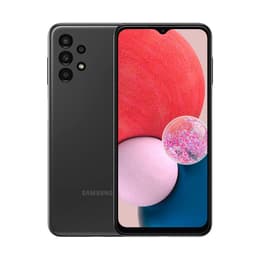
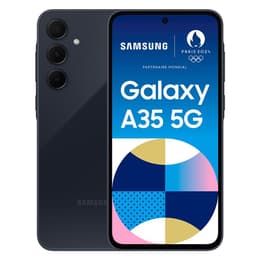
The Samsung Galaxy A13, released in March 2022, and the Samsung Galaxy A35, launched in March 2024, are both Android smartphones from Samsung's A-series. While they share the same operating system, the Galaxy A35 introduces significant upgrades in display technology, processing power, and overall build quality, positioning it as a more advanced option compared to its predecessor.

Scores

Durability

The practical lifespan of a smartphone is heavily influenced by its software support and physical durability. These two models offer different expectations in both areas.

  • Software Longevity: The Galaxy A13 launched with Android 12 and has received updates, with its 4G variant currently running Android 14 with One UI 6.1. The newer Galaxy A35, released with Android 14, is promised four generations of OS upgrades and five years of security updates, extending its software relevance further into the future.
  • Physical Durability: The Galaxy A13 features Corning Gorilla Glass 5 for display protection and a plastic build. The Galaxy A35 offers enhanced protection with Corning Gorilla Glass Victus+ on its display and boasts an IP67 rating for dust and water resistance, providing better resilience against environmental elements.
  • Expected Lifespan: Users prioritizing extended software support and greater resistance to everyday wear and tear may find the Galaxy A35 to be a more future-proof device.

Year of Release

2022

2024

Compatible with latest Update

No

Yes

OS

Android

Android

Foldable

No

No

Performance

Performance is a key differentiator, impacting how smoothly applications run and how responsive the device feels during daily use.

  • Processing Power: The Galaxy A13 is equipped with an octa-core processor, which some users have described as sluggish for demanding applications and gaming, with occasional lag during multitasking. In contrast, the Galaxy A35 features a more capable octa-core processor, which delivers smoother performance for demanding apps and multitasking, generally providing a more fluid user experience.
  • System Responsiveness: For basic tasks like calling, messaging, and web browsing, both devices are functional. However, the Galaxy A35 offers a noticeably more responsive experience, particularly when launching apps or navigating through the interface.
  • Gaming and Heavy Use: Users who engage in mobile gaming or frequently use resource-intensive applications will likely find the Galaxy A35 better suited to their needs due to its enhanced processing capabilities.

Memory (GB)

4 GB

6 GB

Screen quality

The display is a primary interface for smartphone interaction, and there are notable differences in the visual experience offered by these two models.

  • Display Technology and Clarity: The Galaxy A13 features a 6.6-inch LCD (PLS TFT) display with a resolution of 1080 x 2408 pixels, offering decent clarity for general viewing. The Galaxy A35, on the other hand, sports a 6.6-inch Super AMOLED display with a 1080 x 2340 pixel resolution, providing more vibrant colors, deeper blacks, and better contrast.
  • Brightness and Smoothness: The Galaxy A13 has a standard 60Hz refresh rate. The Galaxy A35 significantly upgrades this with a 120Hz refresh rate, resulting in smoother scrolling and a more fluid visual experience. It also offers higher peak brightness, up to 1000 nits in High Brightness Mode (HBM), and includes a Vision Booster feature for improved outdoor visibility.
  • Viewing Experience: Users who prioritize a more immersive and responsive visual experience, especially for media consumption or in bright outdoor conditions, will benefit from the Galaxy A35's display.

Resolution

1080 x 2408

1080 x 2340

Screen type

PLS LCD

Super AMOLED

Audiovisual

Both devices offer multi-camera setups, but their capabilities and performance vary, particularly in challenging lighting conditions.

  • Rear Camera System: The Galaxy A13 includes a quad-camera setup with a 50MP main sensor, a 5MP ultrawide, a 2MP macro, and a 2MP depth sensor. The Galaxy A35 features a triple rear camera system, comprising a 50MP main sensor with Optical Image Stabilization (OIS), an 8MP ultrawide, and a 5MP macro lens.
  • Photography Performance: The main camera on the Galaxy A13 performs adequately in well-lit environments, but its ultrawide and macro lenses are less impressive, and it struggles in low-light situations. The Galaxy A35's main camera captures vibrant and detailed photos, particularly in daylight, and benefits from OIS for more stable shots. While its ultrawide and macro cameras are functional, the main sensor is the highlight.
  • Video and Selfie Capabilities: The Galaxy A13 records video at up to 1080p at 30 frames per second (fps) and has an 8MP selfie camera. The Galaxy A35 supports video recording up to 4K at 30fps with both its main and 13MP selfie cameras, offering higher resolution and more detail for video content.

Main camera

50 megapixels

50 megapixels

Front camera

8 megapixels

13 megapixels

Miscellaneous

Beyond core features, several practical elements contribute to the overall user experience and device utility.

  • Connectivity and Ports: The Galaxy A13 supports 4G LTE connectivity, Wi-Fi 5, and Bluetooth 5.0, and includes a 3.5mm headphone jack and a USB-C 2.0 port. The Galaxy A35 offers more advanced connectivity with 5G support, Wi-Fi 6, and Bluetooth 5.3. It uses a USB-C 2.0 port but omits the 3.5mm headphone jack.
  • Security and Build: Both devices feature fingerprint sensors for secure unlocking. The Galaxy A13 has a plastic build and weighs 195g. The Galaxy A35 has a more premium feel with a glass back and plastic frame, weighing 209g, and includes an in-display fingerprint sensor.
  • Dimensions and Handling: The Galaxy A13 measures 165.1 x 76.4 x 8.8mm. The Galaxy A35 is slightly more compact in height and thinner at 161.7 x 78.0 x 8.2mm.

Weight

195 g

209 g

Screen size (in)

6.6

6.6

Network

4G

5G

SIM card

Dual Physical SIM

Dual Physical SIM

Carrier compatibility

Unlocked

Unlocked

User feedback for the Galaxy A13 often highlights its strong battery life and adequate performance for very basic tasks, making it a functional choice for those with minimal smartphone demands. However, common criticisms point to its sluggish performance over time, particularly with more demanding apps, and a camera system that struggles in less-than-ideal lighting.

The Galaxy A35 generally receives praise for its vibrant Super AMOLED display with a high refresh rate, its reliable main camera performance in good lighting, and its robust battery life that often extends beyond a single day of use. Users also appreciate its enhanced durability features, including an IP67 rating. Some minor concerns include the performance of its ultrawide and macro cameras, which are not as strong as the main sensor.

Users prioritizing a smooth visual experience, better overall performance for a wider range of applications, and enhanced durability will find the Galaxy A35 well-suited to their needs. Its extended software support also makes it a more future-proof option. Conversely, individuals seeking a device primarily for essential communication and light browsing, where budget is a primary consideration and advanced features are less critical, might consider the Galaxy A13. For those looking for an eco-friendly and quality-assured alternative, both models are available as refurbished options, offering a sustainable choice.


See all articles

Our recent comparisons