


Galaxy S23 Ultra Vs Google Pixel 7 Pro

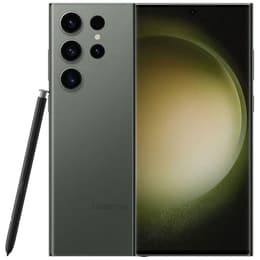
Galaxy S23 Ultra
Galaxy S23 Ultra
Starting at

Refurbished price:430.00

Versus €1,599.00 new

See options
Google Pixel 7 Pro
Google Pixel 7 Pro
Starting at

Refurbished price:201.00

Versus €640.98 new

See options

Ratings

The Samsung Galaxy S23 Ultra, released in February 2023, and the Google Pixel 7 Pro, launched in October 2022, are both prominent Android smartphones designed for users seeking advanced features and capabilities. While both devices operate on the Android platform, they offer distinct approaches to performance, camera technology, and overall user experience. The S23 Ultra emphasizes a versatile camera system and integrated stylus, whereas the Pixel 7 Pro focuses on computational photography and a streamlined software experience.

Scores

Durability

When considering the long-term usability of these devices, their release timelines and software support policies are key factors.

  • Release and Software Support: The Galaxy S23 Ultra, launched in February 2023, is expected to receive four years of Android operating system updates and five years of security patches from Samsung. The Pixel 7 Pro, released in October 2022, initially offered three years of OS updates and five years of security updates, but Google has since extended its policy to provide five years of OS and security updates for the Pixel 7 Pro. This means the Pixel 7 Pro is projected to receive OS updates until Android 18, extending its software longevity.
  • Repairability: The Galaxy S23 Ultra generally offers a more accessible repair process, with some teardowns noting features like easier battery removal. In contrast, the Pixel 7 Pro has been noted for being more challenging to repair, with components like the charging port often soldered to the motherboard and strong adhesives making battery removal difficult.
  • Practical Lifespan: Both devices are built with robust materials, including Gorilla Glass Victus 2 on the S23 Ultra and Gorilla Glass Victus on the Pixel 7 Pro, and both carry an IP68 rating for dust and water resistance, contributing to their physical durability. Users can expect several years of reliable operation from either device, with software support being a primary determinant of their functional lifespan for accessing new features and maintaining security.

Year of Release

2023

2022

Compatible with latest Update

Yes

Yes

OS

Android

Android

Foldable

No

No

Performance

The performance of these smartphones is driven by their respective internal components, impacting how smoothly they handle daily tasks and demanding applications.

  • Processing Power: The Galaxy S23 Ultra features a processor optimized for its ecosystem, delivering robust performance for intensive gaming and complex multitasking. Users report a snappy, fast, and responsive experience, even with demanding applications. The Pixel 7 Pro is powered by Google's custom-designed processor, which excels in AI and machine learning tasks, contributing to its advanced computational photography and efficient software operations.
  • Multitasking and Responsiveness: Both devices offer ample RAM configurations, with the Pixel 7 Pro typically featuring 12GB of RAM across its variants, while the S23 Ultra offers 8GB or 12GB depending on the storage option. This allows both phones to manage multiple applications simultaneously without significant slowdowns. User feedback for the S23 Ultra highlights its consistent responsiveness, while the Pixel 7 Pro is praised for its smooth operation, particularly after software updates.
  • Battery Behavior: Both smartphones are equipped with 5000 mAh batteries. The Galaxy S23 Ultra is frequently lauded by users for its exceptional battery life, often lasting a full day or more even with heavy use. The Pixel 7 Pro's battery performance receives mixed reviews; some users find it adequate for a full day, while others report it requires more frequent charging, especially under heavy usage or with certain network conditions.

Memory (GB)

8 GB

12 GB

Screen quality

The visual experience on both the Galaxy S23 Ultra and the Pixel 7 Pro is a highlight, with both devices featuring high-quality displays.

  • Display Technology and Resolution: The Galaxy S23 Ultra boasts a 6.8-inch Dynamic AMOLED 2X display, offering a sharp 3088x1440 pixel resolution. The Pixel 7 Pro features a 6.7-inch LTPO AMOLED display with a resolution of 3120x1440 pixels. Both technologies deliver vibrant colors, deep blacks, and excellent contrast, providing an immersive viewing experience.
  • Brightness and Refresh Rate: The S23 Ultra's display can reach a peak brightness of 1750 nits in typical use, with some reports suggesting it can achieve up to 2200 nits in specific conditions, ensuring good visibility even in bright outdoor environments. It also features an adaptive refresh rate that scales from 1Hz to 120Hz, optimizing for both smoothness and power efficiency. The Pixel 7 Pro offers a peak brightness of up to 1500 nits and an adaptive refresh rate ranging from 10Hz to 120Hz, providing smooth scrolling and clear visuals in various lighting conditions.
  • Viewing Experience: The S23 Ultra's slightly larger screen and minimal bezels contribute to an expansive viewing area, which users appreciate for media consumption and productivity with its integrated S Pen. The Pixel 7 Pro's display is also highly regarded for its clarity and smooth motion, with users noting its vibrant colors.

Resolution

1440 x 3088

1440 x 3120

Screen type

Dynamic AMOLED 2X

LTPO AMOLED

Audiovisual

Both the Galaxy S23 Ultra and the Pixel 7 Pro are recognized for their advanced camera systems, though they approach photography with different strengths.

  • Rear Camera Systems: The Galaxy S23 Ultra features a versatile quad-camera setup, including a 200MP main sensor, a 12MP ultrawide lens, and two 10MP telephoto lenses offering 3x and 10x optical zoom, respectively. This configuration allows for exceptional detail and impressive zoom capabilities. The Pixel 7 Pro comes with a triple-camera system, comprising a 50MP main sensor, a 12MP ultrawide lens, and a 48MP telephoto lens with 5x optical zoom and up to 30x Super Res Zoom.
  • Photography Performance: The S23 Ultra is praised for its detailed and color-rich photographs, particularly its zoom performance. Some users note that standard photos can sometimes appear over-processed. The Pixel 7 Pro leverages Google's computational photography to produce consistently high-quality stills, often excelling in challenging lighting conditions and with features like Photo Unblur.
  • Video Recording and Audio: The S23 Ultra supports video recording up to 8K at 30 frames per second. The Pixel 7 Pro offers 4K video recording at 60 frames per second across all its lenses, including the front camera, and features like Cinematic Mode for blurred backgrounds. Both devices provide good microphone quality for calls and recording, and stereo speakers for media consumption.

Main camera

200 megapixels

50 megapixels

Front camera

12 megapixels

10.8 megapixels

Miscellaneous

Beyond core features, several practical elements differentiate the user experience of these two devices.

  • Connectivity and Ports: Both the Galaxy S23 Ultra and the Pixel 7 Pro support 5G connectivity and modern Wi-Fi 6E standards, ensuring fast wireless data speeds. They both utilize a USB-C port for charging and data transfer. The S23 Ultra supports Bluetooth 5.3, while the Pixel 7 Pro supports Bluetooth 5.2.
  • Biometrics and Sensors: The S23 Ultra features an ultrasonic under-display fingerprint sensor and supports face recognition. The Pixel 7 Pro includes an optical under-display fingerprint sensor and offers a fast and reliable face unlock feature. Both devices incorporate a standard suite of sensors, including accelerometers, gyroscopes, and compasses.
  • Design and Handling: The Galaxy S23 Ultra has a more angular, boxy design and weighs around 233-234 grams. Its larger size and weight are sometimes noted by users, though some find the weight distribution makes it comfortable to hold. The Pixel 7 Pro, at 212 grams, is slightly lighter and features a design with less pronounced curves than its predecessor. The S23 Ultra uniquely integrates an S Pen stylus, offering additional functionality for note-taking and navigation.

Weight

234 g

212 g

Screen size (in)

6.8

6.7

Network

5G

5G

SIM card

Dual Physical SIM + eSIM

Physical SIM + eSIM

Carrier compatibility

Unlocked

Unlocked

The Samsung Galaxy S23 Ultra and the Google Pixel 7 Pro each offer a compelling smartphone experience, catering to slightly different user preferences. User feedback for the Galaxy S23 Ultra frequently praises its exceptional battery life, the versatility and zoom capabilities of its camera system, and the integrated S Pen for productivity and creative tasks. Some common criticisms include its large size and weight, which might not suit all users, and occasional over-processing in standard camera modes.

The Google Pixel 7 Pro is often lauded for its consistent and high-quality computational photography, delivering impressive still images, and its smooth, clean Android software experience. Its fast fingerprint sensor and reliable face unlock are also frequently highlighted. However, some users have noted mixed battery life performance, particularly under heavy use, and occasional heating.

Users prioritizing a highly versatile camera with extensive zoom, an integrated stylus for productivity, and industry-leading battery endurance may find the Galaxy S23 Ultra well-suited to their needs. Conversely, those who value a streamlined software experience, consistent computational photography for stills, and prompt software updates might lean towards the Google Pixel 7 Pro. Both devices represent excellent choices, and opting for a quality-assured refurbished option can be an eco-friendly alternative to extend their lifecycle.


See all articles

Our recent comparisons