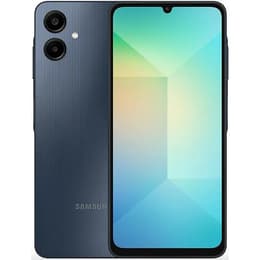
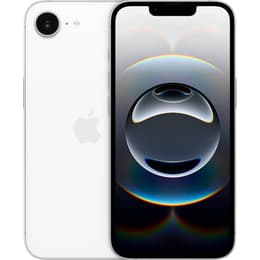


Galaxy A06 Vs iPhone 16e

Galaxy A06
Galaxy A06
Starting at

Refurbished price:108.00

Versus €186.96 new

See options
iPhone 16e
iPhone 16e
Starting at

Refurbished price:405.00

Versus €719.00 new

See options

Ratings

The Samsung Galaxy A06, released in August 2024, and the iPhone 16E, introduced in February 2025, represent distinct approaches to smartphone design and functionality. While the Galaxy A06 operates on the Android platform, offering a customizable experience, the iPhone 16E runs on Apple's iOS, known for its integrated ecosystem. The primary differentiators lie in their operating systems, display technologies, and overall performance profiles, catering to different user preferences.

Scores

Durability

When considering the long-term usability of these devices, several factors come into play, including their release timelines, software support, and physical resilience.

  • Release and Support: The Samsung Galaxy A06 launched in August 2024 with Android 14, typically receiving several years of Android version updates and security patches. The iPhone 16E, released in February 2025, originally shipped with iOS 18.3 and supports iOS 26, indicating a robust software update cycle. However, it was discontinued in March 2026 in favor of the iPhone 17e, which might influence future software support duration compared to a currently active model.
  • Physical Durability: The Galaxy A06 features a glass front with a plastic back and frame, offering a practical build. The iPhone 16E, on the other hand, incorporates a Ceramic Shield front cover and an aluminum frame, contributing to enhanced drop protection. It also boasts an IP68 rating for dust and water resistance, allowing submersion up to 6 meters for 30 minutes, a feature not typically found in the Galaxy A06's segment.
  • Repairability: While specific repairability scores can vary, both devices are designed with components that can be serviced. The availability of parts and repair expertise often differs between Android and iOS ecosystems, with Apple maintaining a more controlled repair network. Users seeking an eco-friendly alternative might consider quality-assured refurbished options for either model to extend their lifecycle.

Year of Release

2024

2025

OS

Android

iOS

Foldable

No

No

Performance

The performance of a smartphone is crucial for daily tasks, from app navigation to demanding applications. Both devices offer capabilities suited to their respective ecosystems.

  • Processing Power: The Samsung Galaxy A06 is equipped with a MediaTek Helio G85 processor, designed to handle everyday applications and multitasking smoothly. The iPhone 16E features Apple's A18 chip, which provides a high level of performance for demanding apps, complex multitasking, and advanced features like Apple Intelligence.
  • Multitasking and Storage: The Galaxy A06 comes with 4GB or 6GB of RAM and storage options of 64GB or 128GB, expandable via microSD card. This allows for flexible storage management. The iPhone 16E offers 8GB of RAM and storage configurations of 128GB, 256GB, or 512GB, providing ample space and efficient memory management for a responsive user experience.
  • Battery Usage: The Galaxy A06 includes a 5000 mAh battery, supporting 25W wired charging, which typically provides extended usage throughout the day for most users. The iPhone 16E is noted for its optimized battery life, with Apple claiming it offers up to 26 hours of video playback, positioning it as a strong contender for users prioritizing longevity between charges.

Memory (GB)

4 GB

8 GB

Screen quality

The display is a primary interface for smartphone interaction, and both devices offer different visual experiences.

  • Display Technology and Resolution: The Samsung Galaxy A06 features a 6.7-inch PLS LCD with a resolution of 720 x 1600 pixels (HD+). This provides a clear viewing experience for general content consumption. The iPhone 16E sports a 6.1-inch Super Retina XDR OLED display with a higher resolution of 2532 x 1170 pixels, offering deeper blacks, vibrant colors, and finer detail.
  • Brightness and Clarity: The iPhone 16E's OLED panel delivers up to 800 nits typical brightness and 1200 nits peak brightness for HDR content, making it suitable for outdoor visibility and high-contrast media. While the Galaxy A06's LCD is adequate for indoor use, it may not match the peak brightness levels of the iPhone 16E in bright sunlight.
  • Refresh Rate and Viewing Experience: The Galaxy A06 typically operates at a 60Hz refresh rate, providing standard smoothness for scrolling and animations. The iPhone 16E also maintains a 60Hz refresh rate, but its OLED technology and higher pixel density contribute to a sharp and immersive visual experience, especially for media consumption.

Resolution

720 x 1600

2532x1170

Audiovisual

Camera capabilities are a significant consideration for many users, and these devices offer distinct photographic and videographic features.

  • Rear Camera System: The Samsung Galaxy A06 is equipped with a dual-camera setup on the rear, featuring a 50MP wide primary sensor and a 2MP depth sensor. This configuration is designed for capturing detailed everyday photos and enhancing portrait shots with background blur. The iPhone 16E features a single 48MP Fusion main camera, which includes a 2x optical-quality telephoto capability. This system is optimized for capturing high-resolution images and offers advanced computational photography features.
  • Photography Features: The iPhone 16E's camera supports 4K Dolby Vision video recording at up to 60 frames per second, along with features like Night mode and Portrait mode, leveraging its advanced processing for image enhancement. The Galaxy A06 provides standard video recording capabilities and focuses on delivering clear images in well-lit conditions.
  • Front Camera and Audio: For selfies and video calls, the Galaxy A06 has an 8MP front camera. The iPhone 16E features a 12MP TrueDepth front camera, which also enables Face ID for secure authentication. Both devices offer integrated speakers for media playback, with the iPhone typically providing a balanced audio experience.

Miscellaneous

Beyond core features, several practical elements contribute to the overall user experience and device utility.

  • Connectivity and Ports: The Samsung Galaxy A06 supports Wi-Fi 5 (802.11ac) and Bluetooth 5.3, along with a USB Type-C 2.0 port and a 3.5mm headphone jack. The iPhone 16E features Wi-Fi 6 and Bluetooth 5.3, and notably includes Apple's C1 5G modem for sub-6GHz 5G connectivity, along with a USB-C port. It does not include a traditional headphone jack.
  • Biometrics and Navigation: The Galaxy A06 incorporates a side-mounted fingerprint sensor for secure unlocking. The iPhone 16E utilizes Face ID, Apple's facial recognition system, for authentication and secure transactions. The iPhone 16E also features an Action Button, which can be customized for various functions, replacing the traditional mute switch.
  • Design and Handling: The Galaxy A06 has a 6.7-inch display, offering a larger screen footprint, and weighs around 189 grams. The iPhone 16E, with its 6.1-inch display and aluminum frame, provides a more compact form factor, weighing approximately 170 grams, which can influence one-handed use and portability.

Weight

189 g

167 g

Screen size (in)

6.7

6.1

Network

4G

5G

SIM card

Dual Physical SIM

eSIM

Carrier compatibility

Unlocked

Unlocked

Connector

USB-C + Jack 3.5mm

USB-C

User feedback often highlights the Galaxy A06 as a reliable device for essential smartphone functions, praised for its large display and substantial battery capacity, making it a practical choice for everyday communication and media consumption. Some users might note its display resolution and camera performance are suitable for its segment but not comparable to higher-end devices. The expandable storage is frequently cited as a significant advantage for users who manage large amounts of data.

The iPhone 16E, despite its relatively short market presence before being succeeded, garnered positive attention for bringing advanced features like the A18 chip, Apple Intelligence, and a high-quality OLED display to a more accessible price point within the Apple ecosystem. Users appreciated its modern design, robust performance, and enhanced camera capabilities. Criticisms sometimes focused on the retention of a 60Hz refresh rate and the single rear camera setup compared to other iPhone 16 models. Its strong battery life was a consistent point of praise.

Users prioritizing a large display, expandable storage, and a familiar Android experience for general use may find the Samsung Galaxy A06 well-suited to their needs. Its long-lasting battery is a key benefit for those who need extended usage without frequent charging. Conversely, users who value a powerful and efficient processor, a vibrant OLED display, advanced camera features, and the integrated iOS ecosystem, along with robust durability features like Ceramic Shield and IP68 water resistance, may lean towards the iPhone 16E. The iPhone 16E also offers a more compact form factor for those preferring a smaller device. Both devices, whether new or as quality-assured refurbished options, provide distinct advantages depending on individual priorities.








