

Dell Latitude 5490 14" Vs Microsoft Surface Pro 6 12"

Dell Latitude 5490 14"
Starting at

Refurbished price:325.00

Versus €793.00 new

See options
Microsoft Surface Pro 6 12"
Starting at

Refurbished price:424.00

Versus €899.00 new

See options

Ratings

The Dell Latitude 5490, released in 2017, is a traditional 14-inch business laptop designed for robust productivity, while the Microsoft Surface Pro 6, launched in October 2018, offers a 12.3-inch 2-in-1 detachable tablet experience. Both devices run on the Windows operating system, but they cater to different user preferences through their form factors and core functionalities. The primary distinction lies in the Latitude's focus on a conventional laptop setup with extensive connectivity, contrasting with the Surface Pro 6's emphasis on portability and touch-first interaction.

Scores

Durability

When considering the long-term usability of these devices, their release timelines and design philosophies play a significant role. The Dell Latitude 5490, a business-oriented laptop, was released in 2017, while the Microsoft Surface Pro 6, a 2-in-1 device, followed in October 2018. Both benefit from ongoing Windows operating system updates, ensuring continued software support for several years.

  • Software Longevity: Both devices, running Windows, receive regular security and feature updates from Microsoft. The Surface Pro 6, being released slightly later, may receive official OS support for a marginally longer period, though practical differences in everyday use are often minimal for devices of similar generations.
  • Physical Durability: The Latitude 5490 is known for its sturdy, business-grade chassis, often described as a "tank" by users, built to withstand daily professional use. Its design prioritizes resilience in a traditional laptop form factor. The Surface Pro 6, while well-built with a magnesium casing, is a more delicate 2-in-1 device, with its detachable keyboard and kickstand design introducing different considerations for wear and tear.
  • Repairability: The Dell Latitude 5490 is generally considered highly repairable, with components often accessible for servicing or upgrades. In contrast, Surface devices, including the Pro 6, are typically more challenging to repair due to their compact, integrated designs, which can make component replacement more complex.

Year of Release

2017

2017

Last Os Compatibility

Yes

Yes

OS

Windows 11

Windows 11

Performance

Both the Dell Latitude 5490 and the Microsoft Surface Pro 6 are equipped with 8th-generation Intel Core processors, offering capable performance for a range of tasks. The real-world experience of their performance, however, is influenced by their design and typical use cases.

  • Processing Power: Both devices handle demanding applications and multitasking smoothly, thanks to their quad-core processors. The Latitude 5490, often configured with more robust cooling, can sustain performance under heavier loads for extended periods, making it suitable for prolonged productivity sessions. The Surface Pro 6 also delivers strong performance for its form factor, though some users have reported instances of thermal throttling under sustained heavy use.
  • Multitasking and Storage: Both models typically come with 8GB or 16GB of RAM, with the Latitude 5490 offering configurations up to 32GB, which can be beneficial for intensive multitasking. Both utilize solid-state drives (SSDs) for storage, ensuring fast boot times and quick application loading. The Latitude 5490 also had options for traditional hard disk drives in some base configurations.
  • Battery Behavior: The Latitude 5490 is noted for its long battery life, often exceeding 12-15 hours in various tests, making it suitable for full workdays without needing a charger. The Surface Pro 6 offers up to 13.5 hours for local video playback and around 9 hours 20 minutes for web browsing, though actual user experiences can vary, with some reporting closer to 6 hours depending on usage patterns.

Memory (GB)

8 GB

8 GB

Processor

Core i5 - Gen 8 (U)

Core i5 - Gen 8 (U)

Graphic card

Integrated Graphics

Integrated Graphics

Screen quality

The display experience on the Dell Latitude 5490 and the Microsoft Surface Pro 6 differs significantly due to their intended use and form factors.

  • Display Technology and Resolution: The Latitude 5490 features a 14-inch Full HD (1920 x 1080) anti-glare WLED display, with some configurations offering touch capabilities. The Surface Pro 6 boasts a 12.3-inch PixelSense display with a higher resolution of 2736 x 1824 pixels and a 3:2 aspect ratio. This higher pixel density on the Surface Pro 6 results in sharper text and more detailed images.
  • Brightness and Clarity: The Latitude 5490's screen typically offers around 200-220 nits of brightness, which is suitable for indoor office environments but can be dim in brighter outdoor conditions. The Surface Pro 6's display is notably brighter, reaching around 408 nits, providing more vibrant colors and better visibility in varied lighting. The Surface Pro 6's 3:2 aspect ratio is also often preferred for productivity tasks like document editing, offering more vertical screen real estate.
  • Touch and Interaction: The Surface Pro 6 is designed as a touch-first device, with its PixelSense display offering 10-point multi-touch and stylus support (Surface Pen sold separately), making it highly versatile for creative work, note-taking, and tablet-mode interaction. While some Latitude 5490 models offer touchscreens, it is not a primary interaction method for the traditional laptop design.

Resolution

1920 x 1080

2736 x 1824

Screen type

IPS

IPS

Camera

Audiovisual

The audio-visual capabilities of these two devices reflect their primary design intentions, with the Surface Pro 6 offering a more comprehensive camera setup due to its tablet nature.

  • Camera System: The Dell Latitude 5490 typically includes a 720p HD webcam, suitable for standard video conferencing. The Microsoft Surface Pro 6 features a 5 MP front-facing camera capable of 1080p HD video recording, which is beneficial for clearer video calls and facial recognition. Additionally, the Surface Pro 6 includes an 8 MP rear-facing camera, also capable of 1080p HD video, allowing for document scanning or casual photography.
  • Microphone and Speakers: Both devices are equipped with integrated microphones for voice communication. The Latitude 5490's audio output is generally considered adequate for business use, though some reviews note a lack of bass. The Surface Pro 6 features 1.6 W stereo speakers with Dolby Audio, providing a more immersive experience for media consumption.
  • Biometric Authentication: The Surface Pro 6 integrates Windows Hello facial recognition via its front camera for secure and convenient login. The Latitude 5490 offers optional security features, including an IR webcam for Windows Hello and a fingerprint reader.

Miscellaneous

Beyond core performance and display, several practical elements differentiate the Dell Latitude 5490 and the Microsoft Surface Pro 6, impacting their daily usability and versatility.

  • Connectivity Options: The Latitude 5490 offers a wide array of ports, including multiple USB 3.1 Gen 1 (Type-A), a USB-C port with DisplayPort functionality (and optional Thunderbolt 3), HDMI, VGA, Ethernet (RJ-45), and an SD card reader, catering to diverse peripheral and networking needs. The Surface Pro 6 has a more limited selection, featuring one USB 3.0 (Type-A) port, a Mini DisplayPort, a Surface Connect port for charging and accessories, and a microSDXC card reader. Notably, the Surface Pro 6 lacks a built-in USB-C port. Both support Wi-Fi 5 and Bluetooth.
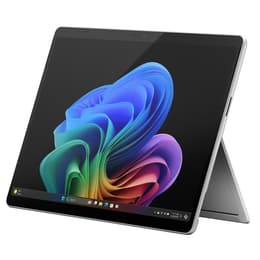
  • Portability and Form Factor: The Latitude 5490 is a traditional clamshell laptop, weighing around 1.6-1.7 kg (3.5-3.8 lbs) and measuring about 20-21mm thick. It provides a stable typing experience with a comfortable keyboard. The Surface Pro 6, as a 2-in-1 detachable tablet, is significantly lighter at 0.77-0.78 kg (1.7-1.73 lbs) for the tablet alone and much thinner at 8.5mm. Its portability is a key advantage, transforming into a laptop with the addition of a Type Cover (sold separately).
  • Build Materials and Design: The Latitude 5490 features a sturdy, dark gray chassis with a carbon fiber lid and a plastic keyboard deck, designed for a professional, understated look. The Surface Pro 6 sports a sleek magnesium casing, available in Platinum and Matte Black, offering a more modern and premium aesthetic.

Weight

1600 g

1120 g

Screen size

14

12

The Dell Latitude 5490 and Microsoft Surface Pro 6, while both capable Windows devices from similar generations, offer distinct experiences tailored to different user needs. User feedback often praises the Latitude 5490 for its robust build quality, extensive port selection, and reliable performance as a traditional workhorse laptop. It is frequently highlighted for its long battery life and strong security features, making it a dependable choice for business professionals and students who prioritize a stable, conventional computing experience. Criticisms sometimes point to its less modern design and a screen that, while functional, may not be as vibrant or bright as some competitors.

Conversely, the Surface Pro 6 receives acclaim for its exceptional, high-resolution PixelSense display, superior portability, and versatility as a 2-in-1 device. Users appreciate its ability to seamlessly transition between a tablet for creative tasks and a laptop for productivity, especially with the optional Surface Pen and Type Cover. Common concerns include the lack of a USB-C port, the necessity of purchasing accessories separately to achieve a full laptop experience, and occasional reports of performance throttling under heavy loads.

Users prioritizing a durable, highly connected, and traditional laptop for sustained productivity, especially those who frequently connect to various peripherals or older display technologies, may find the Dell Latitude 5490 to be a more suitable option. Its robust construction and comprehensive port selection align well with a fixed workstation or frequent travel where diverse connectivity is crucial. On the other hand, individuals seeking maximum portability, a superior touch and pen-enabled display for creative work or note-taking, and the flexibility of a tablet-laptop hybrid will likely lean towards the Microsoft Surface Pro 6. Its lightweight design and high-resolution screen make it ideal for mobile professionals, artists, or students who value a versatile and immersive visual experience. Both models are available as quality-assured refurbished options, providing an eco-friendly alternative for those seeking reliable technology.


See all articles

Our recent comparisons