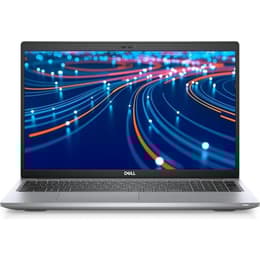


Dell Latitude 5490 14" Vs Dell Latitude 5520 15"

Dell Latitude 5490 14"
Starting at

Refurbished price:325.00

Versus €793.00 new

See options
Dell Latitude 5520 15"
Starting at

Refurbished price:490.00

Versus €1,251.88 new

See options

Ratings

The Dell Latitude 5490, a 14-inch business laptop released around 2018, and the Dell Latitude 5520, a 15.6-inch model introduced in early 2021, represent different generations within Dell's professional-grade Latitude series. While both are designed for productivity and reliability, the 5520 offers more modern internal components and connectivity options, alongside a larger display. Both devices operate on the Windows platform, providing a familiar user experience.

Scores

Durability

Evaluating the practical lifespan of these laptops involves considering their release timelines, software support, and inherent design for business use.

  • Release Timeline and Age: The Latitude 5490, launched around 2018, is an older model compared to the Latitude 5520, which debuted in early 2021. This age difference means the 5520 benefits from more recent hardware and design principles.
  • OS Support and Longevity: Both laptops run Windows, but the newer 5520 is equipped with 11th-generation Intel processors, which generally ensures a longer period of official support for the latest Windows operating system versions and security updates. The 5490, with its 7th or 8th generation processors, may have a shorter remaining window for optimal software compatibility and feature updates.
  • Repairability: Dell's Latitude series is generally known for its repair-friendly design, allowing for component upgrades and replacements. Both models offer accessible internal components, contributing to their potential for extended use through maintenance.

Year of Release

2017

2020

Last Os Compatibility

Yes

Yes

OS

Windows 11

Windows 11

Performance

The performance capabilities of these two Latitude models show a notable progression, primarily due to advancements in processor technology and system architecture.

  • Processor Capabilities: The Latitude 5490 typically features 7th or 8th generation Intel Core processors, which capably handle everyday office tasks, web browsing, and light multitasking. In contrast, the Latitude 5520 is equipped with 11th generation Intel Core processors, providing a significant boost in processing power. This translates to faster application loading, smoother multitasking with more demanding software, and improved responsiveness for complex computations.
  • Memory and Storage: The 5490 supports up to 32GB of DDR4 RAM, which is sufficient for most business applications. The 5520, however, can be configured with up to 64GB of faster DDR4 3200 MHz RAM, offering greater headroom for intensive multitasking and specialized software. For storage, the 5520 commonly utilizes faster M.2 NVMe SSDs, while the 5490 might feature M.2 SATA SSDs or traditional HDDs, impacting data access speeds.
  • Battery Behavior: The Latitude 5490 offers a robust battery life, with some configurations providing over 15 hours of use in specific tests, making it suitable for extended work sessions. The Latitude 5520, benefiting from more power-efficient 11th-generation processors, also delivers strong battery performance, often lasting 10-12 hours on a single charge, with some configurations supporting ExpressCharge for quicker recharging.

Memory (GB)

8 GB

16 GB

Processor

Core i5 - Gen 8 (U)

Core i5-1135G7

Graphic card

Integrated Graphics

Integrated Graphics

Screen quality

The display experience on the Dell Latitude 5490 and 5520 differs primarily in size and subtle advancements in panel technology.

  • Display Technology and Resolution: Both laptops typically feature Full HD (1920x1080) IPS anti-glare displays, providing clear visuals and wide viewing angles suitable for productivity tasks.
  • Screen Size and Viewing Experience: The Latitude 5490 comes with a 14-inch screen, offering a more compact form factor. The Latitude 5520 features a larger 15.6-inch display, which provides more screen real estate for multitasking, viewing documents, or consuming media, potentially enhancing productivity for users who prefer a larger workspace.
  • Brightness Levels: The 5490's display typically offers around 220 nits of brightness. The 5520 generally provides a slightly brighter panel at around 250 nits, with some configurations offering higher brightness options, which can improve visibility in varied lighting conditions.

Resolution

1920 x 1080

1920 x 1080

Screen type

IPS

LCD

Camera

Audiovisual

For communication and multimedia, both Latitude models include essential audio-visual components, with the newer model offering some refinements.

  • Camera System: Both the Latitude 5490 and 5520 are equipped with a 720p webcam, suitable for video conferencing and online meetings. The 5520, however, often includes an HD IR webcam with a privacy shutter and support for Windows Hello facial recognition, enhancing security and convenience.
  • Microphone Quality: Both devices feature integrated dual-array microphones designed to capture clear audio during calls. The 5520 may incorporate intelligent audio features to reduce background noise, potentially offering a clearer voice experience in noisy environments.
  • Speaker Output: Both laptops provide integrated stereo speakers for audio playback. While suitable for general use, for an enhanced audio experience, external speakers or headphones are often recommended for both models.

Miscellaneous

Beyond core performance, several practical features differentiate the user experience between these two business laptops.

  • Connectivity Options: The Latitude 5490 includes Wi-Fi 5 (802.11ac) and Bluetooth 4.2 or 5.0. The Latitude 5520 features more advanced connectivity with Wi-Fi 6 (802.11ax) and Bluetooth 5.1 or 5.2, offering faster wireless speeds and improved network efficiency, especially in congested areas.
  • Port Types: The 5490 offers a range of ports including USB-A 3.0/3.1 Gen 1, a USB-C port with DisplayPort Alt Mode (but not Thunderbolt), HDMI 1.4, VGA, and Ethernet. The 5520 provides a more modern selection, including USB-A 3.2 Gen 1, Thunderbolt 4 ports (USB-C with DisplayPort Alt Mode/USB4/Power Delivery), HDMI 2.0, and Ethernet, allowing for more versatile docking and external display options.
  • Weight and Dimensions: The 14-inch Latitude 5490 weighs around 1.6 kg (3.52-3.8 lbs). The 15.6-inch Latitude 5520 starts at a similar weight of 1.59 kg (3.5 lbs), making it relatively portable for its larger screen size.

Weight

1600 g

1590 g

Screen size

14

15

The Dell Latitude 5490 and 5520 both serve as reliable business laptops, but they cater to slightly different user needs based on their generational differences. The Latitude 5490 is often praised for its robust build quality, dependable performance for everyday tasks, and comprehensive port selection, including legacy options like VGA. Some users note its design can be somewhat utilitarian, and its performance, while solid, is not as swift as newer models.

The Latitude 5520 receives acclaim for its significantly upgraded performance, modern connectivity with Thunderbolt 4 and Wi-Fi 6, and a larger display that enhances productivity. Criticisms are less common but might include its larger footprint compared to 14-inch models, which could be a consideration for users prioritizing maximum portability.

Users prioritizing a compact form factor, a wide array of traditional ports, and a reliable machine for standard office applications may find the Dell Latitude 5490 well-suited to their needs. It remains a capable workhorse for tasks that do not demand the absolute latest processing power. Conversely, users requiring stronger performance for data-intensive applications, extensive multitasking, a larger visual workspace, and cutting-edge connectivity will likely lean towards the Dell Latitude 5520. Its newer architecture provides a more future-proof experience for evolving software and peripherals.

For those considering either model, exploring quality-assured refurbished options can provide an eco-friendly alternative to extend the lifecycle of these business-grade devices.

See all articles

Our recent comparisons