

Compare models
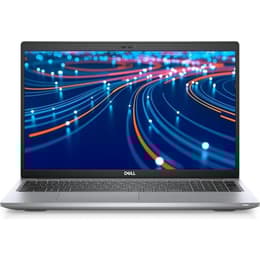
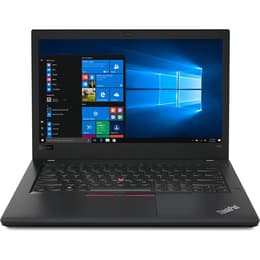
Dell Latitude 5520 15" Vs Lenovo ThinkPad T480 14"
- 1-year minimum warranty
- Free delivery on all orders
- Free 30-day returns
Differences at a glance
The Dell Latitude 5520, released in 2021, and the Lenovo ThinkPad T480, launched in 2018, are business-oriented laptops designed for productivity and reliability. While both offer robust features for professional use, the Latitude 5520 benefits from a more recent hardware generation, bringing advancements in processing power and connectivity. The ThinkPad T480, despite its earlier release, is known for its distinctive hot-swappable battery system and durable build. Both devices primarily run on the Windows operating system, though Linux compatibility is also a consideration for some users.
Available Models
Storage (GB)
Processor
Memory (GB)
Scores
Durability
When considering the long-term usability of these laptops, their release timelines and manufacturer support play a significant role. The Dell Latitude 5520 is a more recent model, offering a longer expected period of official software updates and hardware support compared to the ThinkPad T480.
- Release Timeline: The Dell Latitude 5520 was released in January 2021, making it a newer device. The Lenovo ThinkPad T480 was launched in February 2018, positioning it as an older generation laptop.
- OS Support: The Latitude 5520 supports current Windows versions, including Windows 10 and 11, and is expected to receive updates for a longer duration. The ThinkPad T480 also supports Windows 10 and 11, but official Lenovo support for the T480 is scheduled to end in March 2025, which may impact future driver and firmware availability.
- Repairability: Both laptops are generally designed for business environments, implying a degree of repairability. The ThinkPad T480 is noted for its ease of access to internal components like RAM and storage for upgrades or replacements.
Year of Release
2020
2017
OS
Windows 11
Windows 11
Performance
Performance is a key differentiator, with the Dell Latitude 5520 featuring a more modern internal architecture, which translates to improved responsiveness and efficiency for demanding tasks.
- Processor Capabilities: The Latitude 5520 is equipped with 11th-generation Intel Core processors, offering enhanced performance for everyday business applications, multitasking, and more intensive workloads. The ThinkPad T480 utilizes 8th-generation Intel Core processors, which still provide solid performance for general office tasks and light productivity, though it may show limitations with newer, more resource-intensive software.
- Storage and RAM: Both models offer flexible storage and RAM configurations. The Latitude 5520 supports M.2 NVMe SSDs, with some configurations featuring PCIe Gen 4 speeds, and can accommodate up to 64GB of DDR4 RAM across two SODIMM slots. The ThinkPad T480 also supports M.2 NVMe SSDs and can be configured with up to 32GB of DDR4 RAM, with some users reporting successful upgrades to 64GB.
- Battery Behavior: The Latitude 5520 offers battery options of 42Wh or 63Wh, providing a typical runtime of 8 to 12 hours, and up to nearly 15 hours of web browsing with the larger battery. The ThinkPad T480 features a unique Power Bridge technology, combining an internal 24Wh battery with a hot-swappable external battery (24Wh or 72Wh options), potentially extending battery life up to 17 hours or even 29 hours under optimal conditions with the larger external battery. However, real-world heavy usage often results in 5-6 hours on the standard battery.
Graphic card
Integrated Graphics
Integrated Graphics
Screen quality
The visual experience varies between these two laptops, primarily due to differences in display technology, size, and available resolutions.
- Display Technology and Size: The Dell Latitude 5520 features a 15.6-inch display, typically an IPS panel with Full HD (1920x1080) resolution and an anti-glare finish. Some configurations may offer a 4K UHD option. The Lenovo ThinkPad T480 comes with a 14-inch display, offering various options including HD (1366x768) TN, Full HD (1920x1080) IPS, and WQHD (2560x1440) IPS panels, all with anti-glare properties.
- Brightness and Clarity: Both devices typically offer a brightness of around 250 nits for their Full HD IPS panels, which is suitable for indoor use. The ThinkPad T480's WQHD option can reach 300 nits. The Latitude 5520's IPS panel provides good viewing angles and color reproduction for general tasks. The ThinkPad T480's Full HD IPS panel also offers good viewing angles, but some users have noted that its color coverage can be less vibrant, making it more suited for business tasks than color-sensitive work.
- Refresh Rate: Both laptops generally feature standard 60Hz refresh rates, which are adequate for typical office work and media consumption.
Resolution
1920 x 1080
1920 x 1080
Screen type
LCD
IPS
Audiovisual
For communication and media, both laptops include essential audio and visual components, with some distinctions in camera quality and speaker output.
- Camera System: The Dell Latitude 5520 typically includes an HD IR webcam with a privacy shutter, and an optional Full HD IR camera for enhanced video conferencing and facial recognition. The Lenovo ThinkPad T480 features a 720p webcam, also equipped with a ThinkShutter privacy cover.
- Microphone and Speakers: Both laptops are equipped with dual-array microphones for clearer voice input during calls. The Latitude 5520 has dual 2W speakers. The ThinkPad T480 also features stereo speakers with Dolby Audio Premium, providing a capable audio experience for video calls and media.
- Video Recording Quality: The Latitude 5520's optional Full HD IR camera offers a clearer image for video calls, while the ThinkPad T480's 720p camera is standard for basic video conferencing.
Miscellaneous
Beyond core performance and display, several practical elements contribute to the overall user experience, including connectivity, port selection, and physical design.
- Connectivity Options: The Dell Latitude 5520 supports Wi-Fi 6 and Bluetooth 5.1, offering faster wireless speeds and improved efficiency. It also has optional LTE mobile broadband. The Lenovo ThinkPad T480 features Wi-Fi 802.11ac (Wi-Fi 5) and Bluetooth 4.1, with optional WWAN (4G LTE) for mobile connectivity.
- Port Types: The Latitude 5520 provides a modern selection of ports, including two Thunderbolt 4 ports, two USB 3.2 Gen 1 Type-A ports, HDMI 2.0, an RJ45 Ethernet port, a microSD card reader, and an audio combo jack. The ThinkPad T480 offers a comprehensive array of ports, including two USB 3.1 Gen 1 Type-A, one USB-C 3.1 Gen 1, one USB-C 3.1 Gen 2 / Thunderbolt 3, HDMI 1.4b, RJ45 Ethernet, a 4-in-1 SD card reader, and an audio combo jack, along with a side docking connector.
- Weight and Dimensions: The Latitude 5520 starts at approximately 1.59 kg (3.5 lbs) and has a thickness of about 19.87 mm. The ThinkPad T480 starts at around 1.63 kg (3.6 lbs) and is approximately 19.95 mm thick, with weight increasing with larger battery configurations.
- Build Materials and Durability: The Latitude 5520 incorporates up to 21% bioplastics in its lid, contributing to a more sustainable design while maintaining a durable chassis. The ThinkPad T480 is renowned for its robust construction, having passed MIL-SPEC tests for durability against various environmental conditions.
Weight
2500 g
1580 g
Screen size
15
14
What the community thinks
The Dell Latitude 5520 and Lenovo ThinkPad T480 cater to business users with distinct priorities. User feedback for the Latitude 5520 often praises its updated performance and modern connectivity options, making it a strong contender for those needing a current-generation workhorse. Its use of bioplastics is also a positive point for environmentally conscious users. Some common criticisms might revolve around its display options, with some configurations offering lower-resolution panels.
The ThinkPad T480 is frequently lauded for its exceptional keyboard, robust build quality, and the innovative hot-swappable battery system, which provides unparalleled flexibility for extended use without needing to power down. Users appreciate its comprehensive port selection, reducing the need for adapters. However, its display quality, particularly in terms of brightness and color accuracy, is often noted as a weaker point, and its older processor generation means it may not keep pace with the most demanding modern applications.
Users prioritizing up-to-date performance, faster wireless connectivity, and a larger screen for multitasking may find the Dell Latitude 5520 more aligned with their needs. Its Thunderbolt 4 ports offer advanced peripheral support. Conversely, users who value a highly durable machine, an industry-leading keyboard, and the unique advantage of hot-swappable batteries for maximum uptime will likely lean towards the Lenovo ThinkPad T480. Its extensive port selection also makes it suitable for those with a variety of legacy peripherals.
Both laptops are solid choices for business and productivity. For those seeking an eco-friendly and quality-assured refurbished option, both models are available, offering a sustainable choice for extending the life of electronic products.