
Compare models

Dell Latitude 5410 14" Vs Dell Latitude 5520 15"

  • 1-year minimum warranty
  • Free delivery on all orders
  • Free 30-day returns
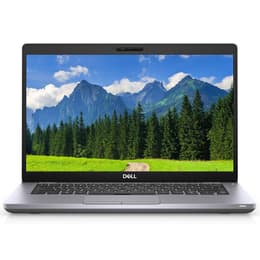
Dell Latitude 5410 14"
Starting at

Refurbished price:250.00

Versus €449.00 new

See options
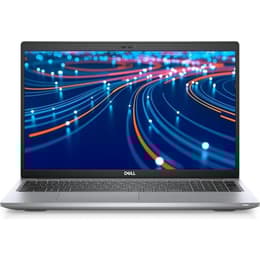
Dell Latitude 5520 15"
Starting at

Refurbished price:335.00

Versus €756.00 new

See options

Differences at a glance

The Dell Latitude 5410 14 (released in 2020) and the Dell Latitude 5520 15 (released in 2021) are business-oriented laptops designed for productivity and reliability. While both models operate on the Windows platform and share a focus on professional use, the Latitude 5520 introduces a newer generation of internal components and a larger display option, alongside advancements in connectivity and sustainable materials. The primary distinctions lie in their release timelines, screen sizes, and the underlying hardware generations that influence overall performance and feature sets.

Available Models

Storage (GB)

Processor

Memory (GB)

Scores

Durability

The practical lifespan of a laptop is influenced by its build quality, software support, and upgradeability. The Dell Latitude 5410, released in 2020, and the Latitude 5520, launched in 2021, both offer robust designs typical of the Latitude series.

  • Software Longevity: The Latitude 5520, being a year newer, is expected to receive operating system updates and security patches for a slightly longer duration than the 5410, extending its software support timeline.
  • Physical Construction: The Latitude 5410 incorporates approximately 18% recycled carbon fiber in its build, contributing to a strong chassis. The Latitude 5520 takes a step further by utilizing up to 21% bioplastics derived from papermaking byproducts, showcasing a focus on sustainable materials while maintaining durability.
  • Upgradeability: Both models generally offer accessible internal components, allowing for upgrades to RAM and storage, which can prolong their useful life. The Latitude 5410 supports up to 64GB of RAM across two slots, a feature also present in the Latitude 5520.

Year of Release

2019

2021

Last Os Compatibility

Yes

Yes

OS

Windows 11

Windows 11

Performance

Performance in these business laptops is primarily driven by their processing capabilities, memory, and storage solutions, impacting responsiveness and multitasking efficiency.

  • Processing Power: The Latitude 5410 features a 10th-generation Intel Core processor, suitable for everyday office tasks, web browsing, and light productivity applications. The Latitude 5520, equipped with an 11th-generation Intel Core processor in many configurations, offers enhanced performance for more demanding applications and smoother multitasking. Users report the 5520 handles tasks responsively, even with light video editing or casual gaming at lower settings.
  • Memory and Storage: Both laptops support ample RAM, typically up to 64GB, facilitating efficient multitasking across numerous applications. Storage is primarily handled by fast SSDs, ensuring quick boot times and rapid application loading. The Latitude 5520 notably offers configurations with PCIe Gen 4 SSD support, providing faster data transfer speeds.
  • Battery Behavior: The Latitude 5410, with its larger 68Wh battery option, can deliver extended usage, with some tests showing around 15 hours of web browsing. The Latitude 5520, with its 63Wh battery option, also provides substantial battery life, often exceeding 14 hours of web browsing, and includes ExpressCharge for quicker recharging.

Graphic card

Integrated Graphics

Integrated Graphics

Screen quality

The display is a key component for user experience, affecting clarity, color representation, and comfort during prolonged use.

  • Display Technology and Resolution: The Latitude 5410 typically features a 14-inch Full HD (1920x1080) IPS display, though some configurations may come with lower-resolution HD TN panels. The Latitude 5520 offers a 15.6-inch Full HD (1920x1080) IPS panel as a common option, with some configurations also available in HD TN or even 4K UHD. The larger screen of the 5520 provides more screen real estate.
  • Brightness and Color: The 5410's IPS panels generally offer comfortable viewing angles, but some budget-quality panels may cover barely half of the sRGB gamut and use PWM for brightness adjustment, which can cause eye strain for some users. The 5520's IPS panels typically achieve around 275 nits of brightness and generally do not use PWM, offering a more comfortable viewing experience for extended periods. However, its sRGB coverage is also noted to be around 53% in some configurations.
  • Viewing Experience: Both laptops offer anti-glare screens, which are beneficial for reducing reflections in various lighting conditions. The larger screen of the 5520 can enhance productivity for tasks requiring more visual information, while the 5410's more compact size makes it slightly more portable.

Audiovisual

For professional communication and media consumption, the quality of the camera, microphone, and speakers is important.

  • Camera Capabilities: Both the Latitude 5410 and 5520 are equipped with HD webcams, typically 720p, suitable for video conferencing. The Latitude 5520 often includes an IR webcam for facial recognition and a physical privacy shutter, enhancing security and privacy. The 5410 also offers a privacy shutter.
  • Microphone and Speakers: Both models feature dual array microphones for clearer voice capture during calls. The Latitude 5520 benefits from "Intelligent Audio" features designed to enhance audio quality and reduce background noise during conferences. Both laptops have stereo speakers, with the 5520's speakers producing decent quality sound. User reports for the 5410 indicate that while speakers are decent, microphone amplification might be an issue in some units.
  • Media Consumption: For casual media viewing, both provide adequate audio and visual experiences, though neither is designed as a multimedia powerhouse. The larger screen of the 5520 might offer a slightly more immersive viewing experience.

Miscellaneous

Beyond core performance, practical features like connectivity, ports, and physical design contribute to the overall user experience.

  • Connectivity Options: Both laptops support modern wireless standards, including Wi-Fi 6 and Bluetooth 5.1 or 5.2, ensuring fast and reliable connections. The Latitude 5520 also offers optional LTE support for mobile connectivity.
  • Port Selection: The Latitude 5410 provides a comprehensive set of ports, including multiple USB-A ports, an HDMI 1.4b port, an RJ-45 Ethernet port, and a USB-C port which can optionally support Thunderbolt 3. The Latitude 5520 enhances this with two Thunderbolt 4 ports (for 11th Gen CPU configurations), offering higher bandwidth and versatility, alongside USB-A, HDMI 2.0 (for 11th Gen CPU configurations), and RJ-45. Both include a microSD card reader and a headphone jack.
  • Physical Design: The Latitude 5410 weighs around 1.47 kg (3.2 lbs), while the 5520 is slightly heavier at 1.59 kg (3.5 lbs). The 5520 features a slightly thinner profile compared to its predecessor, the 5510. Both maintain a professional aesthetic, with the 5520 adopting a more silver-grey finish compared to the 5410's similar but sometimes darker tones.

Weight

3000 g

1600 g

Screen size

14

15

What the community thinks

User feedback for the Dell Latitude 5410 often highlights its robust battery life, particularly with the larger capacity options, and its solid upgradeability for RAM and storage. The keyboard is generally praised for comfort during extended typing sessions. Common criticisms include the display quality in some configurations, with reports of lower sRGB coverage and the use of PWM for brightness control, which can be a concern for users sensitive to screen flickering. The design, while durable, is sometimes perceived as a bit thicker compared to more modern alternatives.

For the Dell Latitude 5520, users frequently commend its improved performance due to the newer generation processors, the inclusion of versatile Thunderbolt 4 ports, and its comfortable keyboard. The enhanced battery life with ExpressCharge is also a notable positive. Some users have noted that the trackpad, lacking dedicated buttons and the traditional "nipple" pointing stick, might be a downgrade for those accustomed to older Latitude models. Additionally, while the display is generally good, some configurations with lower-resolution panels might not meet the expectations of users prioritizing sharp visuals. Fan noise under heavy load has also been mentioned by some users.

Users prioritizing a more compact form factor and maximum battery endurance for basic productivity tasks might find the Dell Latitude 5410 well-suited to their needs, especially if display quality is not their absolute top priority. Conversely, users who require more processing power for demanding applications, faster data transfer speeds with Thunderbolt 4, and a larger screen for enhanced multitasking will likely lean towards the Dell Latitude 5520. Both models offer a reliable computing experience for business professionals. For those considering these devices, exploring quality-assured refurbished options can provide an eco-friendly alternative to new purchases.

See all articles

Our recent comparisons