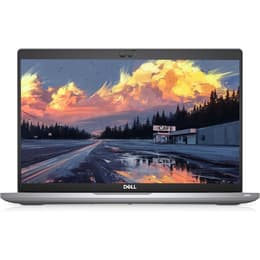
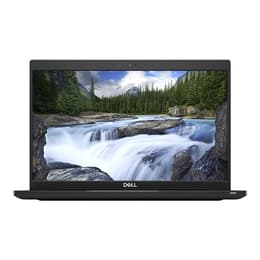


Dell Latitude 5420 14" Vs Dell Latitude 7390 13"

Dell Latitude 5420 14"
Starting at

Refurbished price:263.52

Versus €986.84 new

See options
Dell Latitude 7390 13"
Starting at

Refurbished price:395.00

Versus €733.00 new

See options

The Dell Latitude 5420 14 and the Dell Latitude 7390 13 are business-oriented laptops from Dell's Latitude series, designed for productivity and reliability. The Latitude 5420, released in early 2021, features a 14-inch display, while the Latitude 7390, launched in 2018, offers a more compact 13.3-inch form factor. Both devices run on the Windows operating system, but the 5420 benefits from a newer generation of internal components and updated connectivity standards.

Scores

Durability

When considering the longevity of these devices, their release timelines and potential for ongoing software support are key factors. The Dell Latitude 5420, released in early 2021, benefits from a more recent launch date, suggesting a longer period of official operating system updates and security patches compared to the Latitude 7390, which debuted in 2018.

  • Software Support: The Latitude 5420 ships with Windows 10 Pro and is upgradeable to Windows 11 Pro, ensuring several more years of software support and access to the latest features. The Latitude 7390, while running Windows 10 Pro, is older, meaning its end-of-life for major OS updates will arrive sooner.
  • Repairability: The Latitude 5420 is noted for its relatively straightforward repair process, with easily accessible components like RAM and SSD once the back panel is removed. The CPU, however, is soldered to the motherboard. The Latitude 7390 does not feature an easily accessible maintenance hatch, and its battery is not externally removable.
  • Expected Lifespan: Both models are built for business use, implying a robust construction. However, the newer components and longer software support window of the 5420 generally translate to a longer practical lifespan for daily use.

Year of Release

2020

2017

Last Os Compatibility

Yes

Yes

OS

Windows 11

Windows 11

Performance

The performance capabilities of these two Latitude models reflect their respective generations, impacting how smoothly they handle daily tasks and demanding applications.

  • Processor Capabilities: The Latitude 5420 is equipped with 11th Generation Intel Core processors, providing robust performance for typical business applications and multitasking. Users can expect a smooth and responsive experience, even with several applications running simultaneously. The Latitude 7390, featuring 8th Generation Intel Core processors, offers speedy performance for its time and can handle multitasking effectively, though it may show limitations with more intensive modern software.
  • Memory and Storage: The Latitude 5420 supports DDR4 3200 MHz RAM, configurable up to 64GB across two SODIMM slots, and utilizes M.2 PCIe NVMe SSDs for fast data access and application loading. The Latitude 7390 uses DDR4 2400 MHz RAM, typically up to 16GB, and offers M.2 SATA SSD storage, which provides good speed but is generally slower than NVMe.
  • Battery Behavior: The Latitude 5420, with its 42 Whr or 63 Whr battery options, is reported to offer all-day battery life, with some configurations lasting through two workdays on a single charge. It also supports fast charging. The Latitude 7390, available with 45Whr or 60Whr batteries, also provides long battery life, often exceeding 10 hours in video streaming tests with the larger battery.

Memory (GB)

16 GB

8 GB

Processor

Core i5-1135G7

Core i7 - Gen 8 (U)

Graphic card

Integrated Graphics

Integrated Graphics

Screen quality

The visual experience on these laptops is influenced by their display technology, resolution, and brightness levels, catering to different user preferences and working environments.

  • Display Technology and Resolution: Both the Latitude 5420 and 7390 feature IPS panels with Full HD (1920 x 1080) resolution, offering comfortable viewing angles. The 5420 has a 14-inch display, while the 7390 has a 13.3-inch display, making the 7390 slightly more compact.
  • Brightness and Clarity: The Latitude 5420 offers various brightness options, ranging from 220 nits to 400 nits for higher-end FHD panels, with some configurations averaging around 281-311 nits. The 7390 typically provides around 286 nits of brightness, with some 2-in-1 models reaching 307 nits. Both displays feature an anti-glare coating, which is beneficial for reducing reflections in varied lighting conditions.
  • Refresh Rate and Smoothness: Both models feature a standard 60 Hz refresh rate, which is suitable for general productivity tasks and media consumption. Neither is designed for high-refresh-rate gaming or professional video editing that demands extremely fluid motion.

Resolution

1920 x 1080

1920 x 1080

Screen type

IPS

IPS

Camera

Audiovisual

For communication and media consumption, the audio-visual components of these laptops present some differences, particularly in camera quality and speaker output.

  • Camera System: The Latitude 5420 includes a 720p HD RGB camera, with some configurations offering an IR camera for facial recognition via Windows Hello. The Latitude 7390 also features an HD webcam, and many models include an IR camera for facial recognition. User reports suggest the 7390's camera captures average-brightness, slightly soft-focus shots.
  • Microphone Quality: The Latitude 5420 is equipped with dual-array microphones, designed to improve clarity during calls and recordings. Specific details on the 7390's microphone quality are less prominent in reviews, but it includes standard integrated microphones for communication.
  • Speaker Output: The Latitude 5420 features stereo speakers with Realtek Waves MaxxAudio Pro, described by users as clear and crisp with a hint of bass, comparable to quality external Bluetooth speakers. In contrast, the speakers on the Latitude 7390 have been noted as "shoddy" or offering "slim sound" by some reviewers.

Miscellaneous

Beyond core performance and display, several practical elements contribute to the overall user experience, including connectivity, physical design, and security features.

  • Connectivity Options: The Latitude 5420 offers more modern connectivity, including Wi-Fi 6 (802.11ax) and Bluetooth 5.1 or 5.2, alongside two Thunderbolt 4 USB-C ports, two USB-A 3.2 Gen 1 ports, HDMI 2.0, and an RJ-45 Ethernet port. The Latitude 7390 features Wi-Fi 5 (802.11ac) and Bluetooth 4.2, with one or two Thunderbolt 3 USB-C ports, two USB 3.0/3.1 Gen1 ports, HDMI, and an RJ-45 Ethernet port.
  • Physical Design and Handling: The Latitude 5420 has a starting weight of approximately 1.37 kg (3.03 lbs) and dimensions of 321.4 x 212 x 19.3 mm. Its chassis is reinforced with carbon fiber and magnesium, contributing to its robust feel. The Latitude 7390 is lighter, starting from 1.17 kg (2.59 lbs), and more compact at 305 x 208 x 16 mm. It features a magnesium alloy or carbon fiber reinforced chassis and is MIL-STD 810G tested for durability.
  • Security and Ports: Both laptops include essential security features like fingerprint readers and IR cameras for Windows Hello facial recognition, along with Smart Card readers. The 5420 also has a proximity sensor for Express Sign-in. Both offer a universal audio jack and microSD card readers.

Weight

1400 g

1500 g

Screen size

14

13

User feedback for the Dell Latitude 5420 often praises its strong performance for business tasks, good battery life, and comprehensive port selection, including modern Thunderbolt 4 connectivity. Some users appreciate its robust build quality and the option for a brighter display. Criticisms sometimes point to the display's color accuracy in some configurations and the overall design being functional rather than aesthetically striking. The Latitude 7390 is frequently lauded for its compact size, long battery life, and vivid matte touchscreen. However, common criticisms include its dated design, less-than-ideal keyboard feel, and subpar speaker quality. Users also note that the fans can sometimes run frequently.

Users prioritizing a more modern device with enhanced processing power, faster RAM, and the latest connectivity standards like Wi-Fi 6 and Thunderbolt 4 may prefer the Dell Latitude 5420. Its larger 14-inch screen and potentially brighter display options also cater to those who value screen real estate and outdoor visibility. Conversely, users who prioritize a highly portable and lightweight device with a slightly smaller footprint may lean toward the Dell Latitude 7390. While its design and internal components are older, it still offers solid performance for everyday productivity and excellent battery endurance. For those seeking an eco-friendly and quality-assured alternative, considering a refurbished version of either model can be a sustainable choice, offering a reliable device that aligns with environmental consciousness.

See all articles

Our recent comparisons