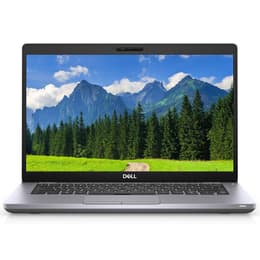
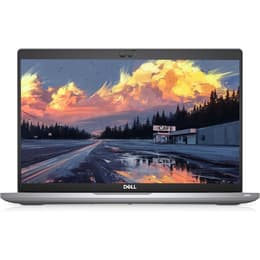


Dell Latitude 5410 14" Vs Dell Latitude 5420 14"

Dell Latitude 5410 14"
Starting at

Refurbished price:312.12

Versus €1,167.40 new

See options
Dell Latitude 5420 14"
Starting at

Refurbished price:263.52

Versus €986.84 new

See options

Ratings

The Dell Latitude 5410, released in 2020, and the Dell Latitude 5420, launched in early 2021, are both 14-inch business-oriented laptops from Dell's Latitude 5000 series. While they share a similar design philosophy focused on productivity and durability, the 5420 introduces a newer generation of internal components and updated connectivity options. Both devices run on the Windows operating system, offering a familiar experience for most users.

Scores

Durability

These two laptops, being part of Dell's business line, are designed for longevity and receive consistent software support. The primary difference in their expected practical lifespan stems from their release dates and the generation of their core components.

  • Release Timeline: The Latitude 5410 was released in June 2020, while the Latitude 5420 followed in early 2021. This means the 5420 benefits from an additional year of potential operating system and security updates, extending its software longevity.
  • OS Support: Both models are compatible with current Windows updates, but the newer 5420 will likely receive official support for a longer duration due to its later release.
  • Repairability: Both the 5410 and 5420 are considered relatively easy to repair, with accessible internal components like RAM and SSDs. However, the CPU in both models is soldered to the motherboard, meaning it cannot be individually replaced.

Year of Release

2020

2020

Last Os Compatibility

Yes

Yes

OS

Windows 11

Windows 11

Performance

Performance in both the Latitude 5410 and 5420 is geared towards business and productivity tasks, though the newer model offers a noticeable uplift due to its updated architecture.

  • Processor Capabilities: The Latitude 5410 features 10th Generation Intel Core processors, providing solid performance for everyday office applications, web browsing, and multitasking. The Latitude 5420, on the other hand, incorporates 11th Generation Intel Core processors, which deliver improved single-core and multi-threading performance, resulting in smoother operation for more demanding applications and a more responsive overall experience.
  • Memory and Storage: Both laptops typically come with DDR4 RAM and M.2 NVMe SSDs for fast boot times and application loading. The Latitude 5410 generally supports up to 32GB of RAM, while the 5420 can be configured with up to 64GB, offering more headroom for intensive multitasking. The 5410 may also offer configurations with a 2.5-inch drive bay in addition to an M.2 slot, whereas the 5420 typically features only an M.2 slot for storage.
  • Battery Behavior: The Latitude 5410 often includes a 68 Wh battery, while the 5420 typically has a 63 Wh battery. Despite the slightly smaller capacity, the 5420's more efficient 11th-gen processors can still provide all-day battery life for typical usage.

Memory (GB)

16 GB

16 GB

Processor

Core i5 - Gen 10 (U)

Core i5-1135G7

Graphic card

Integrated Graphics

Integrated Graphics

Screen quality

Both laptops offer 14-inch displays suitable for professional use, but there are distinctions in their panel technology and brightness options that affect the viewing experience.

  • Display Technology and Resolution: Both the Latitude 5410 and 5420 commonly feature 14-inch Full HD (1920x1080) IPS or LCD panels, providing clear visuals for documents and presentations.
  • Brightness Levels: The Latitude 5410 typically offers display options with brightness levels of 220 nits or up to 300 nits for low-power or privacy screens. In contrast, the Latitude 5420 can be configured with brighter 400-nit display options, which can be beneficial for working in well-lit environments or outdoors.
  • Visual Comfort: Some configurations of the 5410 have been noted for using aggressive Pulse Width Modulation (PWM) for brightness control, which can cause eye strain for some users at lower brightness settings. The 5420 generally offers a more consistent visual experience.

Resolution

1920 x 1080

1920 x 1080

Screen type

LCD

IPS

Camera

Audiovisual

For communication and media consumption, both Latitude models provide essential features, with the 5420 offering some refinements in its integrated components.

  • Webcam and Microphone: Both laptops include a 720p HD webcam suitable for video conferencing. The Latitude 5410 features a privacy shutter for the webcam, a useful security addition. The Latitude 5420 also includes a 720p webcam, often paired with dual-array microphones for clearer audio input during calls.
  • Speaker Output: Both models are equipped with integrated speakers designed for business use, providing adequate audio for video calls and general media consumption. Neither is designed for high-fidelity audio experiences.
  • Video Recording: The 720p resolution of the webcams on both devices means video recording quality is functional for standard online meetings but not intended for high-definition content creation.

Miscellaneous

Beyond core performance, several practical elements differentiate the user experience and connectivity options between these two Dell Latitude laptops.

  • Connectivity Options: Both models support Wi-Fi 6 and Bluetooth 5.1 for robust wireless connections. The Latitude 5420 distinguishes itself with the inclusion of Thunderbolt 4 ports, offering faster data transfer speeds and more versatile connectivity for external displays and peripherals compared to the Latitude 5410's USB 3.2 Gen 2 Type-C port.
  • Physical Ports: The 5410 typically includes three USB-A 3.0/3.1 Gen1 ports, one USB-C, HDMI, Ethernet, and a microSD card reader. The 5420 generally offers two USB-A 3.2 ports, two Thunderbolt 4 ports, HDMI, Ethernet, and an SD card reader, providing a more modern port selection.
  • Weight and Dimensions: The Latitude 5420 is slightly lighter, weighing around 1.4 kg, compared to the 5410's approximate 1.595 kg, making the newer model marginally more portable for users on the go.
  • Security Features: Both laptops incorporate enterprise-grade security features such as TPM chips, optional fingerprint readers, and SmartCard readers. The 5410 also offers an IR webcam for facial recognition login.

Weight

1520 g

1400 g

Screen size

14

14

User feedback for the Dell Latitude 5410 often praises its robust build quality and comfortable keyboard, making it a reliable workhorse for daily tasks. However, some users have reported concerns regarding potential heat-up issues and occasional touchpad inconsistencies. The display quality, particularly in some configurations, has also been a point of criticism due to lower brightness and aggressive PWM.

The Dell Latitude 5420 generally receives positive remarks for its improved performance, especially with the 11th-generation processors, and its excellent keyboard. Its enhanced connectivity with Thunderbolt 4 ports is also a frequently cited advantage. Conversely, some users have expressed dissatisfaction with the touchpad, describing it as less responsive or even unusable in certain instances. The chassis, while solid, is noted for being plastic and prone to showing scratches over time.

For users prioritizing a more modern processor, enhanced graphics capabilities, and versatile Thunderbolt 4 connectivity for future-proofing, the Dell Latitude 5420 will be well-suited. Its brighter display options also make it a better choice for varied lighting conditions. On the other hand, users who value a potentially larger battery capacity and a wider array of legacy USB-A ports might lean towards the Dell Latitude 5410. Both models offer a solid foundation for business and productivity, and considering a quality-assured refurbished option for either can be an eco-friendly alternative for budget-conscious individuals seeking reliable performance.

See all articles

Our recent comparisons