

Dell Latitude 5410 14" Vs Dell Latitude 7390 13"

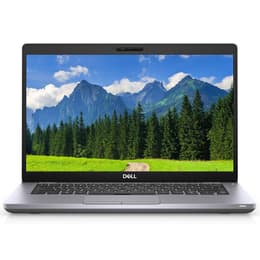
Dell Latitude 5410 14"
Starting at

Refurbished price:312.12

Versus €1,167.40 new

See options
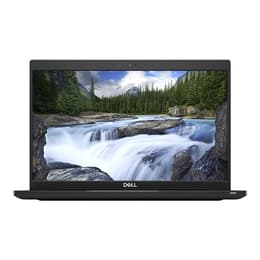
Dell Latitude 7390 13"
Starting at

Refurbished price:395.00

Versus €733.00 new

See options

The Dell Latitude 5410 14 and the Dell Latitude 7390 13 are business-oriented laptops designed for productivity and reliability. Released in 2020 and 2018, respectively, these models offer distinct advantages based on their generation and design philosophy. While the Latitude 5410 provides a larger display and more recent internal components, the Latitude 7390 emphasizes portability with its more compact form factor. Both devices run on the Windows operating system, offering a familiar user experience for professionals and students.

Scores

Durability

When considering the longevity of these laptops, several factors come into play, primarily their release dates and the subsequent duration of software support and hardware resilience.

  • Release Timeline and OS Support: The Dell Latitude 5410, released in Q2 2020, benefits from a more recent launch, typically translating to a longer period of official operating system updates and security patches compared to the Latitude 7390, which debuted in Q1 2018. This difference means the 5410 will likely receive software support for an additional two years.
  • Practical Lifespan: Both Latitude models are built for business use, implying a focus on durability. The Latitude 7390 is MIL-STD 810G tested against various environmental extremes, suggesting a robust build. The Latitude 5410 also features a durable chassis, often reinforced with carbon fiber and magnesium, and has undergone MIL-STD testing.
  • Repairability: Both laptops offer reasonable repairability. The Latitude 5410 allows for upgrades to RAM and storage, with most components being replaceable rather than soldered, except for the CPU. Similarly, the Latitude 7390 is noted for its ease of service, allowing users to upgrade RAM, SSD, and other main components.

Year of Release

2020

2017

Last Os Compatibility

Yes

Yes

OS

Windows 11

Windows 11

Performance

The performance of these laptops is largely influenced by their respective generations of internal components, impacting how smoothly they handle daily tasks and more demanding applications.

  • Processor Capabilities: The Latitude 5410 features 10th Generation Intel Core processors, offering improved efficiency and processing power for multitasking and modern applications. The Latitude 7390, equipped with 8th Generation Intel Core processors, provides solid performance for everyday office tasks, web browsing, and light work. Users of the 5410 may experience slightly faster application loading and smoother transitions between tasks due to its newer processor architecture.
  • Storage and RAM: Both models typically come with fast M.2 PCIe NVMe SSDs, ensuring quick boot times and responsive data access. The Latitude 5410 supports up to 64GB of DDR4 RAM across two SODIMM slots, providing substantial headroom for heavy multitasking and professional software. The Latitude 7390 generally supports up to 16GB of DDR4 RAM, which is sufficient for most productivity needs, though some configurations might support more.
  • Battery Behavior: The Latitude 5410 offers various battery capacities (42 Wh, 51 Wh, or 68 Wh), with larger options providing extended usage times, some reporting up to 15 hours in Wi-Fi tests. The Latitude 7390 typically includes a 60 Wh battery, known for delivering long battery life, often exceeding 10 hours of use.

Memory (GB)

16 GB

8 GB

Processor

Core i5 - Gen 10 (U)

Core i7 - Gen 8 (U)

Graphic card

Integrated Graphics

Integrated Graphics

Screen quality

The visual experience on these laptops differs primarily in screen size and display characteristics, which can influence user comfort and productivity.

  • Display Technology and Resolution: Both laptops feature Full HD (1920x1080) IPS anti-glare displays, providing clear visuals and good viewing angles. The Latitude 5410 has a 14-inch screen, offering a slightly larger workspace, while the Latitude 7390 features a more compact 13.3-inch display.
  • Brightness and Clarity: The Latitude 5410's display options include brightness levels ranging from 220 to 300 nits, with some low-power or privacy screen variants. The Latitude 7390's display typically offers around 255 nits of brightness. While both are suitable for indoor use, the 5410's brighter options may offer a better experience in well-lit environments.
  • Refresh Rate and Viewing Experience: Both models generally feature a 60Hz refresh rate, providing a smooth experience for general computing tasks. Some Latitude 5410 configurations also mention a dual refresh rate of 48Hz/60Hz. User feedback for the 5410 sometimes notes that the display, while functional, may have limited sRGB color coverage and use PWM at lower brightness levels.

Resolution

1920 x 1080

1920 x 1080

Screen type

LCD

IPS

Camera

Audiovisual

For communication and multimedia consumption, both laptops offer standard features, with some distinctions in their audio and visual components.

  • Camera System: Both the Dell Latitude 5410 and 7390 are equipped with an HD webcam, suitable for video conferencing and online meetings. The Latitude 5410 often includes a privacy shutter for the webcam, offering an added layer of security.
  • Microphone Quality: Both devices integrate microphones designed for clear voice capture during calls. The 5410 includes an integrated microphone, and the 7390 also features a microphone for communication.
  • Speaker Output: The Latitude 5410 typically features dual 2W speakers, providing adequate audio for media consumption and video calls. The Latitude 7390's speakers are located under the front edge, and some user reviews have noted that the speaker quality could be improved.
  • Video Recording: The HD webcams on both laptops support standard video recording quality for their class, suitable for general use rather than high-fidelity content creation.

Miscellaneous

Beyond core performance, several practical elements contribute to the overall user experience, including connectivity, physical design, and security features.

  • Connectivity Options: The Latitude 5410 supports Wi-Fi 6 (802.11ax) and Bluetooth 5.1, offering faster wireless speeds and improved efficiency compared to the Latitude 7390's Wi-Fi 802.11ac and Bluetooth 4.2. Both models offer optional LTE for mobile broadband.
  • Port Types: The Latitude 5410 includes a USB 3.2 Gen 2 Type-C port with DisplayPort Alt Mode and Power Delivery, and optional Thunderbolt 3 support, alongside three USB 3.2 Gen 1 Type-A ports, HDMI 1.4b, and an RJ-45 Ethernet port. The Latitude 7390 features a USB-C port (with optional Thunderbolt 3), two USB-A 3.1 Gen 1 ports, HDMI 1.4, and an RJ-45 Ethernet port.
  • Weight and Dimensions: The Latitude 7390 is the more portable option, starting at 1.17 kg (2.58 lbs) with dimensions of 305 x 208 x 16.5 mm. The Latitude 5410 is slightly larger and heavier, starting at 1.47 kg (3.25 lbs) with dimensions of 323.05 x 216 x 20.35 mm.
  • Security Features: Both laptops offer enterprise-grade security features, including optional fingerprint readers and facial recognition via IR cameras. The 5410 also features a TPM chip and lock slot, with Intel vPro support for remote management. The 7390 is MIL-STD 810G certified and supports vPro.

Weight

1520 g

1500 g

Screen size

14

13

Choosing between the Dell Latitude 5410 14 and the Dell Latitude 7390 13 depends heavily on individual priorities regarding performance, portability, and longevity. The Latitude 5410, being the newer model, generally offers more current processing power and potentially longer software support, making it a suitable choice for users who prioritize future-proofing and slightly more demanding workloads. Its larger 14-inch display provides a more expansive workspace, which can be beneficial for productivity-focused tasks. However, some users have noted concerns about its display quality in certain configurations and occasional fan noise.

Conversely, the Latitude 7390 stands out for its enhanced portability with a lighter and more compact 13.3-inch design. It delivers reliable performance for everyday tasks and light work, and its battery life is frequently praised for lasting through a full workday. Criticisms often point to its slightly dated design and a keyboard that some users find less comfortable for extended typing. There have also been some reports of higher failure rates in certain batches, including issues like random freezing and overheating.

Users prioritizing a more compact and lightweight device for frequent travel, where solid everyday performance and long battery life are key, may find the Latitude 7390 well-suited to their needs. Those who require more processing power for multitasking, a slightly larger screen, and a longer window of software updates might lean towards the Latitude 5410. Both models, when considered as quality-assured refurbished options, represent an eco-friendly alternative for consumers seeking reliable business laptops.

See all articles

Our recent comparisons