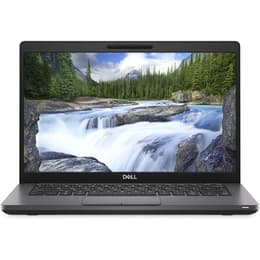
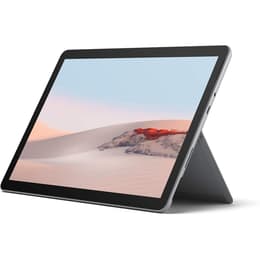


Dell Latitude 5400 14" Vs Microsoft Surface Go 2 10"

Dell Latitude 5400 14"
Starting at

Refurbished price:250.00

Versus €1,030.00 new

See options
Microsoft Surface Go 2 10"
Starting at

Refurbished price:249.00

Versus €590.00 new

See options

Ratings

The Dell Latitude 5400, released in May 2019, is a 14-inch business-oriented laptop designed for productivity. In contrast, the Microsoft Surface Go 2, launched in May 2020, is a 10.5-inch 2-in-1 detachable tablet computer focused on portability and versatility. Both devices run on the Windows operating system, offering a familiar software environment, but cater to different user needs through their distinct form factors and core capabilities.

Scores

Durability

When considering the longevity of these devices, several factors come into play, including their release timelines, operating system support, and repairability.

  • Release Timeline: The Dell Latitude 5400 was released in May 2019, making it an older model compared to the Microsoft Surface Go 2, which debuted in May 2020. This difference in release year can impact the duration of future software updates and overall support.
  • Software Longevity: The Dell Latitude 5400 supports Windows 10 and is compatible with Windows 11, extending its usable lifespan beyond the Windows 10 end-of-support date. The Surface Go 2 also shipped with Windows 10 Home in S mode and is compatible with Windows 11, though its driver and firmware servicing period concluded in December 2024.
  • Repairability: The Dell Latitude 5400, as a business laptop, generally offers more accessible internal components for upgrades and repairs, such as RAM and storage. The Surface Go 2 received an iFixit repairability score of 3 out of 10, indicating that while it is somewhat easier to open than its predecessor, components like RAM and storage are soldered, and the display can be fragile during disassembly.

Year of Release

2017

2019

Last Os Compatibility

Yes

Yes

OS

Windows 11

Windows 11

Performance

The performance of these devices is largely influenced by their internal components, affecting how smoothly they handle daily tasks and more demanding applications.

  • Processing Power: The Dell Latitude 5400 is equipped with 8th Generation Intel Core i3, i5, or i7 processors, providing robust performance suitable for typical business workloads and multitasking. The Surface Go 2 features either an Intel Pentium Gold 4425Y or an 8th Gen Intel Core m3-8100Y processor, which are designed for lighter tasks and offer adequate performance for everyday use, though the base models may feel less responsive with multiple demanding applications.
  • Multitasking and Responsiveness: The Latitude 5400 typically comes with 8GB or 16GB of DDR4 RAM, configurable up to 32GB or 64GB, allowing for efficient multitasking and smooth operation across numerous applications. The Surface Go 2 offers 4GB or 8GB of RAM, which is sufficient for web browsing, document editing, and streaming, but may experience slowdowns when running many applications simultaneously.
  • Storage Speed: The Latitude 5400 commonly utilizes NVMe PCIe M.2 SSDs, offering fast boot times and quick application loading. Some configurations also include a 2.5-inch SATA drive option. The Surface Go 2 offers configurations with either slower eMMC storage or faster SSDs, with the SSD options providing a more responsive user experience.

Memory (GB)

16 GB

8 GB

Processor

Core i5 - Gen 8 (U)

Pentium Gold 4425Y

Graphic card

Integrated Graphics

Integrated Graphics

Screen quality

The visual experience on both devices differs significantly due to their display technologies, resolutions, and sizes.

  • Display Technology and Size: The Dell Latitude 5400 features a 14-inch display, with options for HD (1366x768) or Full HD (1920x1080) panels, some of which are touch-enabled and include anti-glare properties. The Microsoft Surface Go 2 has a smaller 10.5-inch PixelSense Display with a resolution of 1920x1280, offering a crisp image in a more compact form factor.
  • Clarity and Brightness: Both devices typically offer a brightness level around 220 nits, which is adequate for indoor use but may be less ideal for bright outdoor environments. The Surface Go 2's higher pixel density on its smaller screen results in a sharp visual experience.
  • Refresh Rate and Touch: Both the Latitude 5400 and Surface Go 2 feature a standard 60Hz refresh rate, providing a smooth visual experience for general computing tasks. The Surface Go 2's display is a 10-point multi-touch screen with Corning Gorilla Glass 3 for durability, while touch is an optional feature on some Latitude 5400 configurations.

Resolution

1920 x 1080

1920 x 1280

Screen type

IPS

IPS

Camera

Audiovisual

The audio-visual capabilities, particularly the camera systems and sound output, cater to different usage scenarios for each device.

  • Camera System: The Dell Latitude 5400 typically includes an HD front-facing webcam, often with an IR camera for Windows Hello facial recognition and a privacy shutter. The Microsoft Surface Go 2 features a 5MP front-facing camera capable of 1080p video and an 8MP rear-facing camera with autofocus, also supporting Windows Hello via an infrared sensor.
  • Photography and Video Quality: The Surface Go 2's cameras are designed for video calls and casual photography, offering decent quality for its class. The Latitude 5400's webcam is primarily for video conferencing.
  • Audio Experience: The Surface Go 2 includes built-in stereo speakers with Dolby Audio, providing a good media consumption experience for its size. The Latitude 5400 offers standard laptop speakers, suitable for video calls and general audio playback. Both devices include a 3.5mm headphone jack.

Miscellaneous

Beyond core specifications, practical elements like connectivity, ports, and physical design contribute to the overall user experience.

  • Connectivity: The Dell Latitude 5400 supports Wi-Fi 5 and includes an RJ-45 Ethernet port for wired network connections, along with Bluetooth. The Surface Go 2 supports Wi-Fi 6 and Bluetooth 5, with optional 4G LTE Advanced for mobile connectivity.
  • Port Selection: The Latitude 5400 offers a comprehensive array of ports, including multiple USB 3.1 Type-A ports, a USB 3.1 Type-C port (with optional Thunderbolt 3), HDMI 1.4, an RJ-45 Ethernet port, and a microSD card reader. The Surface Go 2 has a more limited selection, featuring a USB-C port, a Surface Connect port, a microSD card slot, and a 3.5mm headphone jack.
  • Design and Handling: The Latitude 5400 is a traditional clamshell laptop weighing around 1.48 kg, built with a durable polycarbonate chassis and MIL-STD 810G testing for resilience. The Surface Go 2 is a lightweight 2-in-1 tablet, weighing approximately 544 grams, with a magnesium alloy construction and a built-in kickstand for versatile positioning.

Weight

1590 g

800 g

Screen size

14

10

User feedback for the Dell Latitude 5400 frequently highlights its robust build quality and suitability for demanding business environments. Many users praise its comfortable keyboard for extended typing sessions and its long battery life, which often exceeds a full workday. Criticisms sometimes point to its somewhat uninspired design and, in some base configurations, a display that could be brighter or more vibrant.

The Microsoft Surface Go 2 is often lauded for its exceptional portability and premium tablet design, making it a convenient companion for on-the-go tasks. Users appreciate its crisp display and the versatility offered by its kickstand and optional Type Cover. However, common concerns include the need to purchase the keyboard and pen separately, the relatively modest performance of base models for intensive applications, and a battery life that, while improved from its predecessor, may require more frequent charging for heavy users.

Users prioritizing a traditional laptop experience with strong performance, extensive port options, and a durable build for professional or academic work may find the Dell Latitude 5400 well-suited to their needs. Its upgradeable components also offer flexibility for future enhancements. Conversely, individuals seeking a highly portable and versatile 2-in-1 device for light productivity, media consumption, and easy transport will likely lean towards the Microsoft Surface Go 2. This device excels as a secondary computer or for users who value its tablet functionality. Both devices are available as quality-assured refurbished options, providing an eco-friendly alternative for informed purchasing decisions.

See all articles

Our recent comparisons