

Compare models

Dell Latitude 5320 13" Vs Dell Latitude 5520 15"

  • 1-year minimum warranty
  • Free delivery on all orders
  • Free 30-day returns
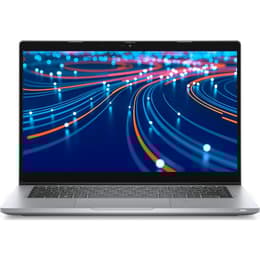
Dell Latitude 5320 13"
Starting at

Refurbished price:260.00

Versus €1,051.43 new

See options
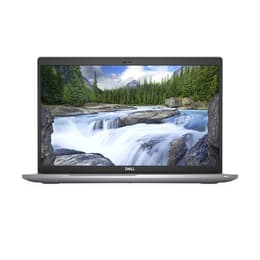
Dell Latitude 5520 15"
Starting at

Refurbished price:330.00

Versus €836.00 new

See options

Differences at a glance

The Dell Latitude 5320 13 and the Dell Latitude 5520 15 are business-oriented laptops released around 2021, designed to cater to professional users. While both models offer robust performance and security features typical of the Latitude series, their primary distinction lies in their form factor and display size, influencing portability versus screen real estate. Both devices operate on the Windows platform, providing a familiar computing experience for business environments.

Available Models

Storage (GB)

Processor

Memory (GB)

Scores

Durability

Both the Dell Latitude 5320 13 and the Dell Latitude 5520 15 were introduced in 2021, placing them in the same generation for software support and expected longevity. As part of Dell's Latitude 5000 series, they are built for business use, suggesting a focus on durability and sustained performance over several years.

  • Software Longevity: Both models are expected to receive operating system updates for a comparable duration, ensuring continued security and feature enhancements for a significant period.
  • Repairability & Upgradability: The Latitude 5320 features integrated RAM, which limits future memory upgrades, though storage remains expandable. In contrast, the Latitude 5520 generally offers two SODIMM slots for RAM, allowing for greater flexibility in memory upgrades, alongside expandable storage.
  • Build Quality: Both laptops incorporate bioplastics in their construction, reflecting an eco-conscious design approach. The 5320's base unit exhibits some flexibility, while its lid is noted for stiffness. The 5520 is generally described as having a solid construction.

Year of Release

2021

2020

OS

Windows 11

Windows 11

Performance

The performance capabilities of the Dell Latitude 5320 13 and 5520 15 are well-suited for professional tasks, with both models offering configurations featuring 11th Generation Intel Core processors. These processors enable smooth operation for demanding business applications, efficient multitasking, and even light creative work.

  • Processing Power: Both laptops deliver responsive performance for everyday computing, handling multiple applications simultaneously without significant slowdowns. Users can expect quick application loading and efficient data processing.
  • Memory and Storage: The Latitude 5320 typically comes with integrated RAM, with configurations offering up to 32GB, and 8GB or more operating in dual-channel mode for improved efficiency. The Latitude 5520 provides more flexibility with two SODIMM slots, supporting up to 64GB of RAM. Both models utilize fast NVMe SSDs for storage, with options extending up to 2TB, ensuring rapid boot times and quick file access.
  • Battery Life: The Latitude 5520 often includes a larger 63Wh battery option, providing extended usage times, with some reports indicating 10 to 14 hours of web browsing on a single charge. The more compact Latitude 5320 typically features a 42Wh battery, offering around 10 hours of use.

Graphic card

Integrated Graphics

Integrated Graphics

Screen quality

The display is a key differentiator between these two Latitude models, primarily due to their varying screen sizes, which impact the overall viewing and working experience.

  • Display Size and Resolution: The Dell Latitude 5320 features a 13.3-inch Full HD (1920x1080) IPS panel, offering a compact viewing area suitable for portability. The Dell Latitude 5520, on the other hand, provides a larger 15.6-inch Full HD (1920x1080) IPS panel, which can be beneficial for multitasking and viewing detailed content. The 5520 also has configurations with UHD options for even greater detail.
  • Brightness and Clarity: The 5320's display typically offers brightness levels ranging from 250 to 400 nits and includes ComfortView Plus technology to reduce blue light emissions, aiming to minimize eye strain. Some configurations of the 5320 may have lower brightness. The 5520 generally provides good brightness and contrast, suitable for various indoor lighting conditions.
  • Panel Type and Finish: Both laptops commonly feature matte, non-touch IPS panels, which help reduce glare and provide wide viewing angles, enhancing comfort during prolonged use.

Resolution

1920 x 1080

1920 x 1080

Screen type

LCD

LCD

Audiovisual

For communication and multimedia, both Dell Latitude models are equipped with standard features designed for business use, focusing on functionality for virtual meetings and basic media consumption.

  • Camera System: Both the Latitude 5320 and 5520 come with integrated HD webcams. Certain configurations may include a privacy shutter for enhanced security and an optional IR sensor for facial recognition login. These cameras are suitable for video conferencing and online collaboration.
  • Microphone Quality: The integrated microphones on both laptops are designed to capture clear audio for calls and virtual meetings, providing a functional experience for professional communication.
  • Speaker Output: Both models feature stereo speakers. User feedback for the 5520 suggests that while functional, the speakers might not offer a premium audio experience compared to some other devices. They are generally adequate for system sounds, voice calls, and casual media playback.
  • Video Recording: The video recording capabilities are standard for business laptops, suitable for basic recording needs rather than high-fidelity content creation.

Miscellaneous

Beyond core performance and display, several practical elements differentiate the user experience between the Dell Latitude 5320 13 and 5520 15, particularly concerning connectivity, physical design, and security features.

  • Connectivity Options: Both laptops support modern wireless standards, including Wi-Fi 6 for fast and reliable internet access, and Bluetooth (either 5.1 or 5.2) for connecting peripherals.
  • Port Selection: The Latitude 5320 offers two Thunderbolt 4 ports, two USB 3.2 Gen 1 ports, an HDMI 2.0 output, a microSD card slot, and an audio jack. Notably, it lacks a built-in Ethernet port. The Latitude 5520 provides a more comprehensive selection, including two Thunderbolt 4 ports, two USB 3.2 Gen 1 ports, HDMI, an RJ45 Ethernet port, an audio jack, and a microSD card reader, catering to a wider range of peripherals and network connections.
  • Physical Attributes: The Latitude 5320 is the more portable option, starting at approximately 1.18 kg (2.61 lb), making it a compact choice for users on the move. The Latitude 5520 is larger and heavier, starting at around 1.59 kg (3.51 lbs), offering a more substantial build and a larger footprint. Both models offer optional security features like fingerprint readers, smart card readers, and IR cameras for enhanced user authentication.

Weight

1200 g

2500 g

Screen size

13

15

What the community thinks

User feedback for the Dell Latitude 5320 13 often highlights its portability and compact design as significant advantages, making it a convenient daily driver for those who frequently travel or work in various locations. Conversely, common criticisms include its integrated RAM, which limits future upgrades, and the absence of a built-in Ethernet port.

The Dell Latitude 5520 15 receives praise for its larger screen, which enhances productivity, and its comfortable keyboard that often includes a numeric keypad, making it suitable for data entry and extended typing sessions. Its broader selection of ports is also frequently appreciated. Some users, however, have noted that the trackpad and speakers might not meet the expectations set by other premium devices.

For users prioritizing a lightweight and compact device for frequent mobility, the Dell Latitude 5320 13 may be the more suitable choice. Its smaller form factor is ideal for carrying between meetings or during commutes. Conversely, professionals who require a larger display for extensive multitasking, a full-sized keyboard for data-intensive work, and a wider array of connectivity options for a more stationary setup will likely find the Dell Latitude 5520 15 better suited to their needs. Both models offer reliable performance for business applications, and considering a quality-assured refurbished option can be an eco-friendly alternative for either device.


Our recent comparisons