

Dell Latitude 5320 13" Vs Microsoft Surface Laptop 4 13"

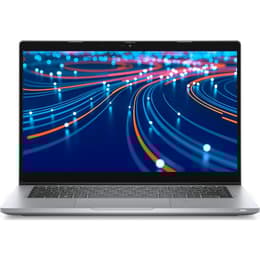
Dell Latitude 5320 13"
Starting at

Refurbished price:307.00

Versus €1,051.43 new

See options
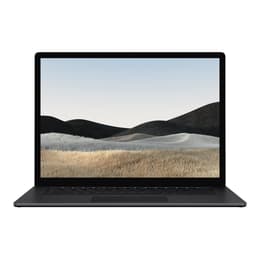
Microsoft Surface Laptop 4 13"
Starting at

Refurbished price:370.00

Versus €754.00 new

See options

Ratings

The Dell Latitude 5320 13-inch and the Microsoft Surface Laptop 4 13.5-inch are both portable laptops released in 2021, designed for productivity and everyday use. While both run on the Windows operating system and offer solid performance for their class, they diverge in design philosophy, display characteristics, and port selection, catering to slightly different user preferences.

Scores

Durability

Both the Dell Latitude 5320 and the Microsoft Surface Laptop 4, released in 2021, benefit from ongoing software support from Microsoft, ensuring they receive Windows updates for several years. The practical lifespan of these devices extends beyond their initial release, supported by continuous security patches and feature updates.

  • Software Longevity: As Windows laptops, both devices are expected to receive regular operating system updates, including security patches and feature enhancements, for an extended period, typically five to seven years from their release.
  • Build Durability: The Dell Latitude 5320 is built with a business-oriented design, often incorporating durable materials and meeting certain military-grade testing standards for resilience. The Surface Laptop 4 features a sleek aluminum chassis, with some configurations offering an Alcantara fabric keyboard deck, providing a premium feel.
  • Repairability Considerations: While specific repairability scores can vary, business-focused laptops like the Latitude series are generally designed with some ease of serviceability in mind. The Surface Laptop 4's SSD is often removable, offering some flexibility for storage upgrades, though other components might be more challenging to access.

Year of Release

2021

2021

Last Os Compatibility

Yes

Yes

OS

Windows 11

Windows 11

Performance

Both laptops are equipped to handle daily computing tasks, offering responsive performance for common applications and multitasking. Their capabilities are influenced by their internal components, including processor, memory, and storage configurations.

  • Processor Capabilities: The Dell Latitude 5320 is powered by 11th-generation Intel processors, providing efficient performance for business applications, web browsing, and light content creation. The Surface Laptop 4 offers a choice between 11th-generation Intel processors and AMD Ryzen 4000 series processors, both delivering smooth operation for everyday tasks, with AMD options often excelling in multi-threaded workloads.
  • Multitasking and Responsiveness: Both devices support ample RAM configurations, typically up to 16GB or 32GB, which allows for efficient multitasking across multiple applications without significant slowdowns. Fast NVMe SSD storage in both models ensures quick boot times and rapid application loading.
  • Battery Behavior: The Dell Latitude 5320, particularly with its larger battery option, can provide up to 13-14 hours of web browsing on a single charge, supporting a full workday. The Surface Laptop 4 generally offers 10-14 hours of real-world usage, with AMD configurations sometimes showing slightly longer endurance under specific workloads.

Memory (GB)

8 GB

16 GB

Processor

Core i5-1135G7

Ryzen 5 4680U

Graphic card

Integrated Graphics

Integrated Graphics

Screen quality

The visual experience on these laptops differs primarily in screen resolution, aspect ratio, and display technology, impacting how content is viewed and interacted with.

  • Display Technology and Resolution: The Dell Latitude 5320 features a 13.3-inch Full HD (1920 x 1080) IPS panel, offering clear visuals and comfortable viewing angles. The Microsoft Surface Laptop 4 comes with a 13.5-inch PixelSense touchscreen display, boasting a higher resolution of 2256 x 1504 pixels, which results in a sharper image.
  • Aspect Ratio and Viewing Experience: The Latitude 5320 utilizes a traditional 16:9 aspect ratio, suitable for media consumption. The Surface Laptop 4 employs a 3:2 aspect ratio, providing more vertical screen real estate, which can be beneficial for productivity tasks like document editing and web browsing.
  • Brightness and Color Accuracy: The Dell Latitude 5320 typically offers brightness levels around 300-400 nits, with some panels covering up to 94% of the sRGB color gamut. The Surface Laptop 4 generally achieves brightness levels between 349 and 390 nits and is noted for its color accuracy, covering a significant portion of the sRGB color space.

Resolution

1920 x 1080

2256 x 1504

Screen type

LCD

LED

Audiovisual

For communication and media consumption, both laptops integrate essential audio and visual components, though with some differences in their specifications and user experience.

  • Webcam Quality: The Dell Latitude 5320 offers various webcam options, including HD, HD IR, or Full HD IR cameras, providing flexibility for different video conferencing needs. The Microsoft Surface Laptop 4 features a 720p HD front-facing camera, which includes Windows Hello face authentication for secure logins.
  • Microphone and Speaker Performance: Both laptops are equipped with integrated microphones for clear voice capture during calls. The Surface Laptop 4 specifically highlights dual far-field Studio Mics designed to reduce background noise and Omnisonic Speakers with Dolby Audio for an enhanced media experience. The Dell Latitude 5320 also includes standard stereo speakers.
  • Video Recording Features: While neither laptop is primarily designed for professional video production, their integrated webcams are suitable for standard video calls and online meetings. The Surface Laptop 4's 720p camera provides adequate quality for these purposes, even in lower light conditions.

Miscellaneous

Beyond core performance and display, practical features such as connectivity, physical ports, and overall design contribute to the daily usability and portability of these laptops.

  • Connectivity and Ports: The Dell Latitude 5320 offers comprehensive connectivity, including Wi-Fi 6, Bluetooth 5.2, and notably, two Thunderbolt 4 (USB-C) ports, alongside two USB-A 3.2 Gen 1 ports, HDMI 2.0, and a microSD card reader. The Surface Laptop 4 includes Wi-Fi 6 and Bluetooth 5.0, with a port selection consisting of one USB-A, one USB-C (without Thunderbolt support on some configurations), a 3.5mm headphone jack, and a proprietary Surface Connect port for charging and docking.
  • Weight and Dimensions: The Dell Latitude 5320 starts from approximately 1.18 kg (2.61 lbs) and measures 305.7 x 207.5 x 16.9 mm, making it a compact and manageable device. The Microsoft Surface Laptop 4 is similarly lightweight, ranging from 1.265 to 1.288 kg (2.79-2.84 lbs), with dimensions of 308 x 223 x 14.5 mm, contributing to its portability.
  • Build Materials and Features: The Latitude 5320 features a robust, business-focused chassis, with some models incorporating sustainable bioplastics. It also offers optional security features like a fingerprint reader and IR face recognition. The Surface Laptop 4 boasts a sleek, minimalist design with an aluminum body, and some versions feature a distinctive Alcantara fabric finish on the keyboard deck.

Weight

1200 g

1288 g

Screen size

13

13

User feedback for the Dell Latitude 5320 often highlights its reliability, robust build quality, and comprehensive port selection as key strengths, particularly for professional environments. Users appreciate its consistent performance for everyday business tasks and the security features it offers. Some common observations include its more traditional design compared to consumer-oriented laptops.

The Microsoft Surface Laptop 4 is frequently praised for its premium design, comfortable keyboard, and high-resolution 3:2 aspect ratio display, which many find ideal for productivity. Its strong battery life and responsive performance are also commonly cited positives. However, some users express concerns about the limited port selection, particularly the absence of Thunderbolt on some configurations, and the 720p webcam resolution.

Users prioritizing extensive connectivity, including Thunderbolt 4, and a more traditional business-grade build might find the Dell Latitude 5320 better suited to their needs. Conversely, those who value a premium, sleek design, a higher-resolution 3:2 touchscreen display, and an exceptional typing experience may lean towards the Microsoft Surface Laptop 4. Both devices offer a solid Windows experience for productivity and daily use. For those seeking an eco-friendly alternative, quality-assured refurbished options for both models are available, providing a sustainable choice without compromising on performance.
See all articles

Our recent comparisons