
Xiaomi Redmi Note 14 4G Vs Xiaomi Redmi Note 14 Pro

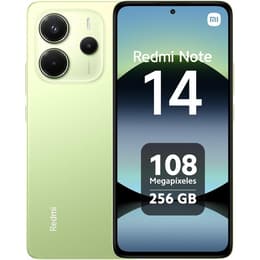
Xiaomi Redmi Note 14 4G
Starting at

Refurbished price:162.00

Versus €229.99 new

See options
Xiaomi Redmi Note 14 Pro
Starting at

Refurbished price:260.77

Versus €349.99 new

See options

Ratings

The Xiaomi Redmi Note 14 4G and the Xiaomi Redmi Note 14 Pro represent different tiers within Xiaomi's mid-range smartphone offerings, both released in early 2025. While they share the same operating system, HyperOS based on Android 14, the Pro model generally introduces enhancements in display technology, camera capabilities, and overall performance. These differences cater to users with varying priorities, from everyday functionality to more demanding tasks and advanced photography.

Scores

Durability

When considering the longevity of these devices, several factors come into play, including software support, physical durability, and component quality. Both models are part of Xiaomi's ecosystem, which has a stated policy for software updates.

  • Software Support: Xiaomi generally provides several years of security updates and multiple Android OS upgrades for its Redmi Note series. The Redmi Note 14 4G is expected to receive flagship-level longevity in terms of security updates, while the Redmi Note 14 Pro 5G is anticipated to receive up to three major Android upgrades. [6, 25, 27, 35]
  • Physical Durability: The Redmi Note 14 4G features Gorilla Glass 5 protection for its display and an IP54 rating, offering resistance against dust and splashes. [2, 4, 13, 26] The Redmi Note 14 Pro elevates this with Corning Gorilla Glass Victus 2 on the front and a higher IP68 rating for the 5G variant, indicating more robust water and dust resistance. [3, 9, 15, 16, 23]
  • Expected Lifespan: Both devices are built for sustained use, with their respective durability features contributing to their practical lifespan. The Pro model's enhanced ingress protection and display glass may offer a slight edge in resisting accidental damage over time.

Year of Release

2025

2025

OS

Android

Android

Foldable

No

No

Performance

The performance of these smartphones is largely determined by their internal components, influencing how smoothly they handle daily tasks, multitasking, and more intensive applications.

  • Processor Capabilities: The Redmi Note 14 4G is equipped with a MediaTek Helio G99-Ultra processor, which provides a smooth and balanced experience for everyday use and casual gaming. [1, 2, 34] The Redmi Note 14 Pro, particularly the 5G variant, features a MediaTek Dimensity 7300 Ultra processor, which offers stronger performance for demanding applications and more graphically intensive games. [3, 15, 20, 25] The 4G version of the Pro model may use a MediaTek Helio G100-Ultra, which is an improvement over the G99 but still positions it for mid-range performance. [9, 17, 31]
  • Multitasking and Storage: Both devices offer various RAM configurations, typically ranging from 6GB to 12GB, allowing for efficient multitasking. The Redmi Note 14 4G supports expandable storage via a hybrid microSD slot, while some configurations of the Redmi Note 14 Pro may not offer expandable storage. [2, 4, 15, 16]
  • Battery Behavior: The Redmi Note 14 4G houses a 5500 mAh battery, providing long-lasting power for extended usage. [1, 10, 11] The Redmi Note 14 Pro also features a substantial battery, with the 5G variant having a 5110 mAh capacity and the 4G Pro model offering 5500 mAh. [3, 9, 16] The Pro model generally supports faster 45W wired charging compared to the 33W charging on the Redmi Note 14 4G, allowing for quicker recharges. [1, 3, 9, 17]

Memory (GB)

6 GB

8 GB

Screen quality

The visual experience on a smartphone is heavily influenced by its display, with differences in technology, resolution, and brightness impacting clarity and vibrancy.

  • Display Technology and Clarity: Both the Redmi Note 14 4G and the Redmi Note 14 Pro feature a 6.67-inch AMOLED display, known for deep blacks and vibrant colors. The Redmi Note 14 4G offers a 1080p resolution, providing clear visuals for daily content consumption. [1, 4] The Redmi Note 14 Pro, especially the 5G variant, steps up with a 1.5K resolution (1220x2712 pixels), resulting in a higher pixel density and sharper image quality. [3, 6, 20, 25, 30]
  • Brightness and Smoothness: Both models boast a 120Hz refresh rate for smooth scrolling and animations. [1, 4, 10] The Redmi Note 14 4G achieves a peak brightness of 1800 nits, ensuring good visibility outdoors. [4, 8, 10] The Redmi Note 14 Pro can reach an even higher peak brightness of 3000 nits (for the 5G variant), enhancing outdoor readability and HDR content viewing. [3, 6, 7, 15, 25] The Pro model also features 10-bit color depth and 1920Hz PWM dimming for improved color accuracy and reduced eye strain. [3, 5, 9, 16]
  • Protection: The Redmi Note 14 4G is protected by Corning Gorilla Glass 5, while the Redmi Note 14 Pro (5G variant) features the more advanced Corning Gorilla Glass Victus 2 for enhanced scratch and drop resistance. [3, 4, 13, 15, 16, 23]

Resolution

1080x2400

1080x2400

Audiovisual

The camera systems on these devices offer different capabilities, catering to various photography and videography needs.

  • Rear Camera System: The Redmi Note 14 4G features a 108MP main camera, accompanied by 2MP macro and 2MP depth sensors. It notably lacks an ultrawide camera, which was present in some previous generations. [1, 2, 4, 8] The main sensor performs well in good lighting conditions, capturing detailed photos, but struggles in low-light environments due to the absence of Optical Image Stabilization (OIS). [2, 22, 37] The Redmi Note 14 Pro significantly upgrades the main camera to a 200MP sensor with OIS, delivering highly detailed and color-accurate images, even in challenging lighting. [9, 12, 15, 16, 17, 19, 25, 29] It also includes an 8MP ultrawide lens and a 2MP macro camera. [9, 15, 16, 17]
  • Video Recording: The Redmi Note 14 4G is limited to 1080p video recording, with decent stabilization but average detail. [1, 37] The Redmi Note 14 Pro (5G variant) is capable of recording 4K video at 30fps from its main camera, offering higher detail and flexibility for video content creators. [19, 25] However, some users of the 4G Pro model have reported issues or a lack of 4K video recording. [14, 31, 42]
  • Front Camera: Both devices feature capable front-facing cameras. The Redmi Note 14 4G has a 20MP selfie camera, which produces decent shots. [2, 4, 11] The Redmi Note 14 Pro offers either a 20MP or 32MP front camera, capable of capturing good selfies with natural tones and crisp details. [9, 15, 16, 25, 29]

Miscellaneous

Beyond the core specifications, several practical features contribute to the overall user experience and device utility.

  • Connectivity and Ports: The Redmi Note 14 4G supports 4G LTE connectivity, Wi-Fi 5, and Bluetooth 5.3. It retains a 3.5mm headphone jack and features a USB-C port. [8, 9, 11, 26, 37] The Redmi Note 14 Pro 5G offers next-generation 5G connectivity, Wi-Fi 6, and Bluetooth 5.4. [7, 15] While it also has a USB-C port, some Pro models may omit the 3.5mm headphone jack. [7, 9, 15, 18]
  • Biometric Security: Both smartphones incorporate an in-display fingerprint sensor for secure and convenient unlocking. [9, 11, 22] They also support AI Face Unlock. [9]
  • Design and Handling: The Redmi Note 14 4G has dimensions of 163.25 x 76.55 x 8.16mm and weighs 196.5g, featuring a flat-edge design. [2, 4, 11] The Redmi Note 14 Pro 5G is slightly more compact at 162.33 x 74.42 x 8.24mm and weighs 190g, often featuring curved edges and a more premium finish. [3, 6, 15, 18]

Weight

196 g

180 g

Screen size (in)

6.67

6.67

Network

4G

4G

SIM card

Physical SIM + eSIM

Dual Physical SIM

Carrier compatibility

Unlocked

Unlocked

User feedback for the Redmi Note 14 4G generally highlights its strong value proposition, particularly praising its vibrant AMOLED display, extended battery life, and reliable performance for daily tasks. [1, 10, 37] However, common criticisms include its average camera performance, the absence of an ultrawide lens, and the limitation to 1080p video recording. [1, 2, 37]

The Redmi Note 14 Pro receives praise for its impressive display, the high-resolution main camera with OIS, and dependable battery life. [15, 18, 24, 29] Conversely, some users have expressed concerns regarding the utility of its secondary cameras (especially the macro lens), the performance of the 4G Pro's processor for demanding games, and occasional software optimization issues that can affect camera performance or overall smoothness. [14, 19, 20, 31, 42, 43]

Users prioritizing an eco-friendly and quality-assured refurbished option for a device with a bright, smooth display and excellent battery life for general use and social media will find the Redmi Note 14 4G well-suited to their needs. Those who require a more advanced camera system with OIS, higher resolution video recording, a sharper display, and potentially faster 5G connectivity for more demanding applications and a more premium build will likely lean towards the Redmi Note 14 Pro. The choice between these two models ultimately depends on whether a user prioritizes core functionality and battery longevity or seeks enhanced multimedia capabilities and a more robust build.


See all articles

Our recent comparisons