
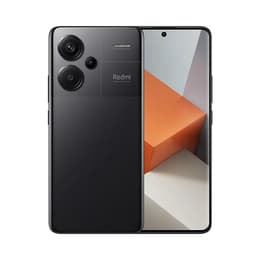


Xiaomi Redmi Note 13 Pro Vs Xiaomi Redmi Note 13 Pro+

Xiaomi Redmi Note 13 Pro
Starting at

Refurbished price:179.00

Versus €349.00 new

See options
Xiaomi Redmi Note 13 Pro+
Starting at

Refurbished price:198.00

Versus €449.00 new

See options

Ratings

The Xiaomi Redmi Note 13 Pro and the Xiaomi Redmi Note 13 Pro+ are both smartphones released in late 2023 and early 2024, offering a range of features for users seeking capable devices. While sharing a similar design philosophy and core camera technology, the Pro+ variant introduces enhancements in display technology, charging speed, and overall durability that differentiate it from its sibling.

Scores

Durability

Both devices were released around the same period, in late 2023 and early 2024, meaning they will likely receive software updates for a comparable duration, typically several years from their launch. The practical lifespan of these devices will depend on individual usage patterns and care.

  • Software Longevity: Both models launched with Android 13 and MIUI 14 (or HyperOS), indicating a similar starting point for software support. Users can expect several years of operating system and security updates, contributing to their long-term usability.
  • Physical Durability: The Redmi Note 13 Pro+ features an IP68 rating for dust and water resistance, offering robust protection against immersion and dust ingress. The Redmi Note 13 Pro, on the other hand, comes with an IP54 rating, providing protection against dust and splashes. Both devices utilize Gorilla Glass Victus for screen protection, enhancing resistance against drops and scratches.
  • Repairability: The Redmi Note 13 Pro+ has an average repairability score of 6.5 out of 10, with some components like the back cover and battery using adhesive, which can complicate repairs. However, the presence of battery pull tabs is a positive aspect for battery replacement. Screen replacement on the Pro+ requires disassembling several components. While a specific score for the Redmi Note 13 Pro is not widely available, general repair services for Xiaomi devices suggest that many common issues can be addressed.

Year of Release

2023

2023

Compatible with latest Update

Yes

Yes

OS

Android

Android

Foldable

No

No

Performance

The performance of both devices is designed to handle daily tasks efficiently, though they feature different internal components that contribute to varying levels of responsiveness and power efficiency.

  • Processing Power: The Redmi Note 13 Pro+ is equipped with a current-generation processor built on a 4nm process, which allows for smooth multitasking, quick app loading, and capable handling of graphically intensive applications and games. The Redmi Note 13 Pro features a different 4nm processor, also providing a responsive experience for everyday use and moderate gaming.
  • Multitasking and Storage: Both models offer various RAM configurations, typically starting from 8GB and going up to 12GB or even 16GB for the Pro+, facilitating smooth transitions between multiple open applications. Storage options range from 256GB to 512GB, providing ample space for applications, photos, and videos. The Pro also supports expandable storage via a microSD card, which is not available on the Pro+.
  • Battery Behavior: The Redmi Note 13 Pro has a 5100mAh battery, which users report provides standout battery life, often lasting a day and a half with moderate use. The Redmi Note 13 Pro+ features a 5000mAh battery, which some users find to offer uninspiring battery life, though its rapid charging capability helps mitigate this.

Memory (GB)

8 GB

12 GB

Screen quality

Both smartphones offer high-quality displays, but there are distinct differences in resolution, design, and peak brightness that affect the visual experience.

  • Display Technology and Resolution: Both devices feature a 6.67-inch AMOLED display with a 120Hz refresh rate, providing fluid scrolling and vibrant colors. The Redmi Note 13 Pro+ boasts a 1.5K resolution (1220x2712 pixels), offering a sharper and more detailed viewing experience. The Redmi Note 13 Pro has an FHD+ resolution (1080x2400 pixels), which still delivers clear visuals for most content.
  • Brightness and Outdoor Visibility: The Redmi Note 13 Pro+ achieves a peak brightness of 1800 nits, making it highly visible even in bright outdoor conditions. The Redmi Note 13 Pro offers a peak brightness of 1300 nits, which is also sufficient for comfortable outdoor use.
  • Design and Viewing Experience: A key visual difference is the display design; the Redmi Note 13 Pro+ features a curved display with minimal bezels, contributing to a more immersive and premium feel. The Redmi Note 13 Pro has a flat display. Both screens are protected by Gorilla Glass Victus.

Resolution

1220 x 2712

1220 x 2712

Screen type

AMOLED

AMOLED

Audiovisual

The camera systems on both the Redmi Note 13 Pro and Pro+ share many similarities, focusing on high-resolution imaging and versatile shooting modes.

  • Main Camera System: Both devices are equipped with a 200MP main camera featuring Optical Image Stabilization (OIS), an 8MP ultrawide lens, and a 2MP macro camera. This setup allows for detailed photos in various lighting conditions.
  • Photography Performance: The 200MP main sensor on both models is capable of capturing highly detailed images, with good color vibrancy and dynamic range in daylight. Low-light performance is also noted to be impressive for the main camera on both devices, with effective noise reduction. However, some user reviews suggest the auxiliary cameras (ultrawide and macro) are less impressive, and the overall camera experience can be inconsistent on the Pro+.
  • Video Recording and Audio: Both phones support 4K video recording at 30 frames per second (fps) with the main camera, and 1080p at 30/60fps for the front camera. Both devices also feature stereo speakers with Dolby Atmos support, providing an enhanced audio experience for media consumption.

Main camera

200 megapixels

200 megapixels

Front camera

16 megapixels

16 megapixels

Miscellaneous

Beyond the core features, several practical elements distinguish these two devices, impacting connectivity, handling, and overall user convenience.

  • Connectivity and Ports: The Redmi Note 13 Pro+ supports Wi-Fi 6, offering faster and more stable wireless connections, while the Redmi Note 13 Pro supports Wi-Fi 5 (802.11ac). Both devices include 5G connectivity, Bluetooth (v5.2 for Pro, v5.3 for Pro+), NFC, and a USB-C port for charging and data transfer. The Redmi Note 13 Pro retains a 3.5mm headphone jack, which is absent on the Pro+.
  • Biometric Security: Both smartphones feature an in-screen fingerprint sensor for secure and convenient unlocking.
  • Physical Characteristics: The Redmi Note 13 Pro is slightly lighter at 187 grams and thinner at 7.98mm compared to the Redmi Note 13 Pro+, which weighs 204.5 grams and measures 8.9mm thick. The Pro+ also features a curved design, which can affect grip and in-hand feel compared to the Pro's flat design.

Weight

187 g

204 g

Width

7,42 cm

7,42 cm

Height

16,11 cm

16,14 cm

Depth

0,8 cm

0,89 cm

Screen size (in)

6.67

6.67

Network

5G

5G

SIM card

Dual Physical SIM

Dual Physical SIM

Carrier compatibility

Unlocked

Unlocked

User feedback for the Redmi Note 13 Pro often highlights its impressive battery life and capable 200MP camera as strong points, alongside a vibrant AMOLED display. Some users appreciate the inclusion of a 3.5mm headphone jack. Criticisms sometimes point to the ultrawide camera's performance and the lack of Wi-Fi 6.

For the Redmi Note 13 Pro+, common praise includes its stunning curved AMOLED display, blazing-fast 120W charging, and robust IP68 water and dust resistance. The main camera is generally well-regarded for its detail. However, some users have noted that the battery life, despite the large capacity, can be less than ideal, and the software experience, particularly regarding updates, might not be as consistent as some competitors. The auxiliary cameras are also frequently mentioned as areas for improvement.

Users prioritizing extended battery life and the convenience of a headphone jack may find the Redmi Note 13 Pro a suitable choice. Its flat display and slightly lighter build could also appeal to those who prefer a more traditional smartphone feel. Conversely, users who value a more premium curved display, faster charging speeds, and higher water and dust resistance will likely lean towards the Redmi Note 13 Pro+. Both devices offer a strong main camera experience, making them viable options for photography enthusiasts. Considering a quality-assured refurbished option for either model can be an eco-friendly alternative for making an informed choice.


See all articles

Our recent comparisons