

Google Pixel 8 Vs iPhone 12 mini

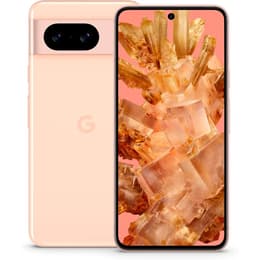
Google Pixel 8
Google Pixel 8
Starting at

Refurbished price:247.59

Versus €819.97 new

See options
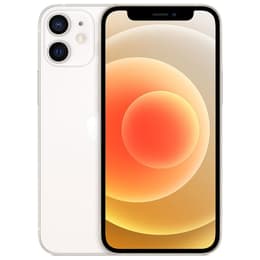
iPhone 12 mini
iPhone 12 mini
Starting at

Refurbished price:146.50

Versus €689.00 new

See options

Ratings

The Google Pixel 8, released in October 2023, and the iPhone 12 Mini, launched in November 2020, represent distinct approaches to smartphone design and user experience. While the Pixel 8 offers a modern Android experience with advanced computational photography and AI features, the iPhone 12 Mini provides a compact iOS device known for its portability. Both devices operate on their respective proprietary operating systems, Android and iOS, offering different ecosystems and software philosophies.

Scores

Durability

When considering the long-term usability of a smartphone, factors like software support, physical resilience, and ease of repair are important.

  • Software Longevity: The Google Pixel 8 is notable for its commitment to seven years of operating system updates, security updates, and feature drops, extending its software lifespan significantly. The iPhone 12 Mini, released earlier, has received several major iOS updates since its launch, with Apple typically providing 5-6 years of software support for its devices.
  • Physical Durability: Both devices feature IP68 ratings for dust and water resistance, indicating protection against immersion. The iPhone 12 Mini incorporates a Ceramic Shield front cover, designed for enhanced drop performance. The Pixel 8 also uses Gorilla Glass Victus for its front and back, offering robust scratch and drop resistance.
  • Repairability: The Pixel 8 has received repairability scores ranging from 5.5 to 7 out of 10, with some components like the screen being relatively easy to replace, though battery replacement can be tricky due to adhesives. The iPhone 12 Mini generally scores around 5.5 to 6 out of 10 for repairability, praised for its modular design for display and battery, but noted for specialized screws and waterproofing measures that can complicate repairs.

Year of Release

2023

2020

Compatible with latest Update

Yes

Yes

OS

Android

iOS

Foldable

No

No

Performance

The performance of a smartphone is crucial for daily tasks, from navigating applications to managing multiple processes simultaneously.

  • Processing Power: The Google Pixel 8 is equipped with a current-generation processor designed to handle demanding applications, facilitate advanced AI features, and ensure smooth multitasking. The iPhone 12 Mini, powered by its own custom-designed chip, delivers responsive performance for everyday use and gaming, characteristic of its release era.
  • Multitasking and Storage: The Pixel 8 comes with 8GB of RAM, which supports efficient multitasking and keeps more applications active in the background without slowdowns. The iPhone 12 Mini features 4GB of RAM, providing sufficient capacity for typical user needs and smooth transitions between apps. Both devices offer various internal storage options, though neither supports expandable storage via a card slot.
  • Battery Behavior: The Pixel 8 houses a 4575 mAh battery, generally providing 8-10 hours of screen-on time with mixed usage, and 6-8 hours for heavy users, often lasting a full day for most individuals. The iPhone 12 Mini has a smaller 2227 mAh battery, which some users find requires more frequent charging, especially with heavy use, though it can last a full day for lighter usage patterns.

Memory (GB)

8 GB

4 GB

Screen quality

The visual experience on a smartphone is largely defined by its display, impacting everything from content consumption to daily interactions.

  • Display Technology and Resolution: Both the Google Pixel 8 and the iPhone 12 Mini feature OLED displays, known for their deep blacks and vibrant colors. The Pixel 8 has a 6.2-inch FHD+ (2400 x 1080) OLED display with a pixel density of 428 ppi. The iPhone 12 Mini offers a more compact 5.4-inch Super Retina XDR OLED display with a resolution of 2340 x 1080 pixels and a higher pixel density of 476 ppi, resulting in a very sharp image for its size.
  • Brightness and Refresh Rate: The Pixel 8's display offers a variable refresh rate of 60-120Hz, providing smoother scrolling and more fluid animations, along with high brightness levels of up to 1400 nits for HDR content and 2000 nits peak brightness for outdoor visibility. The iPhone 12 Mini has a standard 60Hz refresh rate and reaches 625 nits typical brightness, with a peak of 1200 nits for HDR content, offering good visibility in various lighting conditions.
  • Viewing Experience: The Pixel 8's larger screen provides a more expansive canvas for media consumption and productivity, while the iPhone 12 Mini's smaller size makes it exceptionally easy for one-handed use and pocketability.

Resolution

1080 x 2400

1080 x 2340

Screen type

OLED

Super Retina XDR OLED

Audiovisual

Camera capabilities are a significant consideration for many users, influencing how they capture and share moments.

  • Rear Camera Systems: The Google Pixel 8 features a dual-camera setup with a 50MP main wide-angle camera (f/1.68 with optical image stabilization) and a 12MP ultrawide camera (f/2.2 with a 125.8° field of view and autofocus, enabling macro focus). The iPhone 12 Mini also has a dual 12MP camera system, comprising a wide (f/1.6 with optical image stabilization) and an ultrawide (f/2.4 with a 120° field of view) lens.
  • Photography Features: The Pixel 8 leverages advanced computational photography for features like improved low-light performance, faster autofocus, and enhanced detail, even offering 50MP resolution photos. The iPhone 12 Mini offers features like Night mode, Deep Fusion, and Smart HDR 3, providing strong image quality in various conditions.
  • Video Recording and Audio: Both devices are capable of recording 4K video at up to 60 frames per second. The iPhone 12 Mini supports HDR video recording with Dolby Vision at up to 4K 30fps. The Pixel 8 also offers advanced video capabilities, including Dual Exposure technology for sharper videos in challenging lighting. Both phones include stereo speakers for media consumption.

Main camera

50 megapixels

12 megapixels

Front camera

10.5 megapixels

12 megapixels

Miscellaneous

Beyond core features, several practical elements contribute to the overall user experience and daily convenience.

  • Connectivity and Ports: The Google Pixel 8 supports the latest Wi-Fi 7 standard, along with 5G connectivity and Bluetooth 5.3, and uses a USB Type-C 3.2 port for charging and data transfer. The iPhone 12 Mini supports Wi-Fi 6, 5G connectivity, and Bluetooth, utilizing Apple's proprietary Lightning port.
  • Biometric Security: The Pixel 8 features an optical under-display fingerprint sensor for secure unlocking. The iPhone 12 Mini relies on Face ID, Apple's facial recognition system, for biometric authentication.
  • Design and Handling: The Pixel 8 measures 150.5 x 70.8 x 8.9 mm and weighs 187 g, offering a balanced feel in hand. The iPhone 12 Mini is significantly smaller and lighter at 131.5 x 64.2 x 7.4 mm and 135 g, making it exceptionally portable and easy to handle with one hand. Both devices feature aluminum frames.

Weight

187 g

135 g

Screen size (in)

6.2

5.4

Network

5G

5G

SIM card

Physical SIM + eSIM

Physical SIM + eSIM

Carrier compatibility

Unlocked

Unlocked

User feedback for the Google Pixel 8 often highlights its advanced camera capabilities, particularly its computational photography features and AI enhancements, as major strengths. Users also appreciate the extended software support, ensuring the device remains current for a longer period. Some criticisms occasionally point to battery life being adequate but not exceptional for heavy users. For the iPhone 12 Mini, its compact size and lightweight design are frequently praised, making it a preferred choice for those who value portability and one-handed use. Its display quality is also a common positive, despite the smaller size. However, the battery life is a frequent concern for many users, often requiring midday charging with intensive use.

Users prioritizing a modern Android experience with cutting-edge camera technology, long-term software support, and a larger display for media and productivity may find the Google Pixel 8 well-suited to their needs. Conversely, individuals who value an exceptionally compact and lightweight device, prefer the iOS ecosystem, and prioritize ease of one-handed use will likely lean towards the iPhone 12 Mini. Both devices offer robust performance within their respective ecosystems, and choosing between them often comes down to personal preference for operating system, device size, and specific feature priorities. For those considering either model, exploring quality-assured refurbished options can provide an eco-friendly alternative to extend the life cycle of these devices.

See all articles

Our recent comparisons