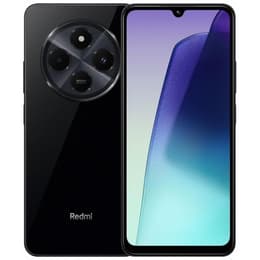

Xiaomi Redmi 14C Vs Xiaomi Redmi Note 14 Pro

Xiaomi Redmi 14C
Xiaomi Redmi 14C
Starting at

Refurbished price:107.00

Versus €189.00 new

See options
Xiaomi Redmi Note 14 Pro
Starting at

Refurbished price:260.77

Versus €349.99 new

See options

Ratings

The Xiaomi Redmi 14C, released in August 2024, and the Xiaomi Redmi Note 14 Pro, launched in January 2025, are both smartphones from Xiaomi's Redmi series, offering distinct experiences for different user needs. While the Redmi 14C focuses on essential functionality with a large display, the Redmi Note 14 Pro elevates the experience with a more advanced screen, enhanced performance, and a more capable camera system. Both devices run on Android 14 with Xiaomi's HyperOS interface.

Scores

Durability

When considering the long-term usability of these devices, several factors come into play, including their release timelines, software support, and physical resilience.

  • Release Timeline: The Redmi 14C was released in August 2024, while the Redmi Note 14 Pro followed in January 2025. This five-month difference means the Note 14 Pro will likely receive software updates for a slightly longer period, extending its practical lifespan by a few months to a year.
  • Software Longevity: The Redmi 14C is expected to receive two years of OS updates and four years of security updates. The Redmi Note 14 Pro, being a more premium offering, is anticipated to receive up to three major OS upgrades and potentially longer security support, aligning with its higher-tier positioning. Both devices run Android 14 with HyperOS, ensuring a consistent software experience initially.
  • Physical Durability: The Redmi 14C features a glass front with a plastic frame and either a glass or eco-leather back. The Redmi Note 14 Pro offers a more robust build, incorporating Corning Gorilla Glass Victus 2 for display protection and an IP68 or IP69 rating for enhanced dust and water resistance, making it more resilient to everyday wear and tear.

Year of Release

2024

2025

OS

Android

Android

Foldable

No

No

Performance

The performance capabilities of the Redmi 14C and Redmi Note 14 Pro cater to different user demands, primarily influenced by their internal components and optimization.

  • Processing Power: The Redmi 14C is equipped with a MediaTek Helio G81 Ultra processor, which handles everyday tasks like social media, messaging, video streaming, and casual gaming smoothly. For more demanding applications or intensive multitasking, users might experience occasional slowdowns. The Redmi Note 14 Pro features the MediaTek Dimensity 7300 Ultra chipset, offering a more robust performance suitable for heavier multitasking and more graphically intensive games.
  • Multitasking and Storage: The Redmi 14C is available with 4GB, 6GB, or 8GB of RAM and 128GB or 256GB of internal storage, which is expandable via a dedicated microSD card slot. The Redmi Note 14 Pro comes with 8GB or 12GB of RAM and 128GB, 256GB, or 512GB of internal storage, typically without expandable storage. The higher RAM options on the Note 14 Pro contribute to smoother transitions between applications and better handling of multiple apps running simultaneously.
  • Battery Performance: The Redmi 14C houses a 5160 mAh battery with 18W wired charging, providing reliable power for a full day of moderate use. The Redmi Note 14 Pro features a 5110 mAh or 5500 mAh battery with significantly faster 45W wired charging, allowing for quicker recharges and less downtime.

Memory (GB)

4 GB

8 GB

Screen quality

The visual experience on both devices differs significantly due to their display technologies and specifications.

  • Display Technology and Resolution: The Redmi 14C features a large 6.88-inch IPS LCD display with a resolution of 720 x 1640 pixels (HD+). This provides a clear viewing experience for everyday content, though some users might notice a less sharp display compared to higher-resolution screens. The Redmi Note 14 Pro boasts a 6.67-inch AMOLED display with a higher 1220 x 2712 pixels (1.5K/FHD+) resolution, offering deeper blacks, more vibrant colors, and sharper details.
  • Brightness and Refresh Rate: Both phones feature a 120Hz refresh rate, contributing to smoother scrolling and a more fluid user interface experience. The Redmi 14C offers a typical brightness of 450 nits, with a High Brightness Mode (HBM) reaching 600 nits, which can be adequate for indoor use but may struggle in very bright outdoor conditions. The Redmi Note 14 Pro stands out with a peak brightness of up to 3000 nits (or 2500 cd/m²), making it exceptionally bright and highly visible even under direct sunlight.
  • Viewing Experience: The Redmi Note 14 Pro's AMOLED panel also supports HDR10+ and Dolby Vision, enhancing the contrast and color accuracy for compatible media content. The slightly smaller screen size of the Note 14 Pro, combined with its higher resolution and superior panel technology, generally provides a more immersive and premium viewing experience.

Resolution

720 x 1640

1080x2400

Audiovisual

The camera systems on the Redmi 14C and Redmi Note 14 Pro are designed to meet different photographic expectations.

  • Rear Camera Capabilities: The Redmi 14C features a dual-camera setup with a 50-megapixel main sensor (f/1.8) and a 2-megapixel depth sensor. It performs well in good lighting conditions, capturing clear photos, though some users note that it can sometimes struggle with color accuracy and fine details. Video recording is limited to 1080p at 30 frames per second. The Redmi Note 14 Pro comes with a more advanced triple-camera system, including a 200-megapixel main sensor with Optical Image Stabilization (OIS), an 8-megapixel ultrawide lens, and a 2-megapixel macro or depth sensor. Advertised video capabilities include 2160p (4K) recording.
  • Front Camera Performance: For selfies and video calls, the Redmi 14C includes a 13-megapixel front camera (f/2.0). The Redmi Note 14 Pro features a higher-resolution 20-megapixel front camera.
  • User Experience and Quality: While the Redmi Note 14 Pro boasts impressive specifications, some user feedback indicates that its camera performance, particularly for video recording, might not always meet expectations, with some reports of video being limited to 1080p at 60fps and subpar photo quality in certain situations. The Redmi 14C's camera is generally considered decent for its segment, especially for photos, but its video capabilities are more basic.

Front camera

13 megapixels

32 MP

Miscellaneous

Beyond core specifications, several practical features and design elements differentiate these two Redmi smartphones.

  • Connectivity and Ports: The Redmi 14C supports 4G LTE connectivity, Wi-Fi 802.11 a/b/g/n/ac, and Bluetooth 5.4. It retains a 3.5mm headphone jack and uses a USB Type-C 2.0 port. The Redmi Note 14 Pro steps up to 5G connectivity, Wi-Fi 6, and Bluetooth 5.3. It features a USB Type-C port but typically omits the 3.5mm headphone jack, relying on wireless audio or USB-C adapters.
  • Biometrics and Sensors: Both devices include NFC for contactless payments (market dependent). The Redmi 14C features a side-mounted fingerprint sensor for secure unlocking. The Redmi Note 14 Pro integrates an under-display fingerprint sensor, offering a more seamless aesthetic.
  • Design and Handling: The Redmi 14C has dimensions of 171.9 x 77.8 x 8.2 mm and weighs between 204 and 211 grams. Its build materials include a glass front, plastic frame, and a choice of glass or eco-leather for the back. The Redmi Note 14 Pro is slightly more compact and lighter at 162.3 x 74.4 x 8.4 mm and 190 grams, featuring a glass front with Gorilla Glass Victus 2 and a plastic frame. The Note 14 Pro also includes dual speakers for an enhanced audio experience.

Weight

207 g

180 g

Screen size (in)

6.88

6.67

Network

4G

4G

SIM card

Dual Physical SIM

Dual Physical SIM

Carrier compatibility

Unlocked

Unlocked

The Xiaomi Redmi 14C and Redmi Note 14 Pro cater to distinct user preferences, offering a range of features that align with different priorities. Users generally praise the Redmi 14C for its solid battery life, smooth 120Hz display, and dependable performance for everyday tasks, making it a practical choice for those seeking core smartphone functionalities without unnecessary extras. Criticisms often point to its less vibrant LCD screen compared to AMOLED alternatives and its more basic camera capabilities, particularly for video.

Conversely, the Redmi Note 14 Pro is frequently lauded for its stunning AMOLED display with high brightness, robust performance for multitasking and gaming, and fast charging capabilities. Its more premium build with enhanced durability features is also a common point of appreciation. However, some users have expressed concerns regarding the actual camera performance, noting that video recording might be limited and photo quality can be inconsistent despite high megapixel counts. The presence of pre-installed apps in HyperOS is also a frequent criticism, though most can be removed.

Users prioritizing a large, smooth display for general use, along with excellent battery life and expandable storage, may find the Redmi 14C well-suited to their needs. It serves as a reliable device for communication, social media, and casual content consumption. On the other hand, users who value a vibrant, high-resolution AMOLED screen, faster performance for demanding applications, quicker charging, and a more durable build will likely lean towards the Redmi Note 14 Pro. This device is better positioned for media enthusiasts, mobile gamers, and those who require a more premium feel and advanced features.

For those looking to make an informed and sustainable choice, considering quality-assured refurbished options for either model can provide an eco-friendly alternative that aligns with both budget and environmental consciousness.


See all articles

Our recent comparisons