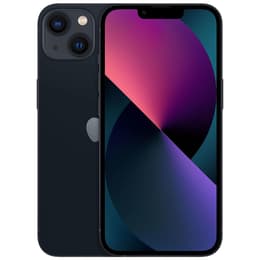
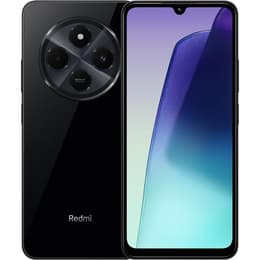


iPhone 13 Vs Xiaomi Redmi 14C

iPhone 13
iPhone 13
Starting at

Refurbished price:232.00

Versus €769.00 new

See options
Xiaomi Redmi 14C
Xiaomi Redmi 14C
Starting at

Refurbished price:128.20

Versus €189.00 new

See options

Ratings

The iPhone 13, released in September 2021, and the Xiaomi Redmi 14C, launched in August 2024, represent distinct approaches to smartphone design and functionality. While the iPhone 13 operates on Apple's iOS ecosystem, the Redmi 14C runs on Android with Xiaomi's HyperOS. Key differentiators between these two devices include their display technology, processing power, and camera capabilities, catering to different user priorities.

Scores

Durability

The longevity of a smartphone is influenced by its release timeline, software support, and physical durability. These two devices offer different expectations in these areas.

  • Release Timeline & Software Support: The iPhone 13, launched in 2021, typically receives iOS updates for approximately five to six years from its release, extending its software relevance well into the future. For instance, it is compatible with iOS 18, released in September 2024, and the current iOS 26. [1, 2] In contrast, the Redmi 14C, released in 2024, is promised two years of major Android updates and four years of security patches, which is a reasonable duration for its category. [3]
  • Physical Durability: The iPhone 13 features a Ceramic Shield front cover and an IP68 rating, indicating a high level of resistance to dust and water immersion. [10, 20] The Redmi 14C, while offering a sturdy build with a glass-like back and plastic frame, has an IP52 rating for dust and splash resistance on its 5G variant, suggesting a lesser degree of protection against environmental elements. [3, 23, 27]
  • Expected Practical Lifespan: Users seeking the longest possible software support and robust physical protection might find the iPhone 13 to offer a more extended practical lifespan. The Redmi 14C provides solid durability and software support for its segment, making it a reliable option for several years of use.

Year of Release

2021

2024

Compatible with latest Update

Yes

Yes

OS

iOS

Android

Foldable

No

No

Performance

Performance in a smartphone is determined by its internal components, impacting everything from app responsiveness to multitasking efficiency. The iPhone 13 and Redmi 14C offer different levels of processing power and storage configurations.

  • Processing Capabilities: The iPhone 13 is equipped with a powerful processor that handles demanding applications and multitasking with considerable speed and efficiency. This allows for smooth navigation, rapid app loading, and fluid gaming experiences. [1, 2] The Redmi 14C features an octa-core processor that capably manages everyday tasks such as social media, messaging, video streaming, and casual gaming. While it provides a smooth experience for these activities, some minor stutters may occur during intensive multitasking or when running several applications simultaneously. [3, 4, 23, 35]
  • System Responsiveness: The iPhone 13 delivers consistent and highly responsive performance, ensuring a seamless user experience even with graphically intensive applications. The Redmi 14C offers good responsiveness for general use, with its processor designed to provide a balanced performance for its intended user base. [3, 4, 23, 35]
  • Storage and Multitasking: The iPhone 13 is available with storage options up to 512GB, providing ample space for applications, media, and files. [2, 13] The Redmi 14C offers various RAM configurations (4GB, 6GB, 8GB) and internal storage options (64GB, 128GB, 256GB), which can be expanded via a microSD card, offering flexibility for users who need more storage for their content. [3, 5, 6, 8]

Memory (GB)

4 GB

4 GB

Screen quality

The display is a primary interface for smartphone interaction, and both devices present different visual experiences based on their underlying technology and specifications.

  • Display Technology and Resolution: The iPhone 13 features a 6.1-inch Super Retina XDR OLED display, offering deep blacks, vibrant colors, and a high resolution of 1170x2532 pixels, resulting in a pixel density of approximately 460 ppi. [2, 9, 11, 18, 20] This OLED technology provides excellent contrast and color accuracy. The Redmi 14C comes with a larger 6.88-inch IPS LCD panel with a resolution of 720x1640 pixels (HD+), translating to a pixel density of around 260 ppi. [3, 4, 5, 6, 12, 23] While the Redmi's screen is larger, the iPhone 13 offers a sharper and more detailed image.
  • Brightness and Refresh Rate: The iPhone 13's display can reach up to 800 nits of typical brightness and 1200 nits peak brightness for HDR content, ensuring good visibility in various lighting conditions. It operates at a standard 60Hz refresh rate. [2, 9, 11, 20] The Redmi 14C features a refresh rate of up to 120Hz, which contributes to smoother scrolling and animations. Its typical brightness is 450 nits, with a High Brightness Mode reaching 600 nits, which is sufficient for indoor use but may be less optimal in very bright outdoor environments. [3, 4, 6, 7, 22, 23]
  • Viewing Experience: Users prioritizing a highly detailed, color-accurate display with superior contrast will find the iPhone 13's OLED screen more suitable. Those who prefer a larger screen with a smoother scrolling experience for everyday browsing and media consumption, and are less concerned with peak sharpness, may appreciate the Redmi 14C.

Resolution

1170 x 2532

720 x 1640

Screen type

Super Retina XDR OLED

IPS LCD

Audiovisual

Camera systems are a significant consideration for many users, and these two devices offer different capabilities for capturing photos and videos.

  • Rear Camera System: The iPhone 13 features a dual 12-megapixel camera system on the rear, comprising a wide lens with sensor-shift optical image stabilization (OIS) and an ultrawide lens with a 120-degree field of view. [1, 2, 9, 10] This setup is noted for improving clarity in images, especially in low-light conditions, and offers features like Cinematic Mode for video. [1, 10, 17, 33] The Redmi 14C includes a 50-megapixel primary rear camera, accompanied by an auxiliary lens. It is capable of capturing detailed photos in good lighting conditions, but its performance in low-light scenarios is less robust, and it lacks optical image stabilization. [3, 5, 14, 21, 22, 35]
  • Front Camera and Video Quality: Both devices feature capable front-facing cameras. The iPhone 13 has a 12-megapixel front camera that performs well for selfies and video calls, supporting 4K video recording up to 60 frames per second. [1, 9, 20] The Redmi 14C is equipped with a 13-megapixel front camera that provides decent selfies, particularly with its beautification features. Video recording on the Redmi 14C is capped at 1080p at 30 frames per second for both front and rear cameras. [3, 5, 21, 22, 35]
  • Photography Experience: Users prioritizing advanced video features, consistent low-light performance, and optical image stabilization will likely find the iPhone 13's camera system more versatile. The Redmi 14C offers a capable camera for well-lit environments and everyday social content.

Main camera

12 megapixels

50 megapixels

Front camera

12 megapixels

13 megapixels

Miscellaneous

Beyond core performance, various practical elements contribute to the overall user experience, including connectivity, physical design, and additional features.

  • Connectivity and Ports: The iPhone 13 supports 5G connectivity, Wi-Fi 6, and Bluetooth 5.0, and utilizes a Lightning port for charging and data transfer. [9, 13, 16] The Redmi 14C supports 4G LTE, Wi-Fi 5, and Bluetooth 5.4. It features a USB-C port for charging and data, and notably includes a 3.5mm headphone jack, which is absent on the iPhone 13. [3, 5, 6, 8]
  • Sensors and Biometrics: The iPhone 13 relies on Face ID for secure facial recognition. [2] The Redmi 14C offers a side-mounted fingerprint sensor and AI face unlock for convenient access. [3, 6]
  • Dimensions and Handling: The iPhone 13 measures 146.7 x 71.5 x 7.65 mm and weighs 174 grams, offering a compact and manageable form factor. [15, 16] The Redmi 14C is a larger device, measuring 171.88 x 77.8 x 8.22 mm and weighing between 204-211 grams, which might appeal to users who prefer a more expansive screen and a substantial feel. [3, 5, 6, 8, 23]

Weight

173 g

207 g

Screen size (in)

6.1

6.88

Network

5G

4G

SIM card

Physical SIM + eSIM

Dual Physical SIM

Carrier compatibility

Unlocked

Unlocked

Connector

Lightning

USB-C

User feedback for the iPhone 13 frequently highlights its robust battery life, capable camera system (especially for video recording), and consistent performance as key strengths. [1, 28, 29, 31, 32, 36] Some users have noted that pictures of people might not always appear as flattering as on some other devices. [36] The Redmi 14C is often praised for its large, smooth 120Hz display, decent battery life, and a design that feels more premium than its category might suggest. [3, 14, 21, 23, 26, 35] Common criticisms include its HD+ display resolution, camera performance in low-light conditions, and the presence of pre-installed applications and advertisements. [3, 21, 23, 26, 35]

Users prioritizing a highly refined operating system, advanced camera capabilities with strong video performance, and a longer period of software updates will find the iPhone 13 well-suited to their needs. Its compact size and premium build also cater to those who value portability and durability. Conversely, users who prioritize a larger display with a high refresh rate for a smoother visual experience, along with the flexibility of the Android ecosystem and expandable storage, may lean toward the Redmi 14C. It offers a practical and feature-rich experience for everyday use, especially for those who consume a lot of media or browse frequently.

For those considering either device, exploring quality-assured refurbished options can be an eco-friendly alternative to extend the life cycle of these products.
See all articles

Our recent comparisons







