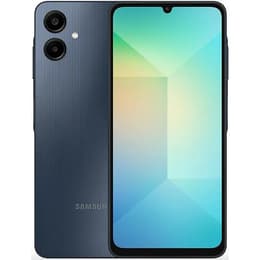
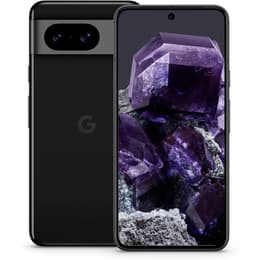


Galaxy A06 Vs Google Pixel 8

Galaxy A06
Galaxy A06
Starting at

Refurbished price:108.00

Versus €186.96 new

See options
Google Pixel 8
Google Pixel 8
Starting at

Refurbished price:247.59

Versus €819.97 new

See options

Ratings

The Samsung Galaxy A06, released in August 2024, and the Google Pixel 8, launched in October 2023, are smartphones designed for different user priorities. While the Galaxy A06 focuses on essential features and a large display, the Pixel 8 emphasizes advanced camera capabilities, a premium user experience, and extended software support. Both devices run on the Android operating system, but they offer distinct approaches to hardware and software integration.

Scores

Durability

When considering the long-term usability of these devices, their release timelines and software support policies are key differentiators.

  • Release Timeline and Age: The Google Pixel 8 was released in October 2023, making it slightly older than the Samsung Galaxy A06, which debuted in August 2024. This difference in release dates impacts their respective support cycles.
  • OS Support Duration: The Pixel 8 offers an industry-leading seven years of OS, security, and Feature Drop updates, ensuring a significantly longer period of software relevance and security. In contrast, the Galaxy A06 (LTE version) is slated to receive two OS upgrades and four years of security updates, extending its support until 2028.
  • Repairability and Lifespan: While specific repairability scores vary, the Pixel 8's longer software commitment suggests a design intent for extended practical use. The Galaxy A06, with its more modest update policy, may see its practical lifespan limited by software compatibility sooner. Users prioritizing maximum software longevity and security updates will find the Pixel 8's offering more compelling.

Year of Release

2024

2023

OS

Android

Android

Foldable

No

No

Performance

The performance of a smartphone is crucial for daily tasks, and these two devices offer different levels of responsiveness and capability.

  • Processor Capabilities: The Google Pixel 8 is equipped with a processor designed for advanced computational tasks, enabling smooth multitasking, efficient handling of demanding applications, and sophisticated on-device artificial intelligence features. The Galaxy A06 features a processor that capably handles everyday applications, web browsing, and casual gaming, providing a reliable experience for general use.
  • System Responsiveness: Users of the Pixel 8 can expect a highly fluid and responsive interface, with quick app loading times and seamless transitions, even under heavy usage. The Galaxy A06 delivers a consistent and smooth experience for typical smartphone activities, though it may exhibit more noticeable delays when running multiple intensive applications simultaneously.
  • Storage and Multitasking: The Pixel 8 comes with 8GB of RAM and offers storage options of 128GB or 256GB, without expandable storage. The Galaxy A06 is available with 4GB or 6GB of RAM and 64GB or 128GB of internal storage, which can be expanded up to 1TB via a microSD card, offering flexibility for users who need more space for media and files.

Memory (GB)

4 GB

8 GB

Screen quality

The visual experience is a significant aspect of smartphone use, and both devices present different display technologies and characteristics.

  • Display Technology and Resolution: The Google Pixel 8 features a 6.2-inch OLED display, referred to as an Actua Display, which provides vibrant colors, deep blacks, and excellent contrast. It has a resolution of 2400x1080 pixels (FHD+), resulting in sharp and detailed visuals. The Samsung Galaxy A06 comes with a larger 6.7-inch PLS LCD, offering a spacious viewing area, with a resolution of 720x1600 pixels (HD+).
  • Brightness and Refresh Rate: The Pixel 8's display can reach a peak brightness of up to 2000 nits, making it highly visible even in bright outdoor conditions, and features a variable refresh rate between 60Hz and 120Hz for smoother scrolling and animations. The Galaxy A06 has a 60Hz refresh rate, providing a standard smooth viewing experience for everyday content.
  • Viewing Experience: Users prioritizing a compact device with a high-resolution, color-accurate, and exceptionally bright display will find the Pixel 8 more suitable. Those who prefer a larger screen for media consumption and general browsing, and for whom a standard refresh rate is sufficient, may lean towards the Galaxy A06.

Resolution

720 x 1600

1080 x 2400

Screen type

PLS LCD

OLED

Audiovisual

Camera capabilities are often a deciding factor for many users, and these phones offer distinct photographic experiences.

  • Camera System Capabilities: The Google Pixel 8 features a dual rear camera system with a 50MP main sensor and a 12MP ultrawide lens, known for its computational photography and advanced image processing. The Samsung Galaxy A06 also has a dual rear camera setup, comprising a 50MP primary camera and a 2MP depth sensor, designed for capturing clear everyday photos.
  • Photography Performance: The Pixel 8 excels in various lighting conditions, offering strong low-light performance, detailed images, and features like Magic Eraser and Photo Unblur for enhanced editing. Its 10.5MP front camera provides detailed selfies. The Galaxy A06's 50MP main camera captures crisp images in good lighting, and its 2MP depth sensor assists with portrait mode effects. The 8MP front camera is suitable for video calls and casual selfies.
  • Video Recording and Audio: Both devices are capable of recording video, with the Pixel 8 offering more advanced video features and stabilization. The Pixel 8 also provides a robust media consumption experience with stereo speakers, while the Galaxy A06 includes a 3.5mm headphone jack for wired audio.

Miscellaneous

Beyond core features, several practical elements contribute to the overall user experience.

  • Connectivity and Ports: The Google Pixel 8 supports modern connectivity standards including 5G and Wi-Fi 7, along with Bluetooth 5.3 and a USB Type-C port (USB 3.2). The Samsung Galaxy A06 supports 4G connectivity, Wi-Fi, Bluetooth 5.3, and features a USB Type-C port (USB 2.0), as well as a traditional 3.5mm headphone jack.
  • Security and Biometrics: The Pixel 8 offers both an in-display fingerprint scanner and facial recognition for secure unlocking. The Galaxy A06 includes a side-mounted fingerprint sensor for convenient access.
  • Design and Handling: The Pixel 8 has a compact design, measuring 150.5 x 70.8 x 8.9mm and weighing 187g, with a premium build that includes Gorilla Glass Victus 2 protection and IP68 water and dust resistance. The Galaxy A06 is larger at 167.30 x 77.30 x 8.00mm and weighs 189g, featuring a glass front with a plastic back and frame.

Weight

189 g

187 g

Screen size (in)

6.7

6.2

Network

4G

5G

SIM card

Dual Physical SIM

Physical SIM + eSIM

Carrier compatibility

Unlocked

Unlocked

The Samsung Galaxy A06 and Google Pixel 8 cater to different segments of the smartphone market, each with its own set of strengths. The Pixel 8 is frequently praised by users for its exceptional camera performance, long-term software support, and the seamless integration of Google's AI features, which enhance daily usability. Some common criticisms, however, include its relatively higher positioning in the market and the absence of expandable storage.

Conversely, the Galaxy A06 is often lauded for its large display, substantial battery capacity, and the inclusion of a 3.5mm headphone jack and expandable storage, which are practical benefits for many users. Potential concerns might revolve around its more modest display resolution and refresh rate compared to higher-end devices, and a shorter software update commitment.

Users prioritizing a compact device with cutting-edge camera technology, a premium build, and an extended period of software updates will find the Google Pixel 8 well-suited to their needs. It's an excellent choice for those who value computational photography and a consistently updated Android experience. On the other hand, users who prioritize a larger screen for media consumption, long battery life, the flexibility of expandable storage, and a more accessible entry point into the Android ecosystem may lean towards the Samsung Galaxy A06. This device is a practical option for everyday tasks and users who appreciate traditional smartphone features.

For those considering either of these models, exploring quality-assured refurbished options can provide an eco-friendly alternative, offering a sustainable choice without compromising on functionality.

See all articles

Our recent comparisons







