

Compare models
Galaxy S25 Edge Vs iPhone SE (2022)
- 1-year minimum warranty
- Free delivery on all orders
- Free 30-day returns
Differences at a glance
The Samsung Galaxy S25 Edge (2025) and the Apple iPhone SE (2022) represent two distinct approaches to smartphone design, catering to users with very different preferences in physical dimensions and ecosystem platforms. While the Galaxy S25 Edge offers a sprawling, modern display and cutting-edge hardware running on Android 15, the iPhone SE (2022) provides a classic, compact form factor anchored by Apple's iOS platform. Choosing between them involves balancing screen space and modern device architecture against pocket-friendly physical proportions and traditional navigation.
Available Models
Colour
Storage (GB)
Scores
Durability
Evaluating the lifespan and durability of these devices highlights differences in their release timelines, software support windows, and hardware robustness.
- Release timeline and software support: The Galaxy S25 Edge benefits from a much newer release year, aligning with extended software update commitments that span several years into the future. By comparison, the iPhone SE (2022) launched earlier, meaning its remaining window of major software updates is shorter, though it continues to receive regular security maintenance from Apple.
- Build quality and physical protection: The Galaxy S25 Edge features advanced glass protection layers and a titanium frame designed to withstand everyday wear. The iPhone SE utilizes a traditional aluminum and glass construction paired with standard water and dust resistance ratings suitable for everyday accidental exposure.
- Repairability and practical lifespan: Both manufacturers provide structured repair networks, but the newer internal architecture and prolonged update schedule of the Galaxy S25 Edge give it a structural advantage for long-term daily use. Selecting a quality-assured refurbished option provides a sustainable choice for buyers looking to extend device lifecycles while maintaining dependable everyday functionality.
Year of Release
2025
2022
OS
Android
iOS
Foldable
No
No
Performance
Performance capabilities differ significantly due to generational advancements in processor architecture and memory capacity between the two devices.
- Multitasking and daily fluidity: The Galaxy S25 Edge handles demanding applications, intense gaming sessions, and heavy multitasking smoothly thanks to its current-generation processor and generous RAM capacity. The iPhone SE (2022) manages everyday communication tasks and standard apps efficiently, though heavy multi-app usage may require more frequent background reloading due to its smaller memory allotment.
- Storage capacity configurations: The Galaxy S25 Edge starts with higher base storage tiers suited for extensive media libraries and large applications. The iPhone SE offers smaller initial storage tiers that suit users with lighter local storage requirements or those who rely heavily on cloud storage services.
- Battery behavior and endurance: The Galaxy S25 Edge manages power efficiently to deliver a full day of mixed usage despite its ultra-slim profile. The iPhone SE features a smaller battery capacity, which translates to more frequent charging intervals for users who stream media or navigate away from power sources for extended periods.
Screen quality
Display characteristics create a major differentiator in daily media consumption, reading comfort, and overall visual interaction.
- Display technology: The Galaxy S25 Edge is equipped with a vibrant AMOLED display that delivers deep blacks, vivid color reproduction, and high contrast ratios. The iPhone SE (2022) utilizes a traditional LCD panel framed by thicker bezels, offering accurate color representation but lacking the deep contrast levels of organic display technology.
- Resolution and refresh rate: The Galaxy S25 Edge supports high-resolution viewing alongside an adaptive refresh rate that scales up for smooth scrolling and gaming. The iPhone SE operates at a standard resolution and a fixed refresh rate, which satisfies basic reading and messaging tasks adequately.
- Outdoor visibility: High peak brightness levels on the Galaxy S25 Edge ensure clear legibility under direct sunlight. The iPhone SE features lower maximum brightness, making outdoor viewing under bright ambient light conditions more challenging.
Resolution
1440x3120
750 x 1334
Audiovisual
Optics and multimedia configurations vary widely, affecting photography styles, video recording quality, and audio output.
- Rear camera systems: The Galaxy S25 Edge features a high-resolution main sensor paired with an ultra-wide lens, offering versatile framing options for landscapes and close-up subjects. The iPhone SE (2022) relies on a single rear camera lens that captures sharp everyday photos and benefits from computational photography software for balanced exposure.
- Video recording and low-light performance: The Galaxy S25 Edge supports high-resolution video capture up to cinematic frame rates and manages low-light scenes effectively through advanced sensor processing. The iPhone SE records stable high-definition video but shows more visible noise in dim environments.
- Audio output and media consumption: Built-in speaker setups on the Galaxy S25 Edge provide adequate sound for casual listening, though its slim profile limits acoustic depth. The iPhone SE delivers standard stereo sound output through its earpiece and bottom speaker configuration, fitting casual calls and short video clips.
Miscellaneous
Physical dimensions, weight distribution, and connectivity features dictate how comfortably each device integrates into daily routines.
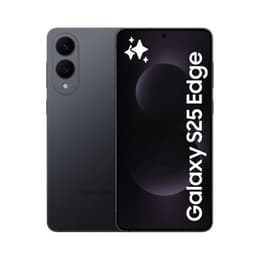
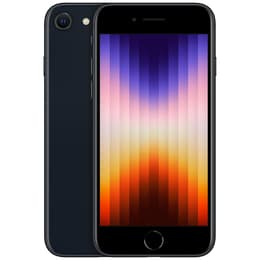
- Physical dimensions and handling: The iPhone SE (2022) is exceptionally compact and lightweight, making it effortless to operate with a single hand and store in smaller pockets. The Galaxy S25 Edge offers a much larger screen area within a remarkably thin chassis, balancing expansive viewing space with a lightweight feel.
- Navigation and security sensors: The iPhone SE retains a physical home button housing a traditional fingerprint recognition sensor, appealing to users who prefer tactile controls. The Galaxy S25 Edge utilizes an under-display biometric sensor and modern facial recognition technology for authentication.
- Connectivity standards: Both models support modern fifth-generation cellular networks for fast data transmission, while the Galaxy S25 Edge incorporates updated wireless communication standards for improved accessory pairing and stable network handoffs.
Weight
163 g
144 g
Screen size (in)
6.7
4.7
Network
5G
5G
SIM card
Dual Physical SIM + eSIM
Physical SIM + eSIM
Carrier compatibility
Unlocked
Unlocked
Connector
USB-C
Lightning
What the community thinks
Deciding between the Samsung Galaxy S25 Edge and the Apple iPhone SE (2022) depends heavily on individual preferences regarding screen dimensions, operating systems, and physical handling. Users prioritizing expansive display space, high refresh rates, versatile multi-lens photography, and modern hardware capabilities will find the Galaxy S25 Edge well-suited to their daily routines. Conversely, users prioritizing a compact physical footprint, single-handed operation, a physical home button, and the iOS ecosystem may lean toward the iPhone SE.
Reviewers and everyday community members frequently praise the Galaxy S25 Edge for its immersive screen quality and slim profile, while noting that its audio output is relatively thin. For the iPhone SE, owners frequently highlight its pocket-friendly ergonomics and reliable performance for basic tasks, though its limited battery life and dated display bezels receive common criticism. Opting for a quality-assured refurbished device provides a sustainable path for consumers aiming to make eco-friendly purchasing decisions without compromising on hardware reliability. Ultimately, aligning your choice with your preferred operating system and everyday ergonomic habits ensures long-term satisfaction.