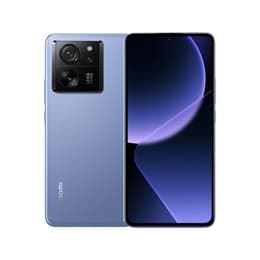



Xiaomi 13T Vs Xiaomi Redmi Note 12 Pro

Xiaomi 13T
Xiaomi 13T
Starting at

Refurbished price:183.00

Versus €630.00 new

See options
Xiaomi Redmi Note 12 Pro
Starting at

Refurbished price:106.00

Versus €399.00 new

See options

Ratings

The Xiaomi 13T, released in September 2023, and the Xiaomi Redmi Note 12 Pro, launched in January 2023, are both Android smartphones from Xiaomi. While they share the same operating system, the 13T introduces a more advanced processor, a higher-resolution display, and an enhanced camera system, distinguishing it from its slightly older counterpart. Both devices run on Android, offering a familiar user experience with Xiaomi's custom interface.

Scores

Durability

The practical lifespan of a smartphone is significantly influenced by its release timeline and the manufacturer's commitment to software updates.

  • Release Timeline and Software Support: The Xiaomi 13T, being a newer device released in September 2023, benefits from a longer projected software support period. It is expected to receive four generations of Android OS upgrades and five years of security patches, extending its usability and security into the future. In contrast, the Redmi Note 12 Pro, launched in January 2023, typically follows Xiaomi's standard policy of two to three major Android updates and up to three years of security updates.
  • Physical Durability: The Xiaomi 13T features an IP68 rating, indicating a high level of resistance to dust and water, capable of withstanding immersion in fresh water up to 1.5 meters for 30 minutes. Both devices incorporate Corning Gorilla Glass 5 for display protection against scratches and minor impacts.
  • Expected Practical Lifespan: Users prioritizing extended software longevity and enhanced environmental protection may find the Xiaomi 13T a more suitable option for long-term use. The Redmi Note 12 Pro still offers a robust build with Gorilla Glass 5, contributing to its durability in everyday scenarios.

Year of Release

2023

2022

Compatible with latest Update

Yes

No

OS

Android

Android

Foldable

No

No

Performance

Performance in daily use, from app handling to gaming, is a key consideration for smartphone users, and these two devices offer different capabilities.

  • Processor Capabilities: The Xiaomi 13T is equipped with a 4nm process processor, designed to deliver efficient performance for demanding applications and multitasking. This allows for smooth operation and capable handling of graphically intensive games at high frame rates. The Redmi Note 12 Pro features a 6nm process processor, which provides good performance for everyday tasks, social media, streaming, and decent gaming without significant heating issues.
  • Multitasking and Storage: The Xiaomi 13T comes with LPDDR5 RAM and UFS 3.1 storage, contributing to swift app launches and seamless multitasking. The Redmi Note 12 Pro uses LPDDR4X RAM and UFS 2.2 storage, which is suitable for managing multiple applications simultaneously and provides responsive system performance.
  • Overall System Responsiveness: Users engaging in heavy gaming or requiring faster processing for complex tasks may notice the performance advantages of the Xiaomi 13T. For general daily usage and moderate gaming, the Redmi Note 12 Pro offers a responsive and capable experience.

Memory (GB)

8 GB

8 GB

Screen quality

The visual experience is a significant aspect of smartphone usage, and both models feature vibrant displays with distinct characteristics.

  • Display Technology and Clarity: Both devices feature AMOLED displays, known for deep blacks and vibrant colors. The Xiaomi 13T offers a 6.67-inch CrystalRes AMOLED display with a 2712 x 1220 (1.5K) resolution, providing a high level of detail. The Redmi Note 12 Pro has a 6.67-inch Flow AMOLED display with a 2400 x 1080 (FHD+) resolution, offering clear visuals for typical viewing.
  • Brightness and Refresh Rate: The Xiaomi 13T boasts a peak brightness of up to 2600 nits and a refresh rate of up to 144Hz, contributing to excellent visibility in bright conditions and very smooth scrolling and animations. The Redmi Note 12 Pro reaches a peak brightness of 900 nits in high brightness mode and features a 120Hz adaptive refresh rate, providing a smooth viewing experience and good outdoor visibility.
  • Viewing Experience: The Xiaomi 13T's higher resolution and significantly brighter display make it particularly well-suited for users who consume a lot of HDR content or frequently use their phone outdoors. The Redmi Note 12 Pro still delivers a pleasing visual experience with its vibrant AMOLED panel and smooth 120Hz refresh rate.

Resolution

1220 x 2712

1080 x 2400

Screen type

AMOLED

AMOLED

Audiovisual

The camera systems on both smartphones are designed to capture various moments, each with its own strengths.

  • Main Camera Capabilities: The Xiaomi 13T features a Leica-tuned triple camera system, including a 50MP wide-angle lens with optical image stabilization (OIS), a 50MP telephoto lens with 2x optical zoom, and a 12MP ultra-wide lens. This setup is designed for versatile photography, including detailed close-ups and wide landscape shots. The Redmi Note 12 Pro is equipped with a 50MP main camera (Sony IMX766 sensor) with OIS, an 8MP ultra-wide camera, and a 2MP macro camera. Its main sensor is noted for capturing detailed photos in good lighting.
  • Low-Light and Video Performance: Both devices benefit from OIS on their main sensors, which aids in capturing clearer images and more stable videos, especially in challenging lighting conditions. The Xiaomi 13T's Leica tuning aims to enhance image quality and color reproduction. The Redmi Note 12 Pro is capable of 4K video recording at 30fps.
  • Front Camera and Audio: For selfies, the Xiaomi 13T has a 20MP front camera, while the Redmi Note 12 Pro features a 16MP front camera. Both phones offer stereo speakers, with the Redmi Note 12 Pro also supporting Dolby Atmos for an immersive audio experience.

Main camera

50 megapixels

50 megapixels

Front camera

20 megapixels

16 megapixels

Miscellaneous

Beyond core performance and display, several practical features contribute to the overall user experience and daily convenience.

  • Connectivity and Ports: Both smartphones support 5G connectivity, ensuring access to faster mobile networks. The Xiaomi 13T supports Wi-Fi 6 and Bluetooth 5.4, while the Redmi Note 12 Pro supports Wi-Fi 6 and Bluetooth 5.2. Both devices include NFC for contactless payments and data transfer. The Xiaomi 13T uses a USB-C port, and the Redmi Note 12 Pro also features a USB-C port, alongside a 3.5mm headphone jack.
  • Security and Biometrics: The Xiaomi 13T incorporates an in-screen fingerprint sensor and AI face unlock for secure access. The Redmi Note 12 Pro utilizes a side-mounted fingerprint sensor and AI face unlock.
  • Design and Handling: The Xiaomi 13T has dimensions of 162.2mm x 75.7mm x 8.49mm (glass back) and weighs around 197g. The Redmi Note 12 Pro measures 162.9mm x 76mm x 7.9mm and weighs 187g. The 13T offers an IP68 rating for enhanced dust and water resistance, providing greater peace of mind in various environments.

Weight

193 g

187 g

Screen size (in)

6.67

6.67

Network

5G

5G

SIM card

Dual Physical SIM

Dual Physical SIM

Carrier compatibility

Unlocked

Unlocked

Connector

USB-C

USB-C

The Xiaomi 13T and Xiaomi Redmi Note 12 Pro cater to slightly different user priorities within the Android smartphone market. User feedback for the Xiaomi 13T often praises its strong performance, vibrant display, and the extended software support policy, which is a significant advantage for long-term use. Some users appreciate its camera capabilities, especially with the Leica tuning. Concerns sometimes arise regarding battery drain for very heavy users, though overall battery life is generally considered sufficient for a full day.

The Redmi Note 12 Pro is frequently lauded for its balanced performance for daily tasks, its bright AMOLED display, and reliable battery life that often lasts more than a day for average users. Its camera system, particularly the main sensor with OIS, receives positive remarks for good lighting conditions. A common point of discussion for the Redmi Note 12 Pro is its less extensive software update commitment compared to newer devices.

Users prioritizing a device with a longer software support window, a more powerful processor for demanding applications and gaming, a brighter and higher-resolution display, and superior water and dust resistance (IP68) may find the Xiaomi 13T better suited to their needs. Conversely, individuals seeking a reliable smartphone for everyday use, with a solid display, good battery endurance, and a capable camera system, might lean towards the Redmi Note 12 Pro. Both devices offer quality-assured refurbished options, providing an eco-friendly alternative for consumers looking to make informed and sustainable choices.


See all articles

Our recent comparisons