


Google Pixel 8 Pro Vs Xiaomi Redmi 14C

Google Pixel 8 Pro
Google Pixel 8 Pro
Starting at

Refurbished price:293.00

Versus €1,099.00 new

See options
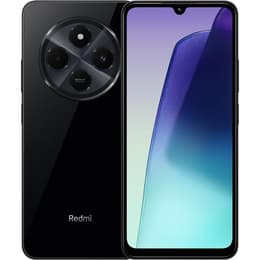
Xiaomi Redmi 14C
Xiaomi Redmi 14C
Starting at

Refurbished price:128.20

Versus €189.00 new

See options

Ratings

The Google Pixel 8 Pro, released in October 2023, and the Xiaomi Redmi 14C, likely introduced in 2024, represent distinct approaches to smartphone design and functionality. While both operate on the Android platform, they cater to different user priorities through their hardware capabilities and software experiences. The Pixel 8 Pro emphasizes advanced computational photography and a premium user experience, whereas the Redmi 14C focuses on delivering essential smartphone features with a strong emphasis on battery endurance and a large display.

Scores

Durability

The longevity and sustained performance of a smartphone are influenced by its build quality, software support, and the availability of repairs.

  • Software Support: The Google Pixel 8 Pro offers an extended software support period, with Google committing to seven years of Android OS upgrades, security updates, and feature drops, ensuring support until at least 2030. The Xiaomi Redmi 14C, typical of its series, generally receives a shorter period of major OS updates, often around two to three years, followed by security updates.
  • Build and Materials: The Pixel 8 Pro features a premium construction with durable materials and an IP68 rating for dust and water resistance, indicating it can withstand submersion in water under specific conditions. The Redmi 14C typically utilizes a plastic construction, which offers a degree of resilience to everyday bumps but generally lacks an official IP rating for water and dust protection.
  • Practical Lifespan: Users prioritizing long-term software relevance and robust physical durability will find the Pixel 8 Pro's extended support and premium build advantageous. The Redmi 14C, while functional, is designed for a more typical upgrade cycle, aligning with users who may replace their devices more frequently.

Year of Release

2023

2024

Compatible with latest Update

Yes

Yes

Foldable

No

No

Performance

Performance is a key differentiator, impacting how smoothly applications run, how quickly tasks are completed, and the overall responsiveness of the device.

  • Processing Power: The Google Pixel 8 Pro is equipped with a high-end processor designed for demanding applications, complex multitasking, and advanced on-device artificial intelligence features. This results in fluid navigation, rapid app loading, and efficient handling of intensive tasks like video editing or graphic-heavy gaming. The Xiaomi Redmi 14C incorporates an entry-level to mid-range processor, which capably handles everyday activities such as web browsing, social media, and light gaming.
  • Multitasking and Responsiveness: With its robust internal components, the Pixel 8 Pro maintains smooth performance even when multiple applications are open simultaneously, providing a seamless user experience. The Redmi 14C, while capable for general use, may exhibit slower transitions or occasional delays when managing numerous demanding applications concurrently.
  • Storage and RAM: Both devices offer various storage configurations, with the Pixel 8 Pro providing ample internal storage options for extensive media and application libraries. The Redmi 14C also offers expandable storage, allowing users to increase capacity for photos, videos, and apps.

Memory (GB)

12 GB

4 GB

Screen quality

The display quality significantly influences the visual experience, from viewing content to daily interaction with the device interface.

  • Display Technology and Clarity: The Google Pixel 8 Pro features a 6.7-inch LTPO OLED display with a high resolution of 1344 x 2992 pixels, delivering deep blacks, vibrant colors, and sharp detail. The Xiaomi Redmi 14C comes with a 6.88-inch IPS LCD panel, offering a resolution of 1640x720 pixels, which provides clear visuals suitable for general viewing and daily tasks.
  • Brightness and Refresh Rate: The Pixel 8 Pro's display can reach impressive brightness levels, with a peak brightness of up to 2400 nits for HDR content, ensuring excellent visibility even in bright outdoor conditions. It also features an adaptive refresh rate that can scale from 1Hz to 120Hz for smooth scrolling and efficient power usage. The Redmi 14C offers a typical brightness of 450 nits and a peak of 600 nits in high brightness mode, along with an adaptive refresh rate of up to 120Hz for a fluid visual experience.
  • Viewing Experience: Users prioritizing a highly immersive and detailed visual experience, especially for high-resolution media, will find the Pixel 8 Pro's OLED display superior. The Redmi 14C provides a large screen area and a smooth refresh rate, making it suitable for casual browsing and video streaming.

Resolution

1344 x 2992

720 x 1640

Screen type

LTPO OLED

IPS LCD

Audiovisual

Camera capabilities are a primary consideration for many users, with differences in sensor technology, computational photography, and overall versatility.

  • Rear Camera System: The Google Pixel 8 Pro boasts a versatile triple-camera system, including a 50MP main sensor, a 48MP ultrawide lens, and a 48MP telephoto lens with 5x optical zoom. Its advanced computational photography excels in various lighting conditions, producing detailed and color-accurate images, particularly in low light. The Xiaomi Redmi 14C features a 50MP main camera, which captures bright and detailed photos in good lighting conditions.
  • Front Camera and Video: The Pixel 8 Pro includes a 10.5MP front camera capable of high-quality selfies and video calls, along with 4K video recording at up to 60 frames per second. The Redmi 14C is equipped with a 13MP front camera, suitable for decent selfies and video calls, and records video at 1080p at 30 frames per second for both front and rear cameras.
  • Photography Features: The Pixel 8 Pro offers a comprehensive suite of photography features, including a Pro mode for manual controls, Night Sight, and Astrophotography. The Redmi 14C provides essential modes like HDR and portrait mode, enhancing its photographic versatility for everyday use.

Main camera

50 megapixels

50 megapixels

Front camera

10.5 megapixels

13 megapixels

Miscellaneous

Beyond core specifications, various practical features contribute to the overall user experience and device utility.

  • Connectivity and Ports: The Google Pixel 8 Pro supports the latest connectivity standards, including Wi-Fi 7 and Bluetooth 5.3, ensuring fast and reliable wireless connections. It features a USB-C port for charging and data transfer. The Xiaomi Redmi 14C typically includes Bluetooth 5.4 and a USB Type-C port for charging, along with a 3.5mm headphone jack, offering broader compatibility with audio accessories.
  • Biometric Security: Both devices offer secure unlocking methods. The Pixel 8 Pro provides reliable facial recognition and an in-display fingerprint scanner. The Redmi 14C typically features a side-mounted fingerprint sensor for convenient and quick access.
  • Design and Handling: The Pixel 8 Pro has dimensions of 162.6 x 76.5 x 8.8 mm and weighs 213g, offering a balanced feel. The Redmi 14C measures 171.88 x 77.8 x 8.22mm and weighs between 204-211g, providing a larger form factor that some users may prefer for media consumption.

Weight

213 g

207 g

Screen size (in)

6.7

6.88

Network

5G

4G

SIM card

Physical SIM + eSIM

Dual Physical SIM

Carrier compatibility

Unlocked

Unlocked

The Google Pixel 8 Pro and Xiaomi Redmi 14C cater to distinct user needs, each excelling in different areas. The Pixel 8 Pro is frequently praised by users for its exceptional camera capabilities, delivering high-quality photos and videos across various conditions. Its long-term software support and premium build are also highly regarded. Some users, however, have noted that while battery life has improved, it may still require careful management for very heavy usage.

The Xiaomi Redmi 14C is often commended for its dependable battery life, which can comfortably last through a full day of extended use, and its large display, providing an immersive viewing experience. Users appreciate its functional performance for everyday tasks. Criticisms sometimes point to its camera performance in challenging lighting conditions and its less powerful processor compared to higher-end devices.

Users prioritizing advanced photography, cutting-edge performance, and a long-term software commitment will find the Google Pixel 8 Pro well-suited to their needs. Conversely, users who value extended battery life, a large display for media consumption, and reliable performance for essential smartphone functions may lean toward the Xiaomi Redmi 14C. Both devices offer a quality-assured refurbished option, providing an eco-friendly alternative for consumers.


See all articles

Our recent comparisons