


iPhone 14 Plus Vs Xiaomi Redmi Note 13

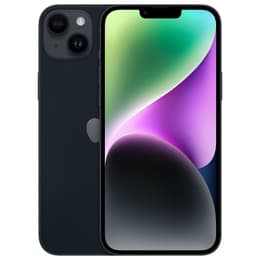
iPhone 14 Plus
iPhone 14 Plus
Starting at

Refurbished price:317.00

Versus €879.00 new

See options
Xiaomi Redmi Note 13
Starting at

Refurbished price:131.00

Versus €340.00 new

See options

Ratings

The iPhone 14 Plus, released in October 2022, and the Xiaomi Redmi Note 13, launched in January 2024, represent distinct approaches to smartphone design and functionality. While the iPhone 14 Plus offers a premium experience within Apple's ecosystem, the Redmi Note 13 provides a feature-rich Android experience. Key differentiators include their operating systems, display technologies, and camera philosophies, catering to different user priorities.

Scores

Durability

When considering the long-term usability of these devices, their release timelines and software support are important factors.

  • Release and Software Support: The iPhone 14 Plus, released in late 2022, benefits from Apple's extended software update policy, typically receiving iOS updates for five to six years from its launch. This suggests a longer period of access to the latest features and security enhancements. The Xiaomi Redmi Note 13, a newer device from early 2024, runs on Android 13 with MIUI 14 at launch, and an update to HyperOS is anticipated. Android devices generally receive fewer major OS updates compared to iPhones, though security updates often continue for several years.
  • Physical Durability: The iPhone 14 Plus features a Ceramic Shield front cover and an IP68 rating, indicating robust resistance to dust and water, capable of submersion up to 6 meters for 30 minutes. The Redmi Note 13 offers IP54 splash and dust resistance and is protected by Corning Gorilla Glass 3, providing good everyday protection against minor impacts and splashes.
  • Expected Lifespan: Users can expect the iPhone 14 Plus to remain functionally relevant and secure for a longer duration due to its software longevity and premium build. The Redmi Note 13, while durable for its class, may see its software support end sooner, potentially impacting its practical lifespan for users who prioritize the latest OS features.

Year of Release

2022

2024

Compatible with latest Update

Yes

Yes

OS

iOS

Android

Foldable

No

No

Performance

The performance of a smartphone is crucial for daily tasks, from navigating apps to demanding gaming sessions.

  • System Responsiveness: The iPhone 14 Plus delivers consistently smooth and responsive performance across a wide range of applications and multitasking scenarios. It handles graphically intensive games and video editing with ease, maintaining fluidity even under heavy load. The Redmi Note 13 provides capable performance for everyday use, including social media, web browsing, and casual gaming, with a generally smooth user experience.
  • Multitasking and Storage: The iPhone 14 Plus comes with 6GB of RAM, contributing to efficient multitasking and quick app switching. It offers storage options of 128GB, 256GB, and 512GB, without expandable storage. The Redmi Note 13 is available with 6GB or 8GB of RAM, and supports dynamic RAM expansion, which can allocate additional virtual RAM from storage for smoother operation. It offers 128GB or 256GB of internal storage, with the added flexibility of expandable storage up to 1TB via a microSD card.
  • Battery Endurance: The iPhone 14 Plus is recognized for its exceptional battery life, often lasting up to two or even three days for moderate users, and providing up to 26 hours of video playback. The Redmi Note 13 features a large 5000mAh battery, typically providing a full day of moderate to heavy use, with some users reporting up to 1.5 to 2 days on a single charge. It also supports 33W fast charging, allowing for a significant charge in about 30 minutes.

Memory (GB)

6 GB

8 GB

Screen quality

The visual experience is a primary interaction point, and both devices offer compelling displays with distinct characteristics.

  • Display Technology and Clarity: The iPhone 14 Plus features a 6.7-inch Super Retina XDR OLED display, delivering deep blacks, vibrant colors, and excellent contrast with a resolution of 2778 by 1284 pixels at 458 pixels per inch. The Redmi Note 13 sports a 6.67-inch AMOLED display with a resolution of 2400 by 1080 pixels and a pixel density of 395 ppi, also offering rich colors and strong contrast.
  • Brightness and Refresh Rate: The iPhone 14 Plus achieves a typical brightness of 800 nits and a peak brightness of 1200 nits for HDR content, ensuring good visibility in various lighting conditions. It has a standard 60Hz refresh rate. The Redmi Note 13 boasts a peak brightness of 1800 nits, making it highly visible outdoors, and features a 120Hz refresh rate for smoother scrolling and more fluid animations.
  • Viewing Experience: Both phones offer large, immersive screens suitable for media consumption. The iPhone's OLED provides consistent color accuracy, while the Redmi Note 13's higher refresh rate offers a noticeably smoother visual experience, particularly during fast-paced content or general navigation.

Resolution

1284 x 2778

1080 x 2400

Screen type

Super Retina XDR OLED

AMOLED

Audiovisual

For many users, the camera system is a deciding factor, and these phones approach photography with different strengths.

  • Rear Camera System: The iPhone 14 Plus features a dual 12MP camera system, comprising a main camera with a wide f/1.5 aperture and sensor-shift optical image stabilization, and a 12MP ultra-wide camera with a 120-degree field of view. It excels in capturing detailed photos with accurate colors, especially in challenging lighting conditions, thanks to features like Photonic Engine and Night mode. The Redmi Note 13 comes with a versatile triple camera setup, including a 108MP main sensor that uses pixel-binning to produce detailed 12MP photos, an 8MP ultra-wide lens, and a 2MP macro camera. It performs well in daylight, producing quality shots with natural colors.
  • Video Recording and Front Camera: The iPhone 14 Plus offers advanced video capabilities, including 4K Dolby Vision HDR recording at up to 60 frames per second, Cinematic mode for shallow depth-of-field effects, and Action mode for stabilized video. Its 12MP TrueDepth front camera features autofocus and also supports 4K Cinematic mode. The Redmi Note 13 records video up to 1080p at 30 frames per second. Its 16MP front-facing camera captures clear selfies.
  • Photography Focus: The iPhone 14 Plus prioritizes consistent image quality and advanced video features across its dual-camera system. The Redmi Note 13 offers a high-megapixel main sensor for detailed stills, alongside additional lenses for varied perspectives.

Main camera

12 megapixels

108 megapixels

Front camera

12 megapixels

16 megapixels

Miscellaneous

Beyond core features, several practical elements contribute to the overall user experience and device utility.

  • Connectivity and Ports: The iPhone 14 Plus supports 5G cellular connectivity, Wi-Fi 6, and Bluetooth 5.3. It uses a Lightning port for charging and data transfer, and in some regions, it exclusively uses eSIM for cellular service. The Redmi Note 13 supports 4G LTE, Wi-Fi 5, and Bluetooth 5.1. It features a USB-C 2.0 port and retains a 3.5mm headphone jack, offering broader compatibility with existing accessories. It also supports hybrid dual SIM.
  • Biometric Security and Additional Features: The iPhone 14 Plus relies on Face ID for secure facial recognition. It also includes advanced safety features like Crash Detection. The Redmi Note 13 incorporates an in-display fingerprint sensor for biometric authentication and includes an infrared (IR) blaster, allowing it to function as a universal remote control.
  • Design and Handling: The iPhone 14 Plus measures 160.8 mm x 78.1 mm x 7.80 mm and weighs 203 grams, featuring a premium aluminum and glass design. The Redmi Note 13 has dimensions of 162.24 mm x 75.55 mm x 7.97 mm and weighs 188.5 grams, with a sleek, flat-edged design.

Weight

150 g

175 g

Screen size (in)

6.7

6.67

Network

5G

5G

SIM card

eSIM

Dual Physical SIM

Carrier compatibility

Unlocked

Unlocked

Connector

Lightning

USB-C

The iPhone 14 Plus and the Xiaomi Redmi Note 13 cater to different user expectations and priorities, each offering a compelling set of features.

Users frequently praise the iPhone 14 Plus for its exceptional battery life, large and vibrant OLED display, and consistently high-quality camera performance, particularly in video recording and low-light photography. Common criticisms often point to its 60Hz display, which some users find less fluid compared to higher refresh rate screens on competing devices, and its reliance on the Lightning port.

The Xiaomi Redmi Note 13 is often lauded for its impressive 120Hz AMOLED display, which offers a very smooth visual experience, and its long-lasting 5000mAh battery with fast charging capabilities. Users also appreciate the inclusion of a 3.5mm headphone jack and an IR blaster for added utility. Some common concerns include its 4G-only connectivity (for this specific model), and the performance of its secondary cameras (ultrawide and macro) compared to the main sensor.

For users prioritizing a large screen, industry-leading battery endurance, and a robust, intuitive software ecosystem with long-term support, the iPhone 14 Plus is a strong contender. Its advanced video capabilities and consistent camera performance make it suitable for those who frequently capture memories. Conversely, individuals seeking a highly responsive display, versatile charging options, and the flexibility of expandable storage, along with a headphone jack, may find the Xiaomi Redmi Note 13 to be a more fitting choice. Both devices offer excellent value, especially when considering quality-assured refurbished options, providing an eco-friendly alternative for informed purchasing decisions.


See all articles

Our recent comparisons