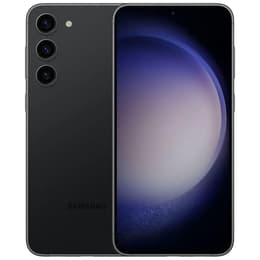



Galaxy S23+ Vs Xiaomi Redmi Note 13

Galaxy S23+
Galaxy S23+
Starting at

Refurbished price:297.00

Versus €1,019.00 new

See options
Xiaomi Redmi Note 13
Starting at

Refurbished price:135.00

Versus €340.00 new

See options

Ratings

The Samsung Galaxy S23 Plus, released in February 2023, and the Xiaomi Redmi Note 13, launched globally in January 2024, are both Android-based smartphones. While the Galaxy S23 Plus positions itself as a premium device with advanced features, the Redmi Note 13 aims to deliver a balanced experience. The primary distinctions lie in their processing power, camera capabilities, and long-term software support, catering to different user priorities within the Android ecosystem.

Scores

Durability

When considering the long-term usability of these devices, their release timelines and manufacturer support policies are key factors.

  • Release Timeline: The Samsung Galaxy S23 Plus was released in February 2023, making it a year older than the Xiaomi Redmi Note 13, which launched globally in January 2024. This difference in release date inherently gives the Redmi Note 13 a slight advantage in terms of being a newer model.
  • Software Longevity: Samsung has committed to providing four major Android OS updates and five years of security updates for the Galaxy S23 Plus, extending its support until 2028. The Redmi Note 13 series is expected to receive two to three major Android OS updates and four years of security updates, also extending support until around 2028 for security patches. This means both devices offer a comparable duration of security support, though the Galaxy S23 Plus generally receives more major OS upgrades.
  • Practical Lifespan: Users can expect both devices to remain functional and secure for several years. The Galaxy S23 Plus, with its more robust update policy for core Android versions, may offer a slightly longer period of access to the newest Android features. For those seeking an eco-friendly alternative, quality-assured refurbished options for both models can extend their practical lifespan even further.

Year of Release

2023

2024

Compatible with latest Update

Yes

Yes

OS

Android

Android

Foldable

No

No

Performance

The performance of a smartphone is crucial for daily tasks, app responsiveness, and multitasking capabilities.

  • Processing Power: The Samsung Galaxy S23 Plus is equipped with a high-performance processor designed for demanding applications and smooth operation. This allows it to handle intensive gaming, complex photo and video editing, and heavy multitasking with ease. The Xiaomi Redmi Note 13, on the other hand, features a capable processor that provides smooth performance for everyday use, social media, and casual gaming.
  • System Responsiveness: Users of the Galaxy S23 Plus often report a consistently fast and fluid experience, with applications loading quickly and transitions appearing seamless. The Redmi Note 13 also offers a responsive user experience for general tasks, though some users have noted occasional minor delays when typing extensive text or with certain UI elements.
  • Multitasking and Storage: The Galaxy S23 Plus typically comes with 8GB of RAM and offers storage options of 256GB or 512GB, utilizing faster UFS 4.0 storage for larger capacities. This combination supports efficient multitasking and rapid data access. The Redmi Note 13 is available with 6GB, 8GB, or 12GB of RAM and storage options up to 512GB, using UFS 2.2 storage. While both offer ample storage, the Galaxy S23 Plus generally provides a performance edge in very demanding scenarios due to its processor and faster storage technology.

Memory (GB)

8 GB

8 GB

Screen quality

The display is a primary interface for smartphone interaction, influencing everything from media consumption to daily navigation.

  • Display Technology and Clarity: The Samsung Galaxy S23 Plus features a 6.6-inch Dynamic AMOLED 2X display, known for its deep blacks, vibrant colors, and excellent contrast. It offers a Full HD+ resolution (1080x2340 pixels), providing sharp visuals. The Xiaomi Redmi Note 13 comes with a slightly larger 6.67-inch AMOLED display, also delivering rich colors and good contrast with a Full HD+ resolution (1080x2400 pixels).
  • Brightness and Refresh Rate: Both devices offer a 120Hz refresh rate, contributing to smoother scrolling and a more fluid visual experience. The Galaxy S23 Plus boasts a peak brightness of up to 1750 nits, ensuring excellent visibility even in bright outdoor conditions. The Redmi Note 13 also offers high peak brightness, with some variants reaching up to 1800 nits, making it well-suited for outdoor use.
  • Screen Protection: The Galaxy S23 Plus incorporates Gorilla Glass Victus 2 for enhanced durability against scratches and drops. The Redmi Note 13 also includes Gorilla Glass protection, contributing to its screen resilience.

Resolution

1080 x 2340

1080 x 2400

Screen type

Dynamic AMOLED 2X

AMOLED

Audiovisual

Camera systems are a significant consideration for many users, impacting the quality of photos and videos captured.

  • Rear Camera System: The Samsung Galaxy S23 Plus features a versatile triple-camera setup, including a 50MP main sensor with optical image stabilization (OIS), a 12MP ultra-wide lens, and a 10MP telephoto lens capable of 3x optical zoom. This configuration allows for detailed shots across various focal lengths. The Xiaomi Redmi Note 13 also has a triple-camera system, typically featuring a 108MP main sensor, an 8MP ultra-wide lens, and a 2MP macro lens.
  • Photography Performance: The Galaxy S23 Plus is praised for its consistent image quality, good detail, and effective low-light performance, with users generally finding its camera capabilities to be strong for everyday photography. The Redmi Note 13's 108MP main sensor can capture detailed images in good lighting, and its overall camera performance is considered decent for its category, though some users have noted that the high megapixel count doesn't always translate to significantly better real-world photos compared to lower-megapixel sensors with better processing.
  • Video Recording and Audio: The Galaxy S23 Plus supports high-resolution video recording, including 8K at 30 frames per second. Its microphone quality for calls and recordings is generally clear. The Redmi Note 13 offers good video recording capabilities for its segment, though some variants may not support 4K video recording despite having high-megapixel sensors. Both devices provide a satisfactory media consumption experience through their speakers.

Main camera

50 megapixels

108 megapixels

Front camera

12 megapixels

16 megapixels

Miscellaneous

Beyond core features, several practical elements contribute to the overall user experience and device utility.

  • Connectivity and Ports: The Samsung Galaxy S23 Plus supports 5G connectivity, advanced Wi-Fi standards (802.11ax), and Bluetooth. It features a USB-C port for charging and data transfer but lacks a 3.5mm headphone jack. The Xiaomi Redmi Note 13 also offers 5G connectivity (on 5G models), Wi-Fi, and Bluetooth. It includes a USB-C port and, for most variants, retains a 3.5mm headphone jack, which can be a convenience for users with wired audio accessories.
  • Biometric Security and Sensors: The Galaxy S23 Plus incorporates an in-display ultrasonic fingerprint sensor for secure and convenient unlocking. It also includes a comprehensive suite of sensors like an accelerometer, gyroscope, barometer, and compass. The Redmi Note 13 typically features a side-mounted fingerprint sensor or an in-display sensor depending on the specific model. A notable addition to the Redmi Note 13 is an IR blaster, allowing it to function as a universal remote control.
  • Design and Build: The Galaxy S23 Plus has dimensions of 157.8 x 76.2 x 7.6 mm and weighs 196g, featuring an Armor aluminum frame and Gorilla Glass Victus 2 for durability, along with IP68 dust and water resistance. The Redmi Note 13 is slightly larger at 161.1 x 75 x 7.6 mm and lighter at 173.5g, with Gorilla Glass protection and an IP54 rating for dust and splash resistance.

Weight

168 g

175 g

Screen size (in)

6.6

6.67

Network

5G

5G

SIM card

Dual Physical SIM + eSIM

Dual Physical SIM

Carrier compatibility

Unlocked

Unlocked

Connector

USB-C

USB-C

User feedback for the Samsung Galaxy S23 Plus frequently highlights its exceptional speed, smooth performance, and reliable battery life, often lasting a full day or more for many users. Its bright and vibrant display is also a common point of praise. Some users, however, note that while its camera is very good, it may not reach the absolute top tier compared to Ultra models or dedicated camera phones. The Redmi Note 13 is generally lauded for its impressive AMOLED display, decent camera performance for its segment, and solid battery life with fast charging capabilities. Criticisms sometimes point to occasional UI quirks or minor performance stutters in very specific scenarios, and some users feel the high megapixel count of the camera doesn't always translate to a significant real-world advantage.

Users prioritizing a consistently high-performance device with a premium build, extensive software support, and advanced camera features will find the Samsung Galaxy S23 Plus well-suited to their needs. Its robust processing power and longer major OS update commitment make it a strong choice for those who keep their phones for several years. Conversely, users who value a large, vibrant display, good battery life, and a capable camera for everyday use, along with the convenience of a headphone jack and IR blaster, may lean towards the Xiaomi Redmi Note 13. It offers a compelling set of features for general smartphone usage. Both devices represent quality options, and considering a quality-assured refurbished option can be a sustainable choice for either model, providing excellent value while supporting environmental responsibility.

See all articles

Our recent comparisons