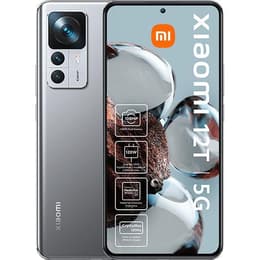
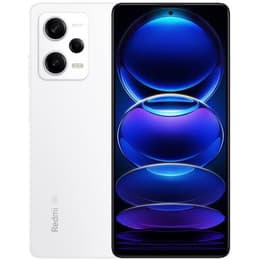


Xiaomi 12T Vs Xiaomi Redmi Note 12 Pro

Xiaomi 12T
Xiaomi 12T
Starting at

Refurbished price:131.00

Versus €649.00 new

See options
Xiaomi Redmi Note 12 Pro
Starting at

Refurbished price:106.00

Versus €399.00 new

See options

Ratings

The Xiaomi 12T and the Xiaomi Redmi Note 12 Pro are both smartphones released by Xiaomi, with the 12T launching in October 2022 and the Redmi Note 12 Pro following shortly after in November 2022 or January 2023, depending on the region. While they share the Android 12 operating system with Xiaomi's MIUI interface at launch, they cater to slightly different user priorities through variations in processing power, camera capabilities, and charging speeds. This comparison will explore their practical differences to help users make an informed decision.

Scores

Durability

When considering the long-term usability of a smartphone, software support and physical resilience are key factors. Both devices were released around the same period, influencing their expected software longevity.

  • Software Updates: The Xiaomi 12T was initially promised three major Android OS updates, potentially reaching Android 15, along with four years of security patches, with support expected to continue through October 2026. The Redmi Note 12 Pro, on the other hand, was slated for two major Android updates and three years of security patches. However, as of March 2026, both devices are approaching or have reached their End of Life (EOL) for software updates, meaning future Android version upgrades and security patches may be limited or cease, with the Redmi Note 12 Pro 5G specifically noted to be running Android 14 with HyperOS 2.0 as its final system update.
  • Physical Durability: Both smartphones feature Corning Gorilla Glass 5 on their front displays, offering a degree of protection against scratches and minor drops. The Xiaomi 12T has a glass back and plastic frame, while the Redmi Note 12 Pro also features a glass back with a plastic frame. Both devices carry an IP53 rating, indicating resistance to dust and splashes of water, but neither is designed for submersion.
  • Repairability: The Xiaomi 12T Pro, a closely related model, received a repairability score of 7.6 out of 10, suggesting a reasonable ease of repair for components like the screen or battery. While a specific score for the Redmi Note 12 Pro is not widely available, the presence of repair guides indicates that components can be accessed for servicing.

Year of Release

2022

2022

Compatible with latest Update

Yes

No

OS

Android

Android

Foldable

No

No

Performance

The performance of these devices is largely determined by their internal components, impacting how smoothly applications run and how efficiently they handle demanding tasks.

  • Processing Power: The Xiaomi 12T is equipped with a more capable processor, which translates to faster app loading times, smoother multitasking, and a more fluid experience in graphically intensive games. The Redmi Note 12 Pro features a competent processor that handles everyday applications and moderate gaming well, but may show limitations in comparison during very demanding usage scenarios.
  • Storage Speed and Options: The Xiaomi 12T utilizes UFS 3.1 storage, which offers faster read and write speeds compared to the UFS 2.2 storage found in the Redmi Note 12 Pro. This difference can affect app installation times, file transfers, and overall system responsiveness. Both devices offer various storage configurations, typically including 128GB and 256GB options, with the Redmi Note 12 Pro also offering a 6GB RAM variant alongside 8GB and 12GB options, while the Xiaomi 12T typically comes with 8GB of RAM.
  • Battery and Charging: Both smartphones house a 5000mAh battery, providing ample power for a full day of typical use. However, the Xiaomi 12T significantly surpasses the Redmi Note 12 Pro in charging speed, supporting 120W fast charging that can fully charge the device in approximately 19 minutes. The Redmi Note 12 Pro offers 67W fast charging, which is still quick, achieving a full charge in around 46 minutes.

Memory (GB)

8 GB

8 GB

Screen quality

The visual experience on a smartphone is heavily influenced by its display technology, resolution, and refresh rate.

  • Display Technology and Clarity: Both the Xiaomi 12T and Redmi Note 12 Pro feature 6.67-inch AMOLED displays, known for their deep blacks, vibrant colors, and excellent contrast. The Xiaomi 12T offers a slightly higher resolution of 1220x2712 pixels, resulting in a sharper image with a pixel density of 446 ppi, compared to the Redmi Note 12 Pro's 1080x2400 pixels and 395 ppi.
  • Brightness and Refresh Rate: Both devices boast a 120Hz refresh rate, providing a smooth scrolling experience and fluid animations. They also offer a peak brightness of 900 nits, ensuring good visibility outdoors and in bright conditions. The Redmi Note 12 Pro further enhances the viewing experience with support for Dolby Vision and HDR10+, which are also present on the Xiaomi 12T.
  • Screen Protection: Both phones are protected by Corning Gorilla Glass 5, offering a degree of resistance against scratches and minor impacts.

Resolution

1220 x 2712

1080 x 2400

Screen type

AMOLED

AMOLED

Audiovisual

The camera systems on both smartphones offer versatile options for photography and videography, though with different primary sensors and capabilities.

  • Rear Camera System: The Xiaomi 12T features a 108MP main sensor with optical image stabilization (OIS), accompanied by an 8MP ultrawide lens and a 2MP macro lens. The Redmi Note 12 Pro comes with a 50MP main sensor (Sony IMX766) also with OIS, an 8MP ultrawide, and a 2MP macro lens. While the 12T has a higher megapixel count, the Redmi Note 12 Pro's main sensor is well-regarded for its image quality, particularly in challenging lighting conditions. Both offer good detail in daylight, with the 12T often producing vibrant, detailed shots, and the Note 12 Pro excelling in dynamic range.
  • Low-Light and Video Performance: Both devices include a night mode to improve low-light photography. The Xiaomi 12T's night mode is noted for preserving shadows and minimizing noise, while the Redmi Note 12 Pro's OIS and software processing also contribute to good low-light results. For video, both can record in 4K at 30fps with their main cameras, and offer 1080p recording at various frame rates.
  • Front Camera and Audio: The Xiaomi 12T is equipped with a 20MP front camera, while the Redmi Note 12 Pro has a 16MP front camera. Both are capable of capturing detailed selfies and supporting video calls. For audio, both phones feature dual stereo speakers with Dolby Atmos support, providing an immersive sound experience for media consumption. The Redmi Note 12 Pro also retains a 3.5mm headphone jack, which is absent on the Xiaomi 12T.

Main camera

108 megapixels

50 megapixels

Front camera

20 megapixels

16 megapixels

Miscellaneous

Beyond core specifications, several practical features contribute to the overall user experience and daily convenience.

  • Connectivity and Ports: Both smartphones support 5G connectivity, Wi-Fi 6, NFC for contactless payments, and an infrared blaster for controlling home appliances. The Xiaomi 12T features Bluetooth 5.3, a slight upgrade from the Redmi Note 12 Pro's Bluetooth 5.2. The Redmi Note 12 Pro includes a 3.5mm headphone jack, a feature not present on the Xiaomi 12T, which relies solely on its USB-C port for wired audio and charging.
  • Biometric Security: The Xiaomi 12T incorporates an in-display fingerprint sensor for secure unlocking. In contrast, the Redmi Note 12 Pro features a side-mounted fingerprint sensor integrated into the power button. Both methods offer reliable and quick access to the device.
  • Design and Handling: The Xiaomi 12T measures 163.1 x 75.9 x 8.6 mm and weighs 202g, while the Redmi Note 12 Pro is slightly lighter and thinner at 163.0 x 76.0 x 8.0 mm and 187g. Both devices have a flat screen with a punch-hole camera and a glass back, contributing to a modern aesthetic. The Redmi Note 12 Pro's lighter build might appeal to users who prefer a less substantial feel in hand.

Weight

220 g

187 g

Screen size (in)

6.67

6.67

Network

5G

5G

SIM card

Dual Physical SIM

Dual Physical SIM

Carrier compatibility

Unlocked

Unlocked

Connector

USB-C

USB-C

The Xiaomi 12T and Xiaomi Redmi Note 12 Pro, while sharing many similarities as mid-range offerings from the same brand, present distinct advantages that cater to different user needs. User feedback often praises the Xiaomi 12T for its powerful processor and exceptionally fast 120W charging, making it a strong contender for those who prioritize performance and quick power-ups. Its higher-resolution display is also a frequent highlight. Some criticisms for the 12T have included its secondary cameras not always matching the main sensor's quality and the software experience, though this is often a subjective matter with MIUI.

The Redmi Note 12 Pro is frequently lauded for its well-regarded 50MP main camera with OIS, which delivers impressive image quality, particularly in challenging lighting. Its solid battery life and the inclusion of a 3.5mm headphone jack are also points of praise. Common concerns for the Redmi Note 12 Pro sometimes revolve around its ultrawide and macro cameras not performing as strongly as the main sensor, and its processor, while capable, being less powerful than some competitors in its segment.

Users prioritizing raw processing power, faster storage, and industry-leading charging speeds may find the Xiaomi 12T better suited to their needs. It offers a slightly sharper display and a more robust performance for demanding applications and gaming. Conversely, users who value a strong main camera for photography, the convenience of a headphone jack, and a slightly lighter design might lean towards the Redmi Note 12 Pro. Both devices offer a compelling package for everyday use, and choosing between them often comes down to these specific feature preferences. For those seeking a more sustainable choice, considering a quality-assured refurbished option for either model can be an eco-friendly alternative.


See all articles

Our recent comparisons