

Galaxy A34 Vs Google Pixel 8a

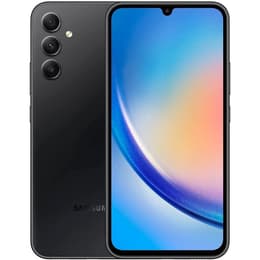
Galaxy A34
Galaxy A34
Starting at

Refurbished price:135.00

Versus €399.00 new

See options
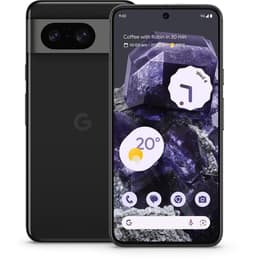
Google Pixel 8a
Google Pixel 8a
Starting at

Refurbished price:223.00

Versus €593.53 new

See options

Ratings

The Samsung Galaxy A34, released in March 2023, and the Google Pixel 8a, launched in May 2024, are both Android smartphones designed to offer a balanced experience for everyday users. While they share the same operating system, key differentiators include their release timelines, software support commitments, and core hardware philosophies, which influence their overall performance and features.

Scores

Durability

The longevity of a smartphone is influenced by its release date, software support, and ease of repair.

  • Software Support: The Galaxy A34, launched in March 2023, is expected to receive four major OS updates and five years of security updates, extending its support until approximately 2027. In contrast, the Pixel 8a, released in May 2024, offers a significantly longer commitment with seven years of OS, security, and Feature Drop updates, ensuring support until 2031.
  • Repairability: The Galaxy A34 generally exhibits a higher repairability score, with some assessments placing it around 8.0 to 8.3 out of 10, indicating a relatively straightforward process for component replacement. The Pixel 8a, however, has a lower repairability score, estimated around 4.5 out of 10, partly due to the use of strong adhesives and soldered components that complicate repairs.
  • Practical Lifespan: Users prioritizing extended software longevity will find the Pixel 8a's seven-year update policy more appealing, offering a longer period of access to the latest Android features and security patches. The Galaxy A34 provides a solid, though shorter, support window.

Year of Release

2023

2024

Compatible with latest Update

Yes

Yes

OS

Android

Android

Foldable

No

No

Performance

Performance in daily use, including app handling and battery endurance, varies between these two devices due to their internal components and optimization.

  • Processor Capabilities: The Galaxy A34, powered by its processor, delivers smooth performance for general tasks and navigation. It can handle most games, though more graphically demanding titles might require adjusting settings for optimal frame rates. The Pixel 8a, featuring its integrated processor, offers a highly responsive experience, smoothly managing demanding applications, multitasking, and leveraging advanced AI features.
  • Battery Behavior: The Galaxy A34 is equipped with a 5000 mAh battery, which typically provides excellent endurance, often lasting up to two days with moderate usage. The Pixel 8a has a 4492 mAh battery, generally offering sufficient power for a full day of typical use, though heavy users might find themselves needing to charge more frequently.
  • Storage and Multitasking: The Galaxy A34 is available with 6GB or 8GB of RAM and 128GB or 256GB of internal storage, with the added benefit of a microSDXC slot for expandable storage. The Pixel 8a comes with 8GB of RAM and storage options of 128GB or 256GB, but it does not offer expandable storage.

Memory (GB)

6 GB

8 GB

Screen quality

The visual experience on a smartphone is largely defined by its display technology, size, and clarity.

  • Display Technology and Size: The Galaxy A34 features a larger 6.6-inch Super AMOLED display, providing vibrant colors and deep blacks. The Pixel 8a comes with a more compact 6.1-inch Actua OLED display, also known for its rich colors and contrast.
  • Resolution and Clarity: Both devices offer a Full HD+ resolution, with the Galaxy A34 at 1080 x 2340 pixels (~390 ppi) and the Pixel 8a at 1080 x 2400 pixels (~430 ppi). The Pixel 8a's slightly higher pixel density on a smaller screen results in a marginally sharper image.
  • Brightness and Smoothness: Both phones feature a 120Hz refresh rate for smooth scrolling and animations. The Pixel 8a boasts a higher peak brightness of up to 2000 nits, which can improve visibility in bright outdoor conditions, compared to the Galaxy A34's generally good, but lower, brightness levels. The Galaxy A34 uses Gorilla Glass 5 for screen protection, while the Pixel 8a uses Gorilla Glass 3.

Resolution

1080 x 2340

1080 x 2400

Screen type

Super AMOLED

OLED

Audiovisual

Camera performance is a significant factor for many users, with both devices offering distinct approaches to photography and videography.

  • Rear Camera Systems: The Galaxy A34 features a triple rear camera setup, including a 48MP main sensor with optical image stabilization (OIS), an 8MP ultrawide lens, and a 5MP macro lens. Its main camera captures good daylight photos with saturated colors, and Night mode aids in low-light conditions, though the ultrawide and macro lenses are less capable. The Pixel 8a has a dual rear camera system, comprising a 64MP main sensor with OIS and a 13MP ultrawide lens. It is highly regarded for its computational photography, producing vivid and detailed images, and includes AI-powered editing features like Magic Editor and Best Take.
  • Front Camera and Video: Both devices are equipped with a 13MP front-facing camera. The Galaxy A34 supports video recording up to 4K at 30 frames per second (fps) on both its main and front cameras. The Pixel 8a can record 4K video at up to 60fps with its main camera, and 4K at 30fps with its ultrawide and front cameras.
  • Audio Experience: The Galaxy A34 includes stereo speakers that are generally described as loud and well-balanced for media consumption. The Pixel 8a also features stereo speakers, though some users have noted that the audio output may not be as loud and can sound muffled at maximum volume.

Main camera

48 megapixels

64 megapixels

Front camera

13 megapixels

13 megapixels

Miscellaneous

Beyond core features, practical elements like connectivity, physical design, and security options contribute to the overall user experience.

  • Connectivity and Ports: Both smartphones support 5G connectivity and feature a USB-C port for charging and data transfer, neither includes a traditional headphone jack. The Galaxy A34 supports Wi-Fi 5, while the Pixel 8a offers the newer Wi-Fi 6E standard, potentially providing faster and more stable wireless connections in compatible environments. Both devices utilize Bluetooth 5.3 for wireless accessories.
  • Biometric Security: The Galaxy A34 incorporates an under-display optical fingerprint sensor, which some users have reported can be slow. The Pixel 8a also features an under-display optical fingerprint sensor and adds the convenience of face unlock.
  • Design and Durability: The Galaxy A34 is slightly larger and heavier, measuring 161.3 x 78.1 x 8.2 mm and weighing 199g, with a Gorilla Glass 5 front and a plastic back and frame. The Pixel 8a is more compact at 152.1 x 72.7 x 8.9 mm and 188g, featuring a Gorilla Glass 3 front, a plastic back, and an aluminum frame. Both devices carry an IP67 rating for dust and water resistance.

Weight

199 g

188 g

Screen size (in)

6.6

6.1

Network

5G

5G

SIM card

Dual Physical SIM

Physical SIM + eSIM

Carrier compatibility

Unlocked

Unlocked

Connector

USB-C

USB-C

User feedback for the Galaxy A34 often praises its vibrant display, robust battery life, and Samsung's commitment to software updates. Common criticisms sometimes point to the performance of its secondary cameras and the speed of its fingerprint sensor. For the Pixel 8a, users frequently highlight its exceptional camera capabilities, smooth performance driven by its integrated processor, and Google's industry-leading software support. Some common concerns include its screen bezels and speaker quality.

Users prioritizing a larger display, extended battery life, and the flexibility of expandable storage may find the Galaxy A34 to be a suitable choice. Conversely, individuals who place a premium on advanced camera performance, long-term software updates, and a more compact device with integrated AI features will likely lean towards the Pixel 8a. Both devices offer compelling features for different user needs. For those considering either model, exploring quality-assured refurbished options can provide an eco-friendly alternative to new devices.


See all articles

Our recent comparisons