
Google Pixel 7A Vs iPhone 15

Google Pixel 7A
Google Pixel 7A
Starting at

Refurbished price:175.00

Versus €649.99 new

See options
iPhone 15
iPhone 15
Starting at

Refurbished price:396.00

Versus €879.00 new

See options

Ratings

The Google Pixel 7A, released in May 2023, and the iPhone 15, launched in September 2023, represent distinct approaches to the modern smartphone experience. While both are capable devices, they cater to different user preferences through their respective operating systems and core design philosophies. The Pixel 7A operates on Google's Android platform, emphasizing computational photography and a streamlined user interface, whereas the iPhone 15 runs on Apple's iOS, known for its integrated ecosystem and robust performance.

Scores

Durability

When considering the long-term usability of a smartphone, factors like software support and physical resilience are key. Both the Pixel 7A and the iPhone 15 offer solid foundations, but with some differences in their expected lifespans and repairability.

  • Software Longevity: The Google Pixel 7A typically receives three years of major Android software updates and five years of security updates from its release. The iPhone 15, running iOS, generally benefits from a longer period of major operating system updates, often extending to five or six years.
  • Physical Durability: The Pixel 7A features Corning Gorilla Glass 3 for screen protection and carries an IP67 rating for dust and water resistance, indicating it can withstand submersion in up to 1 meter of water for 30 minutes. The iPhone 15 is equipped with a Ceramic Shield front cover and a color-infused glass back, alongside an IP68 rating, allowing for submersion in up to 6 meters of water for 30 minutes.
  • Repairability: The Pixel 7A initially received a 4/10 repairability score from iFixit, which was later upgraded to 5/10 after Google released comprehensive service manuals. The iPhone 15 has seen its iFixit repairability score improve to 7/10, up from an initial 4/10, partly due to improved access for repairs and the ability to use parts from other identical iPhones.

Performance

The performance of a smartphone is crucial for daily tasks, from app usage to multitasking and gaming. Both devices offer capable internal components designed to handle a variety of demands.

  • Processing Power: The Google Pixel 7A is powered by Google's Tensor G2 processor, which is designed to optimize AI and machine learning tasks, contributing to features like advanced photography and voice processing. The iPhone 15 utilizes a current-generation processor, enabling smooth operation across applications and efficient handling of graphics-intensive content.
  • Multitasking and Storage: The Pixel 7A comes with 8GB of RAM and 128GB of internal storage. The iPhone 15 includes 6GB of RAM and offers storage options of 128GB, 256GB, or 512GB. Both configurations support efficient multitasking and provide ample space for applications and media, with the iPhone offering more flexibility in storage capacity.
  • Battery Behavior: The Pixel 7A houses a 4385 mAh battery. User experiences with the Pixel 7A's battery life have been mixed, with some reporting that heavy usage or certain applications can lead to more frequent charging. The iPhone 15, with a 3349 mAh battery, generally provides a full day of use for many users, with some tests indicating over 11 hours of continuous use.

Memory (GB)

8 GB

6 GB

Screen quality

The display is a primary interface for smartphone interaction, and both devices offer vibrant viewing experiences with distinct characteristics.

  • Display Technology and Size: Both the Google Pixel 7A and the iPhone 15 feature 6.1-inch OLED displays, known for their deep blacks and high contrast. The Pixel 7A has a resolution of 2400x1080 pixels, while the iPhone 15 offers a slightly higher resolution of 2556x1179 pixels, resulting in similar pixel densities for clear visuals.
  • Refresh Rate and Smoothness: The Pixel 7A features a 90Hz refresh rate, which contributes to smoother scrolling and a more fluid visual experience compared to standard 60Hz displays. The iPhone 15 maintains a 60Hz refresh rate.
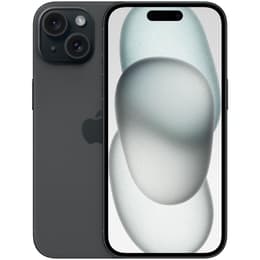
  • Brightness and Outdoor Visibility: The iPhone 15's display can reach a peak outdoor brightness of up to 2000 nits, making it highly visible even in direct sunlight. While the Pixel 7A's display is generally bright, some users have noted that its brightness can be a concern in very sunny conditions. The iPhone 15 also incorporates the Dynamic Island, a feature that dynamically adapts to show alerts and activities.

Audiovisual

Both the Google Pixel 7A and the iPhone 15 offer advanced camera systems, each with strengths in different areas of photography and videography.

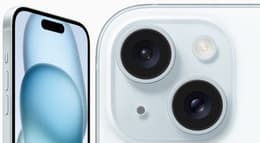
  • Rear Camera Systems: The Pixel 7A features a dual-camera setup with a 64MP main sensor (with optical image stabilization) and a 13MP ultrawide lens. The iPhone 15 also has a dual-camera system, comprising a 48MP main sensor (with sensor-shift optical image stabilization and 2x telephoto zoom capabilities) and a 12MP ultrawide lens.
  • Photography Performance: The Pixel 7A is recognized for its computational photography, delivering images with good color accuracy, dynamic range, and detail, particularly in still photos. The iPhone 15 is praised for its natural color reproduction, excellent detail, and strong performance in various lighting conditions, including low light.
  • Video Recording Capabilities: The Pixel 7A can record 4K video at up to 60 frames per second with its main camera and 4K at 30 frames per second with its front camera. The iPhone 15 supports 4K video recording at various frame rates up to 60 frames per second across its cameras and includes features like Cinematic mode and Action mode for enhanced video capture.

Miscellaneous

Beyond core performance, several practical features contribute to the overall user experience and daily convenience of these devices.

  • Connectivity and Ports: Both smartphones support modern connectivity standards, including 5G, Wi-Fi 6E, and Bluetooth 5.3. A notable difference is the charging and data port: the Pixel 7A uses USB-C 3.2, while the iPhone 15 has transitioned to USB-C.
  • Biometric Security: The Google Pixel 7A incorporates an under-display fingerprint sensor for secure unlocking and authentication. The iPhone 15 relies on Face ID, Apple's facial recognition system.
  • Design and Handling: The Pixel 7A weighs 193.5 grams and has dimensions of 152 mm (H) x 72.9 mm (W) x 9 mm (D). The iPhone 15 is slightly lighter at 171 grams and has dimensions of 147.6 mm (H) x 71.6 mm (W) x 7.8 mm (D). Both devices feature stereo speakers, but neither includes a traditional 3.5mm headphone jack.

Screen size (in)

6.1

6.1

Network

5G

5G

SIM card

Physical SIM + eSIM

Physical SIM + eSIM

Carrier compatibility

Unlocked

Unlocked

Choosing between the Google Pixel 7A and the iPhone 15 involves weighing their distinct strengths and user experiences. User feedback for the Pixel 7A often highlights its exceptional camera capabilities, particularly for still photography, and the clean, intuitive Android interface. However, some users have expressed concerns regarding its battery performance, potential heating under heavy load, and occasional inconsistencies with the fingerprint sensor.

The iPhone 15 generally receives praise for its vibrant display, robust battery life that often lasts a full day, and its overall smooth and responsive performance within the iOS ecosystem. Common points of discussion among users include the 60Hz refresh rate of its display, which some find less fluid compared to higher refresh rate screens on other devices, and a preference for a fingerprint sensor over Face ID for unlocking.

Users who prioritize a powerful and versatile camera for everyday photos, coupled with a pure Android experience and Google's AI-driven features, may find the Pixel 7A well-suited to their needs. Conversely, individuals who value a highly integrated ecosystem, consistent performance, a brighter display for outdoor use, and a longer software support window may lean towards the iPhone 15. Both devices offer compelling features, and considering a quality-assured refurbished option can provide an eco-friendly alternative for either model.