

iPhone 14 Pro Max Vs Xiaomi Redmi Note 11 Pro 5G

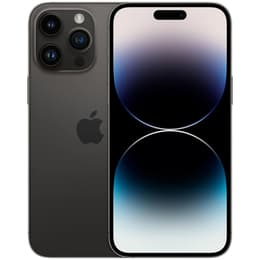
iPhone 14 Pro Max
iPhone 14 Pro Max
Starting at

Refurbished price:446.00

Versus €1,489.00 new

See options
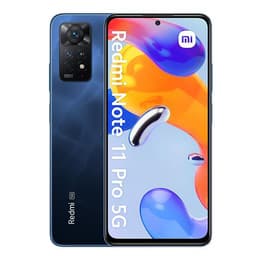
Xiaomi Redmi Note 11 Pro 5G
Starting at

Refurbished price:126.00

Versus €699.00 new

See options

Ratings

The iPhone 14 Pro Max (released September 2022) and the Xiaomi Redmi Note 11 Pro 5G (released January 2022) are both smartphones, yet they cater to different user expectations and priorities. While the iPhone 14 Pro Max represents a premium offering with advanced features and a proprietary operating system, the Redmi Note 11 Pro 5G focuses on delivering a comprehensive Android experience with strong core specifications.

The primary differentiators lie in their operating systems, overall performance capabilities, and camera systems, with the iPhone running on iOS and the Redmi on Android.

Scores

Durability

The longevity of a smartphone is influenced by its release timeline, software support, and physical durability. These two devices offer different trajectories in terms of expected practical lifespan.

  • Release Timeline and Age: The Xiaomi Redmi Note 11 Pro 5G was released in January 2022 [4, 5], making it slightly older than the iPhone 14 Pro Max, which launched in September 2022 [2, 7]. This difference in release dates means the iPhone 14 Pro Max will likely receive software updates for a longer period.
  • OS Support Duration: Apple typically provides major iOS updates for iPhones for approximately five to seven years, with security updates extending even longer, sometimes up to eight years [13, 23, 30, 31]. The iPhone 14 Pro Max launched with iOS 16 and is currently on iOS 26.3.1 [2, 6, 14]. Xiaomi's Android devices generally receive fewer major OS updates, typically two to three, along with security patches for a few years. The Redmi Note 11 Pro 5G launched with Android 11 and MIUI 13 [3, 5, 26, 34].
  • Physical Durability: The iPhone 14 Pro Max features a Ceramic Shield front and a stainless steel frame, contributing to its IP68 dust and water resistance, allowing submersion up to 6 meters for 30 minutes [7, 14, 19]. The Redmi Note 11 Pro 5G uses Corning Gorilla Glass 5 for screen protection and has a glass back [1, 4, 15, 22], but official IP water and dust resistance ratings are not consistently highlighted in available information, with some user feedback noting a lack of water and dust protection [26].

Year of Release

2022

2022

Compatible with latest Update

Yes

No

OS

iOS

Android

Foldable

No

No

Performance

Performance is a key aspect for daily usage, affecting everything from app responsiveness to demanding tasks like gaming and multitasking. Both devices offer capable performance for their respective segments.

  • Processor Capabilities: The iPhone 14 Pro Max is equipped with a current-generation processor, enabling smooth handling of demanding applications, complex multitasking, and graphically intensive games [2, 6, 8, 14, 25]. The Xiaomi Redmi Note 11 Pro 5G features a processor designed for efficient 5G connectivity and capable everyday performance [3, 4, 9, 16, 37]. It handles most daily tasks without significant lag and can manage multitasking with several apps open [9].
  • Multitasking and Responsiveness: The iPhone 14 Pro Max, with its 6GB of RAM, offers robust multitasking capabilities, allowing users to switch between numerous applications seamlessly [2, 6, 8, 14, 25]. The Redmi Note 11 Pro 5G, available with 6GB or 8GB of RAM, also provides a responsive experience for typical daily use and multitasking, though it may show some slowdown with very heavy gaming or extensive multitasking [4, 5, 9, 35].
  • Storage Options: The iPhone 14 Pro Max offers a wide range of internal storage options, from 128GB up to 1TB, without expandable storage [7, 10, 14, 25]. The Redmi Note 11 Pro 5G comes with 64GB or 128GB of internal storage, which can be expanded significantly via a microSD card up to 1TB [3, 4, 5, 35].
  • Battery Behavior: The iPhone 14 Pro Max features a 4323 mAh battery, providing all-day power for most users, with some reporting 1-2 days depending on usage [6, 8, 14, 25, 32]. The Redmi Note 11 Pro 5G has a larger 5000 mAh battery, often lasting a full day of intensive use or two days of light use [1, 3, 4, 5, 22, 37]. It also supports 67W fast charging, capable of reaching 50% in 15 minutes and a full charge in 42 minutes [4, 22].

Memory (GB)

6 GB

6 GB

Screen quality

The display is a primary interface for smartphone interaction, and both devices offer vibrant and clear viewing experiences, though with distinct characteristics.

  • Display Technology and Clarity: The iPhone 14 Pro Max features a 6.7-inch LTPO Super Retina XDR OLED display with a resolution of 2796 x 1290 pixels, resulting in a sharp 460 pixels per inch (ppi) [2, 7, 11, 14]. This OLED panel delivers deep blacks and vibrant colors [11]. The Redmi Note 11 Pro 5G has a 6.67-inch Super AMOLED display with a 1080 x 2400 pixel resolution, offering a pixel density of 395 ppi [1, 4, 5, 15, 22]. It also provides excellent contrast and vivid colors [15, 17].
  • Brightness and Outdoor Visibility: The iPhone 14 Pro Max boasts impressive brightness levels, with a typical maximum of 1000 nits, a peak HDR brightness of 1600 nits, and an outdoor peak brightness of 2000 nits, ensuring excellent visibility even in direct sunlight [2, 11, 18, 19, 20, 25]. The Redmi Note 11 Pro 5G offers a typical brightness of 700 nits and a peak brightness of 1200 nits, with an effective sunlight mode for improved outdoor viewing [4, 15, 17].
  • Refresh Rate and Smoothness: Both devices feature a 120Hz refresh rate, contributing to smooth scrolling and a more fluid user experience [1, 2, 3, 5, 11, 14, 15, 17, 20, 21, 22, 37]. The iPhone 14 Pro Max's ProMotion display can adapt its refresh rate down to 1Hz to conserve battery life [2, 11, 18]. The Redmi Note 11 Pro 5G's 120Hz refresh rate is a notable feature for its segment, though it can be set to 60Hz to extend battery life [3, 15, 16].

Resolution

1290 x 2796

1080 x 2400

Screen type

LTPO Super Retina XDR OLED

Super AMOLED

Audiovisual

Camera capabilities are a significant factor for many users, and both smartphones offer distinct photographic and videographic experiences.

  • Main Camera System: The iPhone 14 Pro Max features a versatile triple-camera system, including a 48MP main sensor with sensor-shift optical image stabilization (OIS), a 12MP ultrawide camera, and a 12MP telephoto lens with 3x optical zoom and OIS [6, 12, 14, 19, 27]. The Redmi Note 11 Pro 5G comes with a 108MP main camera, an 8MP ultrawide camera with a 118° field of view, and a 2MP macro camera [1, 3, 4, 5, 16, 17, 21, 37].
  • Photography Performance: The iPhone 14 Pro Max excels in capturing detailed images, especially with its 48MP main sensor which can produce 12MP photos through pixel binning or full 48MP ProRAW files for greater editing flexibility [12, 29, 32]. It shows improved low-light performance and accurate white balance [32]. The Redmi Note 11 Pro 5G's 108MP main camera delivers good image quality with natural colors, high sharpness, and good dynamic range in optimal lighting conditions [16, 17, 21]. Its low-light performance is decent for its category, but night shots are not its strongest point [16].
  • Video Recording Capabilities: The iPhone 14 Pro Max offers advanced video recording, including 4K resolution at various frame rates up to 60fps, Cinematic mode for shallow depth of field, and Action mode for enhanced stabilization [14, 39]. It also supports ProRes video recording [14, 39]. In contrast, the Redmi Note 11 Pro 5G is limited to 1080p video recording at 30fps, lacking 4K capability, which is a notable difference from some predecessors and competitors [1, 3, 15, 16, 17, 21, 35].
  • Front Camera: The iPhone 14 Pro Max has a 12MP front camera with autofocus and a dedicated depth sensor for Face ID [6, 14, 19]. The Redmi Note 11 Pro 5G features a 16MP front camera that provides adequate results for selfies and video calls [3, 4, 5, 17, 35].

Main camera

48 megapixels

108 megapixels

Front camera

12 megapixels

16 megapixels

Miscellaneous

Beyond core specifications, several practical features and design elements contribute to the overall user experience.

  • Connectivity and Ports: Both devices support 5G connectivity for faster mobile data speeds [2, 6, 14, 24, 33, 37]. The iPhone 14 Pro Max uses a Lightning port for charging and data transfer [7, 14, 25] and supports Wi-Fi 6 and Bluetooth 5.3 [14]. It also features Emergency SOS via satellite for communication in areas without cellular or Wi-Fi coverage [2, 24]. The Redmi Note 11 Pro 5G includes a USB-C 2.0 port, Wi-Fi (802.11 a/b/g/n/ac), and Bluetooth 5.1 [4, 5, 22, 35]. Notably, it retains a 3.5mm headphone jack, which is absent on the iPhone [4, 22, 35, 36].
  • Biometric Security and Sensors: The iPhone 14 Pro Max relies on Face ID for secure facial recognition [2, 14]. The Redmi Note 11 Pro 5G features a side-mounted fingerprint sensor integrated into the power button, which is reported to be fast and accurate, along with AI face unlock [4, 16, 22, 33, 35]. The Redmi also includes an IR blaster, allowing it to function as a universal remote control [33, 36, 37].
  • Design and Handling: The iPhone 14 Pro Max has dimensions of 160.7 x 77.6 x 7.85 mm and weighs 240g, featuring a flat-edge design and a Dynamic Island cutout at the top of the display [2, 7, 10, 14, 20, 24]. The Redmi Note 11 Pro 5G measures 164.2 x 76.1 x 8.1 mm and weighs 202g, also sporting a flat-edge design and a matte-finish glass back [1, 4, 5, 15, 17, 26, 34, 35].
  • Audio Experience: The iPhone 14 Pro Max offers stereo speakers [14]. The Redmi Note 11 Pro 5G also features loud and robust-sounding stereo speakers [15, 36, 37].

Weight

120 g

202 g

Screen size (in)

6.7

6.67

Network

5G

5G

SIM card

Physical SIM + eSIM

Dual Physical SIM

Carrier compatibility

Unlocked

Unlocked

Connector

Lightning

USB-C + Jack 3.5mm

The iPhone 14 Pro Max and the Xiaomi Redmi Note 11 Pro 5G offer distinct propositions in the smartphone market, each with its own set of strengths and considerations based on user feedback and specifications.

Users frequently praise the iPhone 14 Pro Max for its exceptional display brightness and clarity, particularly its outdoor visibility and the adaptive 120Hz refresh rate [18, 19, 20, 25]. Its camera system, especially the 48MP main sensor and advanced video capabilities like Cinematic and Action modes, receives high marks for detail and versatility [12, 19, 27, 32]. The overall performance for demanding tasks and the long-term software support from Apple are also consistently highlighted as strong points [2, 8, 13, 23, 31]. Some common criticisms, however, include its weight and the continued use of the Lightning port [14, 20].

The Xiaomi Redmi Note 11 Pro 5G is often commended for its vibrant 120Hz AMOLED display and strong battery life, with many users appreciating its fast charging capabilities [1, 3, 15, 16, 21, 37]. The 108MP main camera is generally seen as capable in good lighting conditions [16, 17, 21]. However, frequent concerns revolve around the lack of 4K video recording, which is a step down from its predecessor, and the potential for a less consistent camera experience in varied conditions [1, 15, 16, 17, 21]. The software experience, while functional, is sometimes noted for being less streamlined compared to premium alternatives [9].

Users prioritizing a top-tier camera system with advanced video features, a highly optimized operating system with extended software support, and industry-leading display brightness will find the iPhone 14 Pro Max well-suited to their needs. Its robust performance makes it ideal for heavy multitasking and demanding applications.

Conversely, users who value a large, smooth display, excellent battery endurance with rapid charging, expandable storage, and the flexibility of the Android ecosystem may lean toward the Xiaomi Redmi Note 11 Pro 5G. It is a practical choice for everyday use and media consumption, especially for those who appreciate the inclusion of a headphone jack and an IR blaster.

For those considering either device, exploring quality-assured refurbished options can provide an eco-friendly alternative, allowing access to these technologies while making a sustainable choice.


See all articles

Our recent comparisons