

Compare models
Google Pixel 9a Vs iPhone SE (2022)
- 1-year minimum warranty
- Free delivery on all orders
- Free 30-day returns
Differences at a glance
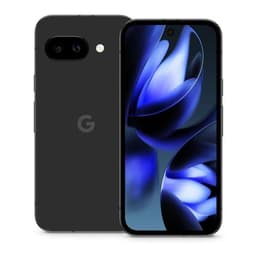
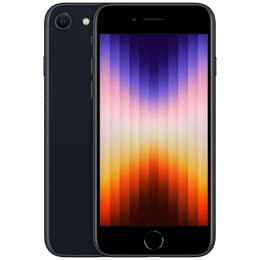
The Google Pixel 9a (2025) and the iPhone SE (2022) represent two distinct approaches to everyday mobile technology, balancing modern capabilities with accessible design philosophies. While the Google Pixel 9a runs on the Android ecosystem with an emphasis on contemporary display technology and extended software support, the iPhone SE (2022) relies on Apple's iOS platform inside a traditional, compact form factor featuring physical navigation controls. These devices offer divergent user experiences defined by their differing release eras and software environments.
Available Models
Colour
Storage
Scores
Durability
When evaluating hardware longevity and software support, the Google Pixel 9a and iPhone SE (2022) offer contrasting timelines based on their respective release years and manufacturer commitments.
- Software Support Duration: The Google Pixel 9a benefits from an extensive update window providing long-term operating system upgrades, whereas the iPhone SE (2022) operates on a mature software cycle with a shorter remaining active support window.
- Repairability and Build Longevity: Both models utilize sealed internal configurations that require professional intervention for major component replacements, though standard protective casing helps mitigate daily wear for each device.
- Expected Practical Lifespan: The Pixel 9a's newer hardware generation and larger capacity energy storage position it for extended daily utility over several years, while the iPhone SE suits users comfortable with shorter upgrade cycles.
Year of Release
2025
2022
Performance
Daily operation and multitasking capabilities vary significantly between the two devices due to differences in memory allocation and background system management.
- App Loading and Multitasking: The Google Pixel 9a handles demanding applications and rapid switching smoothly thanks to its current-generation processor and ample memory allocation, while the iPhone SE (2022) manages everyday tasks efficiently using a streamlined processor paired with a lighter memory footprint.
- Battery Behavior: The Pixel 9a incorporates a high-capacity power source designed to comfortably sustain heavy use through a full day, whereas the iPhone SE (2022) features a smaller energy capacity that often necessitates midday recharging during intensive usage.
- Storage Configurations: Both smartphones offer multiple internal storage tiers to accommodate varying user libraries for photos, local media, and downloaded applications.
Screen quality
Display performance and visual workspace presentation differ substantially, directly impacting media consumption and outdoor readability.
- Display Technology: The Google Pixel 9a utilizes an OLED panel delivering deep black levels and vibrant color reproduction, while the iPhone SE (2022) employs a traditional LCD screen with standard contrast ratios.
- Refresh Rate and Smoothness: The Pixel 9a features a high variable refresh rate up to 120Hz for fluid scrolling and motion, compared to the fixed 60Hz refresh rate found on the iPhone SE.
- Size and Workspace: The Pixel 9a provides a spacious 6.3-inch viewing area suited for productivity and video, whereas the iPhone SE (2022) features a compact 4.7-inch display accompanied by traditional bezels and a home button.
Audiovisual
Imaging hardware and multimedia output reflect different priorities in photography and audio-visual playback.
- Camera System Capabilities: The Google Pixel 9a equips a dual-lens rear array including an ultra-wide sensor alongside computational photography tools, whereas the iPhone SE (2022) relies on a single rear lens focused on straightforward point-and-shoot photography.
- Low-Light and Video Performance: Computational processing allows the Pixel 9a to maintain clarity in challenging lighting conditions and steady high-resolution video, while the iPhone SE handles bright daylight well but lacks specialized low-light modes.
- Audio and Media Output: Both devices deliver clear stereo sound for calls and media playback, though neither includes a traditional 3.5mm headphone jack.
Miscellaneous
Physical dimensions, connectivity standards, and daily handling characteristics establish distinct user experiences outside of core processing tasks.
- Dimensions and Handling: The iPhone SE (2022) offers a notably lightweight and compact body that fits easily into smaller pockets and enables effortless one-handed use, while the Pixel 9a offers a larger surface area suited for expanded visual content.
- Authentication Methods: The Pixel 9a utilizes modern biometric security via an in-display fingerprint sensor and facial recognition, contrasted with the iPhone SE's physical Touch ID home button.
- Connectivity and Ports: The Pixel 9a adopts a modern USB-C port configuration alongside contemporary wireless standards, whereas the iPhone SE (2022) retains Apple's proprietary Lightning connector.
Screen size (in)
6.3
4.7
Network
5G
5G
SIM card
Physical SIM + eSIM
Physical SIM + eSIM
Carrier compatibility
Unlocked
Unlocked
Connector
USB-C
Lightning
What the community thinks
Choosing between the Google Pixel 9a and the iPhone SE (2022) depends heavily on individual preferences regarding physical size, software ecosystems, and daily utility. Users prioritizing modern display smoothness, extended battery endurance, and versatile multi-lens photography will find the Google Pixel 9a well-suited to their daily routines. Conversely, users who prefer a compact footprint, a physical home button, and the Apple iOS environment may lean toward the iPhone SE (2022). For consumers seeking a sustainable choice, a quality-assured refurbished option provides an eco-friendly alternative that extends device lifecycles without compromising on core functionality. Ultimately, evaluating how each device aligns with specific daily habits ensures a satisfying long-term selection.