

Xiaomi 12T Vs Xiaomi 13T

Xiaomi 12T
Xiaomi 12T
Starting at

Refurbished price:140.00

Versus €649.00 new

See options
Xiaomi 13T
Xiaomi 13T
Starting at

Refurbished price:183.00

Versus €630.00 new

See options

Ratings

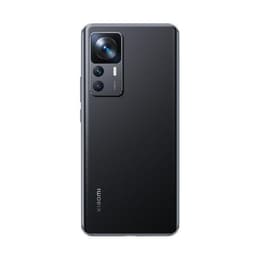
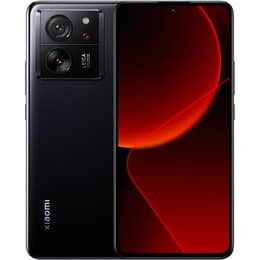
The Xiaomi 12T, released in October 2022, and the Xiaomi 13T, launched in September 2023, are both Android smartphones from Xiaomi's T series. While they share a similar design philosophy and core functionalities, the newer Xiaomi 13T brings advancements in processor technology, display capabilities, and camera features, alongside enhanced durability. Both devices run on Xiaomi's MIUI software layered over Android, offering a consistent user experience.

Scores

Durability

When considering the longevity of these devices, several factors come into play, including their release timelines, software support, and physical durability features.

  • Release Timeline: The Xiaomi 12T was introduced in October 2022, making it approximately a year older than the Xiaomi 13T, which launched in September 2023. This difference directly impacts their remaining software support window.
  • Software Longevity: The Xiaomi 12T typically receives around three years of Android OS updates. The Xiaomi 13T, being newer, is expected to receive four major Android OS updates and HyperOS, offering a longer period of software support and security patches.
  • Durability Features: The Xiaomi 12T features Corning Gorilla Glass 5 on the front and has an IP53 rating for dust and splash resistance. The Xiaomi 13T also uses Gorilla Glass 5 for its display but significantly upgrades its protection with an IP68 rating, indicating full dust and water resistance, making it more resilient to environmental elements.

Year of Release

2022

2023

Compatible with latest Update

Yes

Yes

OS

Android

Android

Foldable

No

No

Performance

Both the Xiaomi 12T and 13T are designed to offer smooth performance for daily tasks, but they differ in their underlying processing power and efficiency.

  • Processor Capabilities: The Xiaomi 12T is equipped with a processor built on a 5nm manufacturing process, providing capable performance for everyday applications and moderate gaming. The Xiaomi 13T features a newer processor manufactured with a more advanced 4nm process, which generally translates to improved power efficiency and enhanced performance for demanding applications and multitasking.
  • System Responsiveness: Users of the Xiaomi 12T report smooth operation for general use, with the device handling most apps without significant slowdowns. The Xiaomi 13T, with its newer processor, offers a slightly more responsive experience, particularly noticeable in heavy multitasking or graphically intensive games, where it maintains stable frame rates.
  • Storage and RAM: Both models typically come with 8GB or 12GB of RAM and 128GB or 256GB of internal storage, utilizing UFS 3.1 technology for fast data access. The Xiaomi 13T also includes a memory extension feature through MIUI 14, allowing for additional virtual RAM.

Memory (GB)

8 GB

8 GB

Screen quality

The display is a central feature for both smartphones, offering vibrant visuals, though the Xiaomi 13T introduces some notable enhancements.

  • Display Technology and Resolution: Both devices feature a 6.67-inch AMOLED display with a resolution of 1220 x 2712 pixels, providing sharp and clear visuals. AMOLED technology ensures deep blacks and vibrant colors, suitable for media consumption.
  • Refresh Rate and Brightness: The Xiaomi 12T offers a 120Hz refresh rate, contributing to smooth scrolling and animations. It has a typical brightness of 500 nits and a peak brightness of 900 nits. The Xiaomi 13T elevates the experience with a 144Hz adaptive refresh rate, providing even smoother visuals, and boasts a significantly higher peak brightness of 2600 nits, improving outdoor visibility.
  • Viewing Experience: Both displays support HDR10+, with the Xiaomi 13T additionally supporting Dolby Vision, enhancing contrast and color accuracy for compatible content. The higher brightness of the 13T makes it particularly well-suited for use in bright environments.

Resolution

1220 x 2712

1220 x 2712

Screen type

AMOLED

AMOLED

Audiovisual

The camera systems on the Xiaomi 12T and 13T offer distinct capabilities, with the newer model benefiting from a collaboration with Leica.

  • Main Camera: The Xiaomi 12T features a 108MP main camera with Optical Image Stabilization (OIS), capable of capturing detailed images in good lighting conditions. The Xiaomi 13T comes with a 50MP main camera, also with OIS, which is Leica-tuned, offering enhanced color science and image processing for a distinct photographic style.
  • Versatility and Low-Light: The Xiaomi 12T includes an 8MP ultrawide and a 2MP macro lens. The Xiaomi 13T significantly improves versatility by adding a 50MP telephoto lens with 2x optical zoom, alongside a 12MP ultrawide camera. Both phones offer night modes, with the 13T's Leica tuning often resulting in better low-light performance and dynamic range.
  • Video Recording and Selfies: Both devices support 4K video recording at 30 frames per second (fps) with their main cameras. For selfies, both have a 20MP front-facing camera, providing good detail and color reproduction.

Main camera

108 megapixels

50 megapixels

Front camera

20 megapixels

20 megapixels

Miscellaneous

Beyond the core specifications, several practical elements differentiate the user experience between these two Xiaomi smartphones.

  • Connectivity and Ports: Both the Xiaomi 12T and 13T support 5G connectivity, Wi-Fi 6 (802.11ax), and NFC for contactless payments. The Xiaomi 13T further upgrades to Wi-Fi 7 and Bluetooth 5.4, offering potentially faster and more stable wireless connections. Both devices feature a USB-C port for charging and data transfer, and neither includes a traditional 3.5mm headphone jack.
  • Biometric Security: Both smartphones incorporate an in-display fingerprint sensor for secure unlocking. They also offer face recognition capabilities.
  • Design and Handling: The Xiaomi 12T weighs 202 grams and measures 163.1 x 75.9 x 8.6 mm. The Xiaomi 13T is slightly lighter at 193g or 197g (depending on the back material) and has dimensions of 162.2 x 75.7 x 8.5 mm, making it marginally more compact. The 13T also offers an option for an eco-leather back in its Alpine Blue variant, providing a different tactile experience compared to the glass backs of both models.

Weight

220 g

193 g

Screen size (in)

6.67

6.67

Network

5G

5G

SIM card

Dual Physical SIM

Dual Physical SIM

Carrier compatibility

Unlocked

Unlocked

Connector

USB-C

USB-C

The Xiaomi 12T and Xiaomi 13T both offer compelling smartphone experiences, each with strengths catering to different user priorities. Users frequently praise the Xiaomi 12T for its robust 108MP main camera, which delivers vibrant and detailed photos, and its exceptionally fast 120W wired charging, allowing for very quick power-ups. However, some users have noted that its battery life, while decent, can be underwhelming for heavy usage, and its ultrawide and macro cameras are less impressive.

The Xiaomi 13T, on the other hand, is often lauded for its significantly upgraded display with a 144Hz refresh rate and high peak brightness, making for a smoother and more visible viewing experience, especially outdoors. Its Leica-tuned camera system, particularly the inclusion of a 50MP telephoto lens, receives high praise for its versatility and distinct photographic style, with strong low-light performance. The enhanced IP68 dust and water resistance is also a significant advantage for users seeking greater durability. Criticisms for the 13T sometimes point to its slower 67W charging compared to its predecessor, and some users have reported average battery life despite the 5000mAh capacity.

Users prioritizing rapid charging and a high-megapixel main camera might find the Xiaomi 12T well-suited to their needs. Conversely, those who value a more advanced display, a versatile and high-quality camera system with optical zoom, longer software support, and superior environmental protection will likely lean towards the Xiaomi 13T. Both devices represent solid choices in their respective segments, and for those looking for an eco-friendly alternative, quality-assured refurbished options for both models are available, offering a sustainable choice without compromising on performance.


See all articles

Our recent comparisons


