


Xiaomi 12T Pro Vs Xiaomi Redmi Note 13 Pro+

Xiaomi 12T Pro
Xiaomi 12T Pro
Starting at

Refurbished price:201.00

Versus €1,199.00 new

See options
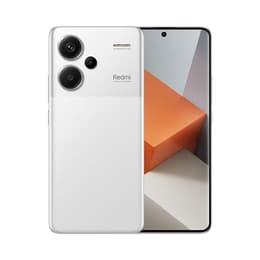
Xiaomi Redmi Note 13 Pro+
Starting at

Refurbished price:198.00

Versus €449.00 new

See options

Ratings

The Xiaomi 12T Pro, released in October 2022, and the Xiaomi Redmi Note 13 Pro+, launched in January 2024, are both Android smartphones from Xiaomi that offer compelling features. While the 12T Pro arrived as a performance-focused device, the Redmi Note 13 Pro+ aims to bring premium features to a broader audience. Both devices run on the Android operating system, with the 12T Pro initially featuring MIUI 13 based on Android 12, and the Redmi Note 13 Pro+ launching with MIUI 14 based on Android 13, with a promised upgrade path to HyperOS.

Scores

Durability

When considering the long-term usability of these devices, their release timelines and software support are key factors.

  • Release and Software Support: The Xiaomi 12T Pro, being an older model from late 2022, will likely receive fewer major Android version updates compared to the Redmi Note 13 Pro+, which was released in early 2024. Xiaomi typically provides several years of software updates, and the newer Redmi Note 13 Pro+ is promised at least three major Android updates, extending its software longevity further into the future.
  • Physical Durability: The Redmi Note 13 Pro+ offers enhanced protection with an IP68 rating for dust and water resistance, meaning it can withstand immersion in fresh water up to 1.5 meters for 30 minutes. In contrast, the Xiaomi 12T Pro has an IP53 rating, providing resistance against dust and light splashes but not full submersion. The Redmi Note 13 Pro+ also features Corning Gorilla Glass Victus for screen protection, while the 12T Pro uses Corning Gorilla Glass 5.
  • Repairability: Both devices, as modern smartphones, generally present moderate repairability challenges due to their sealed designs. However, the choice of materials and the newer design of the Redmi Note 13 Pro+ with its reinforced structural elements might offer a slight edge in overall resilience to daily wear and tear.

Year of Release

2022

2023

Compatible with latest Update

Yes

Yes

OS

Android

Android

Foldable

No

No

Performance

Both smartphones are designed to deliver smooth performance for daily tasks, but they approach demanding applications with different levels of processing power.

  • Processing Power: The Xiaomi 12T Pro is equipped with a powerful chipset that handles demanding applications and graphic-intensive games with ease, offering a responsive experience for users who push their devices. The Redmi Note 13 Pro+ features a very capable mid-range chipset that ensures smooth operation for everyday use, multitasking, and most popular games at good settings.
  • Multitasking and Storage: Both devices offer various RAM configurations, typically ranging from 8GB to 12GB, allowing for efficient multitasking. The 12T Pro comes with UFS 3.1 storage, available in 128GB or 256GB options. The Redmi Note 13 Pro+ also utilizes UFS 3.1 storage, with options up to 512GB, providing ample space and fast data access.
  • Battery and Charging: Both smartphones house a 5000mAh battery, designed to provide a full day of use for most users. A significant shared feature is their 120W fast charging capability, allowing for a full charge in approximately 20 minutes, which is a notable convenience for users on the go. Neither device supports wireless charging.

Memory (GB)

8 GB

12 GB

Screen quality

The visual experience on both devices is characterized by vibrant displays, though with some distinctions in brightness and protection.

  • Display Technology and Resolution: Both the Xiaomi 12T Pro and the Redmi Note 13 Pro+ feature a 6.67-inch AMOLED display with a resolution of 2712 x 1220 pixels, resulting in a sharp pixel density of 446 ppi. This provides clear and detailed visuals for various content.
  • Brightness and Smoothness: Both screens offer a 120Hz refresh rate for smooth scrolling and responsive interactions. The Redmi Note 13 Pro+ boasts a higher peak brightness of 1800 nits, with a High Brightness Mode (HBM) of 1200 nits, making it highly visible even in bright outdoor conditions. The Xiaomi 12T Pro reaches a peak brightness of 1200 nits, with an HBM of around 900 nits.
  • Design and Protection: The Redmi Note 13 Pro+ features a curved display and is protected by Corning Gorilla Glass Victus, offering enhanced scratch and drop resistance. The Xiaomi 12T Pro has a flat display protected by Corning Gorilla Glass 5. Both displays support HDR10+ and Dolby Vision for an enriched viewing experience.

Resolution

1220 x 2712

1220 x 2712

Screen type

AMOLED

AMOLED

Audiovisual

Both smartphones emphasize high-resolution photography, particularly with their main sensors, but differ in their overall camera system capabilities and video recording.

  • Main Camera Performance: Both the Xiaomi 12T Pro and the Redmi Note 13 Pro+ feature a 200-megapixel main camera with optical image stabilization (OIS) and pixel-binning technology, which combines pixels to produce detailed 12.5MP images by default. This allows for capturing sharp photos with good detail and dynamic range in well-lit conditions. Users can also opt for full 200MP shots for maximum detail, useful for cropping.
  • Secondary Cameras and Video: Both devices include an 8-megapixel ultrawide camera and a 2-megapixel macro camera. The ultrawide sensors are generally considered adequate but may show limitations in detail and color consistency compared to the main sensor, especially in low light. The 2MP macro cameras on both are often noted as having limited utility. For video recording, the Xiaomi 12T Pro is capable of recording up to 8K resolution at 24fps, while the Redmi Note 13 Pro+ supports up to 4K video recording.
  • Audio Experience: Both smartphones are equipped with stereo speakers, providing a more immersive audio experience for media consumption and gaming.

Main camera

200 megapixels

200 megapixels

Front camera

20 megapixels

16 megapixels

Miscellaneous

Beyond core performance, several practical features contribute to the overall user experience of these devices.

  • Connectivity and Ports: Both the Xiaomi 12T Pro and the Redmi Note 13 Pro+ support 5G connectivity, ensuring access to faster mobile networks. They also feature modern Wi-Fi standards (Wi-Fi 6 for 12T Pro, Wi-Fi 6 for Redmi Note 13 Pro+) and Bluetooth (5.2 for 12T Pro, 5.3 for Redmi Note 13 Pro+). Both devices utilize a USB-C port for charging and data transfer, but neither includes a 3.5mm headphone jack.
  • Biometric Security: For secure unlocking, both smartphones incorporate an in-display fingerprint sensor.
  • Design and Handling: The Xiaomi 12T Pro measures 163.1 x 75.9 x 8.6 mm and weighs 205g, featuring a plastic back and a flat display. The Redmi Note 13 Pro+ has dimensions of 161.4 x 74.2 x 8.9 mm and weighs 204g, offering a slightly more compact feel despite similar screen size. It features a curved display and is available with either a glass or eco-leather back, contributing to a more premium in-hand feel.

Weight

204 g

204 g

Screen size (in)

6.67

6.67

Network

5G

5G

SIM card

Dual Physical SIM

Dual Physical SIM

Carrier compatibility

Unlocked

Unlocked

The Xiaomi 12T Pro and the Xiaomi Redmi Note 13 Pro+ each present a strong case for different user priorities. The 12T Pro is often praised for its robust performance, particularly for gaming and demanding applications, and its fast charging capabilities. However, some users have noted that its secondary cameras are less impressive than the main sensor, and its IP rating offers less protection compared to newer devices.

The Redmi Note 13 Pro+ receives acclaim for its premium design, superior display brightness, and the significant upgrade to an IP68 dust and water resistance rating, a feature typically found in higher-end smartphones. Its main camera is also highly regarded, though criticisms sometimes point to the supporting cameras and the software experience, including pre-installed applications.

Users prioritizing raw processing power for intensive tasks and who value a slightly earlier release for potential refurbishment availability might lean towards the Xiaomi 12T Pro. Conversely, those who value enhanced durability, a brighter and more modern display design, and a longer software support window will find the Redmi Note 13 Pro+ to be a compelling choice. Both devices offer excellent fast charging, making them suitable for users who need quick power top-ups. Considering a quality-assured refurbished option for either model can be an eco-friendly alternative for making an informed purchasing decision.


See all articles

Our recent comparisons