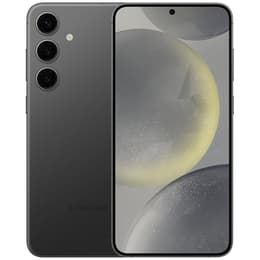
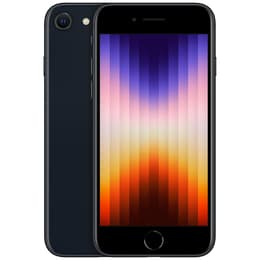


Galaxy S24+ Vs iPhone SE (2022)

Galaxy S24+
Galaxy S24+
Starting at

Refurbished price:399.00

Versus €1,167.06 new

See options
iPhone SE (2022)
iPhone SE (2022)
Starting at

Refurbished price:127.00

Versus €549.00 new

See options

Ratings

The Samsung Galaxy S24 Plus, released in January 2024, and the iPhone SE (2022), launched in March 2022, represent distinct approaches to smartphone design and functionality. While the Galaxy S24 Plus offers a modern, expansive Android experience with advanced features, the iPhone SE (2022) provides a compact, iOS-driven device with a traditional design. These differences cater to varying user preferences, from screen size and camera capabilities to operating system ecosystems.

Scores

Durability

When considering the longevity of these devices, several factors come into play, including software support and physical durability.

  • Release Timeline and Software Support: The Galaxy S24 Plus, released in early 2024, benefits from Samsung's commitment to providing seven years of operating system and security updates, potentially extending its software lifespan until 2031. The iPhone SE (2022), launched in March 2022, typically receives iOS updates for approximately five to seven years, with support expected to continue until around 2028-2030.
  • Repairability: The Galaxy S24 Plus generally receives a high repairability score, often rated around 8.0 to 9.0 out of 10, with its back plate and battery being relatively easy to access for repairs. The iPhone SE (2022) has an average repairability score, typically around 5.5 to 6 out of 10, with battery and screen replacements being manageable, though some repairs can be more complex due to adhesive use and potential software limitations for replacement parts.
  • Physical Durability: The Galaxy S24 Plus features an aluminum frame and glass on both the front and back, including Gorilla Glass Victus 2, and is rated IP68 for dust and water resistance. The iPhone SE (2022) also has a glass front and back with an aluminum frame and an IP67 rating for dust and water resistance.

Year of Release

2024

2022

Compatible with latest Update

Yes

Yes

OS

Android

iOS

Foldable

No

No

Performance

The performance of a smartphone is crucial for daily tasks, from launching applications to managing multiple processes simultaneously.

  • Processing Power: The Galaxy S24 Plus is equipped with a powerful current-generation processor, enabling it to handle demanding applications and multitasking smoothly. The iPhone SE (2022) features a highly efficient processor, which ensures smooth operation for everyday use and responsive performance across applications.
  • Multitasking and Responsiveness: With its generous amount of RAM, the Galaxy S24 Plus offers robust multitasking capabilities, allowing users to switch between numerous applications without noticeable slowdowns. The iPhone SE (2022), while having less RAM, is optimized to provide a fluid user experience, maintaining responsiveness even with several apps open.
  • Battery Behavior: The Galaxy S24 Plus houses a larger battery, often providing enough power for a full day of heavy use and sometimes extending to 1.5 days with moderate usage. The iPhone SE (2022) typically offers sufficient battery life for a full day of moderate use, though heavy users might find themselves needing to recharge before the day ends.

Memory (GB)

12 GB

4 GB

Screen quality

The display is a primary interface for any smartphone, and these two devices offer different visual experiences.

  • Display Technology and Resolution: The Galaxy S24 Plus features a 6.7-inch Dynamic AMOLED 2X display with a QHD+ resolution (3120x1440 pixels), providing vibrant colors, deep blacks, and sharp detail. In contrast, the iPhone SE (2022) has a more compact 4.7-inch Retina IPS LCD display with a resolution of 750x1334 pixels, offering good color accuracy and viewing angles.
  • Brightness and Outdoor Visibility: The Galaxy S24 Plus boasts a high peak brightness of up to 2600 nits, making it highly visible even in bright outdoor conditions. The iPhone SE (2022) offers a typical brightness of 625 nits, which is adequate for most indoor and outdoor environments but may struggle in direct sunlight compared to the Galaxy S24 Plus.
  • Refresh Rate and Smoothness: The Galaxy S24 Plus features an adaptive refresh rate that can scale from 1Hz to 120Hz, contributing to smoother scrolling and more fluid animations. The iPhone SE (2022) maintains a standard 60Hz refresh rate, which provides a consistent visual experience for general use.

Resolution

1440 x 3120

750 x 1334

Screen type

Dynamic LTPO AMOLED 2X

Retina IPS LCD

Audiovisual

For many users, the camera system is a key differentiator, and these phones offer distinct photographic capabilities.

  • Rear Camera System: The Galaxy S24 Plus is equipped with a versatile triple-camera setup, including a 50-megapixel main sensor, a 12-megapixel ultrawide lens, and a 10-megapixel telephoto lens with 3x optical zoom, allowing for a wide range of photographic styles and zoom capabilities. The iPhone SE (2022) features a single 12-megapixel wide-angle rear camera, which excels in everyday photography with good detail and color reproduction.
  • Low-Light and Video Performance: The Galaxy S24 Plus generally performs well in low-light conditions and supports 8K video recording, offering advanced video capabilities. The iPhone SE (2022) provides solid video recording up to 4K resolution and benefits from its processor for image processing, though it lacks a dedicated night mode.
  • Front Camera and Audio: Both devices offer capable front-facing cameras for selfies and video calls. The Galaxy S24 Plus has a 12-megapixel front camera, while the iPhone SE (2022) has a 7-megapixel front camera. Both phones provide clear microphone quality for calls and recording, and their speakers deliver a good media consumption experience.

Main camera

50 megapixels

12 megapixels

Front camera

12 megapixels

7 megapixels

Miscellaneous

Beyond the core features, several other elements contribute to the overall user experience and practical utility of a smartphone.

  • Connectivity and Ports: The Galaxy S24 Plus supports modern connectivity standards including 5G, Wi-Fi 6E, and Bluetooth 5.3, and features a USB-C port for charging and data transfer. The iPhone SE (2022) also supports 5G and Wi-Fi 6, with Bluetooth 5.0, and utilizes a Lightning port.
  • Biometric Security: The Galaxy S24 Plus incorporates an in-display fingerprint sensor for secure unlocking and authentication. The iPhone SE (2022) features Touch ID, a fingerprint sensor integrated into its physical home button.
  • Design and Handling: The Galaxy S24 Plus is a larger device, measuring 158.50 x 75.90 x 7.60mm and weighing 197 grams, offering an expansive screen for media and productivity. The iPhone SE (2022) is significantly more compact and lighter at 138.4 x 67.3 x 7.3 mm and 144 grams, making it easier for one-handed use and pocketability.

Weight

197 g

144 g

Width

7,59 cm

6 cm

Height

15,85 cm

13 cm

Depth

0,77 cm

0,73 cm

Screen size (in)

6.7

4.7

Network

5G

5G

SIM card

Dual Physical SIM + eSIM

Physical SIM + eSIM

Carrier compatibility

Unlocked

Unlocked

Connector

USB-C

Lightning

User feedback for the Galaxy S24 Plus often highlights its impressive display, robust performance, and extended software support. Many users appreciate its long battery life and versatile camera system. Some criticisms have occasionally pointed to inconsistencies in camera processing after updates or regional differences in processor performance. For the iPhone SE (2022), common praise centers on its compact form factor, reliable performance for its size, and the familiarity of its traditional design with Touch ID. Users sometimes note its smaller screen and battery life as areas that might require adjustments for heavy usage.

Users prioritizing a large, vibrant display, extensive software longevity, and a multi-camera system for diverse photography needs will find the Samsung Galaxy S24 Plus well-suited to their requirements. Its modern design and advanced features cater to those who engage in demanding tasks and media consumption. Conversely, individuals who prefer a compact device that is easy to handle with one hand, value the traditional home button and Touch ID, and are deeply integrated into the Apple ecosystem may lean toward the iPhone SE (2022). It offers a dependable and efficient smartphone experience in a smaller package.

Both devices offer compelling options depending on individual priorities. For those looking for an eco-friendly and quality-assured alternative, considering refurbished versions of either model can be a sustainable choice.


See all articles

Our recent comparisons






