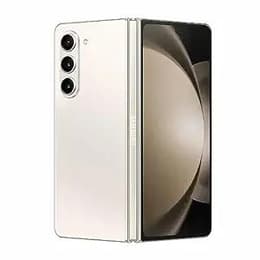
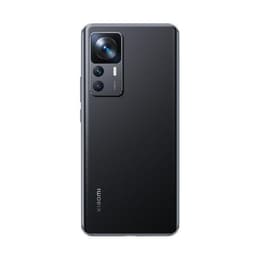


Galaxy Z Fold5 Vs Xiaomi 12T

Galaxy Z Fold5
Galaxy Z Fold5
Starting at

Refurbished price:591.00

Versus €1,899.99 new

See options
Xiaomi 12T
Xiaomi 12T
Starting at

Refurbished price:138.00

Versus €649.00 new

See options

Ratings

The Samsung Galaxy Z Fold5, released in August 2023, represents the pinnacle of foldable smartphone technology, offering a unique form factor that transforms from a compact phone into a tablet-sized display. In contrast, the Xiaomi 12T, launched in October 2022, is a more traditional slab-style smartphone designed to deliver a robust experience. While the Z Fold5 focuses on versatility and a premium foldable experience, the Xiaomi 12T prioritizes a powerful, conventional smartphone design with a strong emphasis on battery life and charging capabilities. Both devices operate on the Android ecosystem, but their core design philosophies cater to different user preferences.

Scores

Durability

The practical lifespan of a smartphone is significantly influenced by its physical durability and the duration of software support it receives.

  • Release Timeline: The Galaxy Z Fold5 was released in August 2023, making it a newer device compared to the Xiaomi 12T, which launched in October 2022. This difference in release date impacts their respective software support windows.
  • Software Longevity: The Galaxy Z Fold5 shipped with Android 13 and is expected to receive major Android OS upgrades up to Android 17, likely extending its software support into late 2026 or sometime in 2027. The Xiaomi 12T, which launched with Android 12, is projected to receive its final major OS update with Android 15 and security updates until October 2026.
  • Physical Durability: The Z Fold5 features an IPX8 water resistance rating, meaning it can withstand submersion in water, and is built with Gorilla Glass Victus 2 on its cover display and back, alongside an Armor Aluminum frame for enhanced structural integrity. Its improved hinge design allows it to fold flat, contributing to its overall robustness. However, it lacks a dust resistance rating. The Xiaomi 12T offers an IP53 rating, providing protection against dust and light splashes, and uses Gorilla Glass 5 for its display.

Year of Release

2023

2022

Compatible with latest Update

Yes

Yes

OS

Android

Android

Foldable

Yes

No

Performance

Performance in both devices is tailored to their respective designs, with the Z Fold5 offering top-tier processing for demanding tasks and the Xiaomi 12T providing smooth operation for everyday use.

  • Processing Power: The Galaxy Z Fold5 is equipped with a customized, high-performance processor designed for efficiency and speed, enabling it to handle intensive applications, complex multitasking, and graphic-heavy gaming with ease. The Xiaomi 12T features a capable processor that delivers stable and powerful performance for daily tasks, gaming, and general app usage.
  • Multitasking and Storage: The Z Fold5 comes with 12GB of RAM and utilizes UFS 4.0 storage, contributing to its responsiveness and quick app loading times, especially when running multiple applications simultaneously on its large internal display. The Xiaomi 12T typically includes 8GB of RAM and UFS 3.1 storage, providing a smooth experience for most users, though some users have noted aggressive background app management.
  • Battery Behavior: The Galaxy Z Fold5 houses a 4400 mAh battery, which generally provides a full day of use for many users, though heavy usage, particularly with the larger internal screen, may necessitate more frequent charging. The Xiaomi 12T is equipped with a larger 5000 mAh battery, known for its excellent endurance, often lasting up to 1.5 days for casual users. It also supports exceptionally fast 120W wired charging, with the charger included.

Memory (GB)

12 GB

8 GB

Screen quality

The display experience is a primary differentiator, with the Z Fold5 offering a unique foldable design and the Xiaomi 12T providing a high-quality traditional panel.

  • Display Technology and Size: The Galaxy Z Fold5 features a 7.6-inch foldable Dynamic AMOLED 2X main display and a 6.2-inch Dynamic AMOLED 2X cover display, both offering vibrant colors and deep blacks. The Xiaomi 12T sports a 6.67-inch AMOLED display, providing a rich and immersive viewing experience in a conventional form factor.
  • Resolution and Clarity: The Z Fold5's main display has a resolution of 2176 x 1812 pixels, while its cover screen is 2316 x 904 pixels. The Xiaomi 12T offers a 2712 x 1220 pixel resolution, which Xiaomi refers to as CrystalRes, providing sharp and clear visuals with a pixel density of 446 ppi.
  • Brightness and Smoothness: Both devices feature a 120Hz adaptive refresh rate for smooth scrolling and responsiveness. The Z Fold5's main display can reach a peak brightness of 1750 nits, ensuring good visibility even in bright outdoor conditions. The Xiaomi 12T's display can achieve a peak brightness of 900 nits in auto mode, offering good outdoor visibility.

Resolution

1812 x 2176

1220 x 2712

Screen type

Foldable Dynamic AMOLED 2X

AMOLED

Audiovisual

Both smartphones offer capable camera systems, though their configurations and strengths differ based on their design and intended use.

  • Rear Camera Systems: The Galaxy Z Fold5 features a versatile triple-camera setup on its rear, including a 50MP main sensor with optical image stabilization (OIS) and phase detection autofocus (PDAF), a 12MP ultrawide camera, and a 10MP telephoto lens with 3x optical zoom and OIS. The Xiaomi 12T also has a triple rear camera system, highlighted by a 108MP main sensor with OIS, an 8MP ultrawide camera, and a 2MP macro camera.
  • Photography Performance: The Z Fold5's main camera delivers crisp images with vivid colors, performing well in various lighting conditions, including low light, and offers accurate background blur for close-up shots. The Xiaomi 12T's 108MP main camera performs well in good lighting, producing detailed images, but its low-light performance is acceptable rather than exceptional, and its ultrawide and macro lenses are generally considered less impressive.
  • Video and Selfie Capabilities: The Galaxy Z Fold5 supports video recording up to 8K at 30 frames per second (fps) and offers improved Super Steady video recording at QHD 60fps. It includes a 10MP cover camera and a 4MP under-display camera on the main screen. The Xiaomi 12T can record video up to 4K at 30fps with electronic stabilization. It features a 20MP front-facing camera for selfies.

Main camera

50 megapixels

108 megapixels

Front camera

4 megapixels

20 megapixels

Miscellaneous

Beyond core features, several practical elements contribute to the overall user experience and differentiate these two devices.

  • Connectivity and Ports: Both devices support 5G connectivity and feature USB-C ports for charging and data transfer. Neither includes a 3.5mm headphone jack. The Z Fold5 supports Wi-Fi 6E and Bluetooth 5.3, while the Xiaomi 12T supports Wi-Fi 6 and NFC (regionally).
  • Biometrics and Sensors: The Galaxy Z Fold5 incorporates a side-mounted fingerprint scanner and facial recognition for secure unlocking. The Xiaomi 12T features an under-display fingerprint scanner.
  • Design and Handling: The Z Fold5, when folded, measures 154.9 x 67.1 x 13.4 mm and weighs 253g, offering a compact yet thick profile. Unfolded, it becomes a larger, thinner device at 154.9 x 129.9 x 6.1 mm. The Xiaomi 12T has dimensions of 163.1 x 75.9 x 8.6 mm and weighs 202g, presenting a more traditional smartphone feel that some users find large for one-handed use. The Z Fold5's build includes glass on the back and an aluminum frame, while the Xiaomi 12T has a glass back and a plastic frame.

Weight

253 g

220 g

Screen size (in)

7.6

6.67

Network

5G

5G

SIM card

Dual Physical SIM + eSIM

Dual Physical SIM

Carrier compatibility

Unlocked

Unlocked

User feedback for the Galaxy Z Fold5 often highlights its innovative foldable display as a major advantage, transforming the device into a versatile tool for productivity and media consumption. Users appreciate the enhanced multitasking capabilities and the immersive viewing experience offered by the large internal screen. Common criticisms include the still-visible crease on the main display and battery life that, while improved, may not satisfy the most demanding users without a mid-day charge. The camera system, while capable, is sometimes noted as not reaching the absolute peak of traditional flagship smartphones.

For the Xiaomi 12T, users frequently praise its exceptional battery life and rapid 120W wired charging, making it a reliable companion for extended use. The smooth and vibrant AMOLED display is also a consistent point of positive feedback. Some users have expressed concerns regarding aggressive background app management and occasional software quirks, which might require some adjustment. The main camera is generally considered good in well-lit conditions, but the auxiliary ultrawide and macro lenses are often seen as less effective.

Users prioritizing a cutting-edge, adaptable device for multitasking, media consumption, and a tablet-like experience in a pocketable form factor may find the Samsung Galaxy Z Fold5 well-suited to their needs. Conversely, individuals seeking a dependable, long-lasting battery, and a high-quality traditional smartphone display, particularly those who value fast charging, might lean towards the Xiaomi 12T. Both devices offer distinct advantages, and considering a quality-assured refurbished option for either model can provide an eco-friendly alternative.


See all articles

Our recent comparisons