


OnePlus 11 Vs Xiaomi Redmi Note 13 Pro+

OnePlus 11
OnePlus 11
Starting at

Refurbished price:325.00

Versus €949.00 new

See options
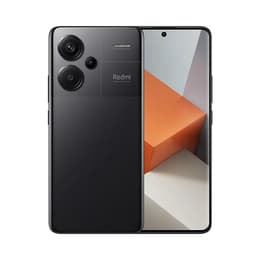
Xiaomi Redmi Note 13 Pro+
Starting at

Refurbished price:198.00

Versus €449.00 new

See options

Ratings

The OnePlus 11, released in early 2023, and the Xiaomi Redmi Note 13 Pro+, launched in early 2024, are both Android-based smartphones designed to offer a comprehensive mobile experience. While the OnePlus 11 positions itself with a focus on refined performance and camera capabilities, the Redmi Note 13 Pro+ emphasizes a high-resolution camera and rapid charging. Both devices run on the Android operating system, providing access to a wide ecosystem of applications and services.

Scores

Durability

When considering the long-term usability of these devices, their release timelines and software support policies are key differentiators.

  • Release Timeline: The OnePlus 11 was introduced in early 2023, making it a year older than the Xiaomi Redmi Note 13 Pro+, which launched in early 2024. This difference in release date directly impacts their expected software longevity.
  • Software Longevity: The OnePlus 11 is set to receive four major Android operating system updates and five years of security updates from its launch, extending its support through Android 17. In contrast, the Redmi Note 13 Pro+ is committed to three major Android OS updates, reaching up to Android 16, and four years of security patches, with support expected until January 2028.
  • Physical Durability: Both devices feature Corning Gorilla Glass Victus for display protection, offering a good level of resistance against drops and scratches. The Redmi Note 13 Pro+ also boasts an IP68 rating, indicating robust dust and water resistance, a feature not explicitly highlighted for the OnePlus 11.

Year of Release

2023

2023

OS

Android

Android

Foldable

No

No

Performance

Both smartphones are equipped with capable internal components, but they cater to slightly different performance expectations.

  • Processing Power: The OnePlus 11 features a high-end processor from its release year, enabling it to handle demanding applications, intensive multitasking, and graphic-heavy gaming with notable smoothness and efficiency. Users often report a fluid experience even under heavy load. The Redmi Note 13 Pro+ utilizes a capable processor designed for efficient performance in its segment, providing a responsive experience for daily tasks and moderate gaming.
  • Multitasking and Storage: The OnePlus 11 offers configurations with up to 16GB of RAM and faster UFS 4.0 storage in its higher variants, contributing to quicker app loading and seamless transitions between applications. The Redmi Note 13 Pro+ is available with up to 12GB of RAM and UFS 3.1 storage, which is sufficient for most users' multitasking needs and provides ample space for apps and media.
  • Battery Behavior: Both devices house a 5000 mAh battery. The OnePlus 11 is frequently praised by users for its strong battery life, often lasting a full day with typical usage. The Redmi Note 13 Pro+ also offers good battery performance, though some users have noted variations in battery longevity after software updates.

Memory (GB)

16 GB

12 GB

Screen quality

The visual experience on both devices is designed to be immersive, though they achieve this with slightly different display characteristics.

  • Display Technology and Resolution: The OnePlus 11 features a 6.7-inch QHD+ LTPO AMOLED display, offering a high resolution of 1440 x 3216 pixels for sharp and detailed visuals. The Redmi Note 13 Pro+ comes with a 6.67-inch 1.5K AMOLED display, providing clear and vibrant imagery.
  • Refresh Rate and Smoothness: Both phones offer a 120Hz adaptive refresh rate, which contributes to smooth scrolling and fluid animations. The OnePlus 11's LTPO technology allows its refresh rate to dynamically adjust, potentially optimizing power consumption.
  • Brightness and Clarity: The Redmi Note 13 Pro+ boasts a peak brightness of 1800 nits, which can be beneficial for visibility in bright outdoor conditions. The OnePlus 11's display reaches up to 1300 nits in auto mode, providing good visibility in various lighting environments. Both displays are noted for vibrant colors and deep blacks.

Resolution

1440 x 3216

1220 x 2712

Audiovisual

Photography capabilities are a significant aspect of modern smartphones, and these two devices approach it with distinct camera systems.

  • Main Camera System: The Redmi Note 13 Pro+ features a high-resolution 200MP main camera with optical image stabilization (OIS), designed to capture highly detailed photos, even allowing for lossless zoom at 2x and 4x. The OnePlus 11 includes a 50MP main camera with OIS, co-developed with Hasselblad, focusing on color accuracy and overall image quality.
  • Additional Lenses: The OnePlus 11 offers a versatile setup with a 48MP ultrawide lens and a 32MP telephoto lens with 2x optical zoom, providing flexibility for different photographic scenarios. The Redmi Note 13 Pro+ includes an 8MP ultrawide and a 2MP macro lens, which are suitable for broader scenes and close-up shots, respectively.
  • User Experience: Users generally praise the main camera of the Redmi Note 13 Pro+ for its detail, though the ultrawide and macro lenses are sometimes noted as less impactful. The OnePlus 11's camera is appreciated for its color science, though some users have reported occasional inconsistencies with shutter speed, particularly in indoor settings. Both devices feature 16MP front cameras for selfies.

Miscellaneous

Beyond the core specifications, several practical features contribute to the overall user experience of these smartphones.

  • Charging Speed: The Redmi Note 13 Pro+ stands out with its 120W HyperCharge technology, capable of fully charging the device in approximately 19 minutes. The OnePlus 11 also offers very fast charging, with 100W wired charging internationally and 80W in the USA, reaching a full charge in about 25 minutes.
  • Connectivity and Ports: Both devices support 5G connectivity, Wi-Fi, and Bluetooth for modern wireless communication. The OnePlus 11 features a USB-C port, while the Redmi Note 13 Pro+ also uses USB-C.
  • Design and Handling: The OnePlus 11 has dimensions of 163.1 x 74.1 x 8.5 mm and weighs 205 grams, featuring a glass back and metal frame. The Redmi Note 13 Pro+ has a slightly different form factor, with dimensions of 161.4 x 74.2 x 8.9 mm and a weight of 204.5 grams, often featuring a vegan leather back option. Both include in-display fingerprint sensors for secure unlocking.

Weight

205 g

204 g

Screen size (in)

6.7

6.67

Network

5G

5G

SIM card

Physical SIM

Dual Physical SIM

Carrier compatibility

Unlocked

Unlocked

The OnePlus 11 and Xiaomi Redmi Note 13 Pro+ each present a compelling package, catering to different user priorities. Users frequently commend the OnePlus 11 for its consistently smooth performance, vibrant display, and reliable battery life. Some criticisms occasionally point to its camera performance in specific conditions and slower file transfer speeds.

The Redmi Note 13 Pro+ receives praise for its exceptionally fast charging, bright screen, and the high-resolution main camera. However, some users have reported concerns regarding battery life consistency after software updates, potential signal issues, and occasional UI lag.

Users prioritizing extended software support and top-tier processing power for demanding applications may find the OnePlus 11 well-suited to their needs. Those who value rapid charging, a high-megapixel main camera, and robust dust and water resistance might lean towards the Redmi Note 13 Pro+. Both devices offer a strong Android experience, and for those seeking a more sustainable choice, considering a quality-assured refurbished option for either model can be an eco-friendly alternative.


See all articles

Our recent comparisons