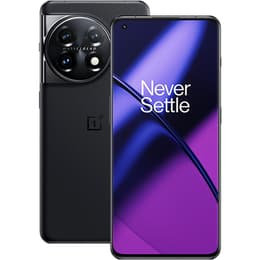
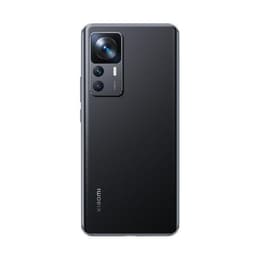


OnePlus 11 Vs Xiaomi 12T

OnePlus 11
OnePlus 11
Starting at

Refurbished price:325.00

Versus €949.00 new

See options
Xiaomi 12T
Xiaomi 12T
Starting at

Refurbished price:131.00

Versus €649.00 new

See options

Ratings

The OnePlus 11 and the Xiaomi 12T are both Android smartphones released in late 2022 and early 2023, respectively. While both devices offer robust performance and impressive displays, they differentiate themselves through their camera systems, software support policies, and overall build philosophies. The OnePlus 11 launched globally in February 2023, following its China release in January 2023, running Android 13 with OxygenOS 13. The Xiaomi 12T, released in October 2022, debuted with Android 12 and MIUI 13.

Scores

Durability

The longevity of a smartphone is significantly influenced by its release timeline and the manufacturer's commitment to software updates. These factors determine how long a device remains secure and compatible with the latest applications.

  • Release Timeline: The Xiaomi 12T was released in October 2022, making it slightly older than the OnePlus 11, which had its global launch in February 2023. This difference means the OnePlus 11 will generally receive software support for a few months longer.
  • OS Support Duration: OnePlus has committed to providing four major Android updates and five years of security updates for the OnePlus 11. This policy suggests the OnePlus 11 will receive updates through Android 17. In contrast, the Xiaomi 12T is slated to receive three major Android OS updates, up to Android 15, and four years of security updates.
  • Repairability: The OnePlus 11 has a repairability score of 6.75 out of 10, indicating a moderate ease of repair, though replacing the screen requires disassembling several components. The Xiaomi 12T Pro, which shares a similar design to the 12T, has a repairability score of 7.6 out of 10, suggesting it might be slightly easier to repair.

Year of Release

2023

2022

OS

Android

Android

Foldable

No

No

Performance

Both devices are designed to handle daily tasks and demanding applications, but they approach performance with different underlying hardware and software optimizations.

  • Processor Capabilities: The OnePlus 11 is equipped with a current-generation processor, enabling it to handle demanding apps and multitasking smoothly. Users report that it feels fast and responsive in everyday use. The Xiaomi 12T features a different processor, which also delivers snappy performance for general use and gaming.
  • Storage and RAM: The OnePlus 11 offers various configurations, including options with faster UFS 4.0 storage and up to 16GB of RAM, which can contribute to quicker app loading and more efficient multitasking. The Xiaomi 12T typically comes with 8GB of RAM and UFS 3.1 storage, providing ample capacity for most users.
  • Battery Behavior: Both phones feature a 5000mAh battery capacity. The OnePlus 11 is noted for its excellent battery life, often lasting a full day or more even with heavy use. The Xiaomi 12T also offers solid battery life, with some users reporting it can last an entire day for heavy users or two days with moderate usage.

Memory (GB)

16 GB

8 GB

Screen quality

The visual experience on a smartphone is largely defined by its display, and both the OnePlus 11 and Xiaomi 12T offer high-quality screens with distinct characteristics.

  • Display Technology and Resolution: The OnePlus 11 features a 6.7-inch LTPO AMOLED display with a higher resolution of 1440 x 3216 pixels (QHD+), resulting in a pixel density of 525 pixels per inch. This provides a very sharp and detailed viewing experience. The Xiaomi 12T has a 6.67-inch AMOLED display with a resolution of 1220 x 2712 pixels (FHD+), offering a pixel density of 446 pixels per inch.
  • Refresh Rate and Smoothness: Both devices boast a 120Hz refresh rate, contributing to smooth scrolling and fluid animations. The OnePlus 11's LTPO technology allows for a variable refresh rate, which can dynamically adjust from 1Hz to 120Hz, potentially aiding in power efficiency.
  • Brightness and Protection: The OnePlus 11's display is protected by Corning Gorilla Glass Victus, offering enhanced durability against drops and scratches. The Xiaomi 12T uses Gorilla Glass 5 for its screen protection. Both displays offer good brightness levels for outdoor visibility.

Resolution

1440 x 3216

1220 x 2712

Audiovisual

The camera systems on the OnePlus 11 and Xiaomi 12T are key differentiators, each offering a distinct approach to mobile photography.

  • Rear Camera System: The OnePlus 11 features a triple camera setup co-developed with Hasselblad, including a 50MP main sensor with optical image stabilization (OIS), a 48MP ultrawide lens, and a 32MP telephoto lens with 2x optical zoom. Users generally find the main camera to produce good photos with solid detail and dynamic range, though some note it may not consistently match the performance of top-tier flagships in all scenarios. The Xiaomi 12T also has a triple rear camera system, highlighted by a 108MP main sensor with OIS, an 8MP ultrawide camera, and a 2MP macro lens. The 108MP main camera is praised for vibrant and detailed stills.
  • Low-Light and Video Performance: Both phones offer night modes for improved low-light photography. The OnePlus 11's primary camera performs well in low light, with pleasing night mode tuning. Its video recording quality is noted for good stabilization and exposure at 4K 60fps. The Xiaomi 12T's main camera also performs well in low light, and its video recording at 4K 30fps is considered stable.
  • Front Camera: The OnePlus 11 is equipped with a 16MP front camera. The Xiaomi 12T features a 20MP front camera.

Miscellaneous

Beyond the core specifications, several practical elements contribute to the overall user experience and daily usability of these smartphones.

  • Connectivity and Ports: Both devices support 5G connectivity and modern Wi-Fi standards. The OnePlus 11 includes Bluetooth 5.3, while the Xiaomi 12T also features Bluetooth 5.3. Both phones utilize a USB-C port for charging and data transfer. Neither device includes a traditional headphone jack.
  • Biometric Security: For secure unlocking, both the OnePlus 11 and Xiaomi 12T incorporate in-display fingerprint sensors. The OnePlus 11 also features face recognition.
  • Design and Build Materials: The OnePlus 11 features a glass front (Gorilla Glass Victus) and a glass back, with an aluminum frame, giving it a premium feel. It weighs 205g. The Xiaomi 12T has a glass front (Gorilla Glass 5) and a glass back, but with a plastic frame, and weighs 202g. The OnePlus 11 includes the signature alert slider, a physical switch for notification modes.

Weight

205 g

220 g

Screen size (in)

6.7

6.67

Network

5G

5G

SIM card

Physical SIM

Dual Physical SIM

Carrier compatibility

Unlocked

Unlocked

The OnePlus 11 and Xiaomi 12T both present compelling options in the Android smartphone market, each with its own strengths that cater to different user priorities. User feedback for the OnePlus 11 often highlights its strong performance, excellent battery life, and vibrant display as key advantages. Some users have noted that while its camera system is good, it may not always compete with the absolute best in certain scenarios, and the software experience has evolved from its earlier, more minimalist versions. Concerns about its durability in extreme bend tests have also been raised.

For the Xiaomi 12T, common praise points include its long-lasting battery, rapid charging capabilities, and a bright, smooth display. Its main camera is generally well-regarded for producing detailed images. Criticisms sometimes point to the plastic frame and the inclusion of a less capable macro camera. Some users have also reported inconsistencies in software update delivery.

Users prioritizing extended software support and a slightly higher-resolution display may find the OnePlus 11 more aligned with their needs. Its powerful processor and premium build materials also make it suitable for those seeking a robust daily driver. Conversely, users who value extremely fast charging, a high-megapixel main camera, and a slightly lighter device might lean towards the Xiaomi 12T. Both devices offer a quality-assured refurbished option, providing an eco-friendly alternative for consumers.


See all articles

Our recent comparisons






