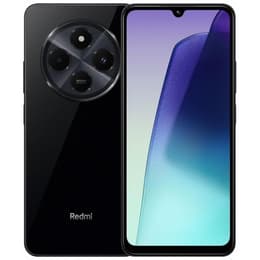



Xiaomi Redmi 14C Vs Xiaomi Redmi Note 11 Pro 5G

Xiaomi Redmi 14C
Xiaomi Redmi 14C
Starting at

Refurbished price:128.20

Versus €189.00 new

See options
Xiaomi Redmi Note 11 Pro 5G
Starting at

Refurbished price:126.00

Versus €699.00 new

See options

Ratings

The Xiaomi Redmi 14C, released in August 2024, and the Xiaomi Redmi Note 11 Pro 5G, launched in January 2022, are both smartphones from Xiaomi's Redmi series. While both devices aim to provide a comprehensive mobile experience, they differ notably in their display technology, camera capabilities, and overall software longevity. The Redmi 14C offers a more recent software experience with a larger display, while the Redmi Note 11 Pro 5G features a more vibrant screen and faster charging.

Scores

Durability

When considering the long-term usability of these devices, their release timelines and software support play a significant role.

  • Release Timeline: The Redmi 14C was introduced in August 2024, making it a more recent device compared to the Redmi Note 11 Pro 5G, which launched in January 2022. This difference in release date directly impacts their expected software support duration.
  • Software Longevity: The Redmi 14C shipped with Android 14 and has since been updated to Android 15, with Xiaomi promising two major Android updates and four years of security patches. This suggests a longer period of official software support. In contrast, the Redmi Note 11 Pro 5G launched with Android 11 and has received updates up to Android 13.
  • Physical Durability: The Redmi Note 11 Pro 5G features a glass back and an IP53 rating for splash and dust resistance, offering a degree of protection against everyday elements. The Redmi 14C, while offering a glass front and options for glass or eco-leather backs, does not carry an official IP rating, suggesting less resistance to water and dust exposure.

Year of Release

2024

2022

Compatible with latest Update

Yes

No

OS

Android

Android

Foldable

No

No

Performance

The performance of a smartphone is crucial for daily tasks, app responsiveness, and multitasking. Both devices offer capable performance for their respective segments.

  • Everyday Responsiveness: The Redmi 14C, powered by a MediaTek Helio G81 Ultra, handles routine tasks like browsing, social media, and messaging smoothly. Users generally report a fluid experience for basic operations, though some note occasional stutters during heavy multitasking or when exiting demanding applications. The Redmi Note 11 Pro 5G, featuring a Qualcomm Snapdragon 695 5G processor, also provides up-to-par performance for its class, managing everyday apps and general usage without significant delays.
  • Multitasking and Storage: Both devices offer various RAM configurations, with the Redmi 14C available in 4GB, 6GB, and 8GB options, and the Redmi Note 11 Pro 5G in 6GB and 8GB. The Redmi 14C also includes memory extension technology, allowing for expanded RAM up to 16GB for smoother system performance and app switching. Both models provide 128GB or 256GB of internal storage, expandable via a dedicated microSD card slot, offering ample space for applications and media.
  • Battery Behavior: The Redmi 14C is equipped with a 5160 mAh battery, while the Redmi Note 11 Pro 5G has a 5000 mAh battery. Both are designed to last through a full day of moderate to heavy use. The Redmi Note 11 Pro 5G supports significantly faster 67W wired charging, allowing for a quicker recharge time compared to the Redmi 14C's 18W fast charging.

Memory (GB)

4 GB

6 GB

Screen quality

The visual experience is a key differentiator, with both smartphones offering distinct display technologies and characteristics.

  • Display Technology and Clarity: The Redmi Note 11 Pro 5G features a 6.67-inch Super AMOLED display, known for its deep blacks, vibrant colors, and excellent contrast. It offers a Full HD+ resolution of 1080 x 2400 pixels, resulting in sharp and detailed visuals. In contrast, the Redmi 14C comes with a larger 6.88-inch IPS LCD panel, which provides good color reproduction but does not achieve the same level of contrast or black depth as an AMOLED screen. Its HD+ resolution of 720 x 1640 pixels means content will appear less sharp than on the Note 11 Pro 5G.
  • Brightness and Outdoor Visibility: The Redmi Note 11 Pro 5G boasts a high peak brightness of up to 1200 nits, making it highly visible even in bright outdoor conditions. The Redmi 14C offers a typical brightness of 450 nits, with a High Brightness Mode (HBM) reaching 600 nits, which is adequate for most indoor and some outdoor scenarios but may struggle under direct sunlight.
  • Refresh Rate and Smoothness: Both devices feature a 120Hz refresh rate, contributing to smoother scrolling, more fluid animations, and a more responsive feel during interactions. This high refresh rate enhances the overall user experience, particularly for browsing and gaming.

Resolution

720 x 1640

1080 x 2400

Screen type

IPS LCD

Super AMOLED

Audiovisual

The camera systems on both phones are designed to capture everyday moments, though they approach photography with different sensor configurations and capabilities.

  • Main Camera Capabilities: The Redmi Note 11 Pro 5G is equipped with a 108MP main camera, accompanied by an 8MP ultrawide lens and a 2MP macro sensor, offering versatility for different types of shots. The Redmi 14C features a 50MP main camera and a 2MP depth sensor. While the Redmi Note 11 Pro 5G has a higher megapixel count and an ultrawide option, user experiences suggest that the actual image quality can be inconsistent, particularly in challenging lighting. The Redmi 14C's 50MP main camera performs well in good lighting conditions, capturing decent detail and colors, but its performance diminishes in low-light environments.
  • Front Camera and Video Recording: For selfies and video calls, the Redmi Note 11 Pro 5G includes a 16MP front camera, while the Redmi 14C has a 13MP front camera. Both are capable of capturing adequate selfies. In terms of video, both devices are limited to 1080p resolution at 30 frames per second for both front and rear cameras. The Redmi Note 11 Pro 5G notably lacks 4K video recording, which was a feature present in some of its predecessors.
  • Audio Experience: The Redmi Note 11 Pro 5G features stereo speakers, providing a more immersive audio experience for media consumption. It also retains a 3.5mm headphone jack. The Redmi 14C also includes a 3.5mm headphone jack, catering to users who prefer wired audio solutions.

Main camera

50 megapixels

108 megapixels

Front camera

13 megapixels

16 megapixels

Miscellaneous

Beyond core performance and display, several practical features contribute to the overall user experience of these smartphones.

  • Connectivity Standards: The Redmi Note 11 Pro 5G supports 5G connectivity, offering faster mobile data speeds where available. The Redmi 14C also offers 5G connectivity, ensuring access to the latest network speeds. Both devices support Wi-Fi 5 (802.11 a/b/g/n/ac) and Bluetooth (5.1 for Note 11 Pro 5G, 5.4 for 14C), along with NFC for contactless payments in supported regions.
  • Ports and Sensors: Both smartphones include a USB Type-C port for charging and data transfer, and a 3.5mm headphone jack. For biometric security, both feature a side-mounted fingerprint sensor, which offers convenient and quick unlocking. The Redmi Note 11 Pro 5G also includes an IR blaster, allowing it to function as a universal remote control for various home appliances.
  • Design and Handling: The Redmi Note 11 Pro 5G measures 164.19 x 76.10 x 8.12 mm and weighs 202 grams, featuring a glass back with a matte finish that contributes to a more premium feel. The Redmi 14C is slightly larger at 171.9 x 77.8 x 8.2 mm and weighs between 204-211 grams, with a glass front and options for glass or eco-leather backs. The larger screen size of the Redmi 14C might make one-handed use more challenging for some users.

Weight

207 g

202 g

Screen size (in)

6.88

6.67

Network

4G

5G

SIM card

Dual Physical SIM

Dual Physical SIM

Carrier compatibility

Unlocked

Unlocked

Connector

USB-C

USB-C + Jack 3.5mm

User feedback for the Redmi 14C often highlights its large 120Hz display and dependable battery life as strong points, with many appreciating its overall value for everyday tasks. Some users have noted that while the performance is adequate for general use, it can experience lag with more demanding applications or extensive multitasking. Criticisms sometimes point to the HD+ resolution on a large screen, which may not offer the sharpest viewing experience, and the camera's performance in low-light conditions.

The Redmi Note 11 Pro 5G is frequently praised for its excellent Super AMOLED display, offering vibrant colors and high brightness, along with its fast 67W charging capability and solid battery life. Its design, featuring a glass back, also receives positive remarks for a more premium feel. However, common concerns revolve around the camera system, particularly its video recording limitations (no 4K) and inconsistent results, as well as occasional software bugs within MIUI. Some users also find its processor, while capable, not ideal for intensive gaming.

Users prioritizing a more recent device with a larger screen and longer software support may find the Redmi 14C well-suited to their needs, especially for general browsing and media consumption. Those who value a superior display with richer colors, faster charging speeds, and a more premium build quality might lean towards the Redmi Note 11 Pro 5G. Both devices offer a reliable experience for daily smartphone use, and considering a quality-assured refurbished option for either model can be an eco-friendly alternative to extend their lifecycle.


See all articles

Our recent comparisons