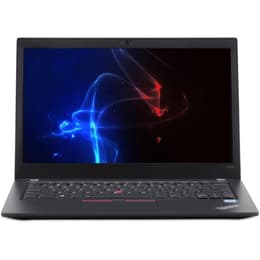
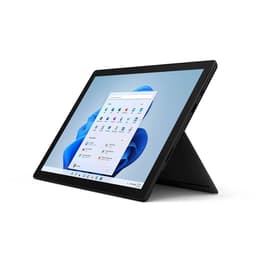


Lenovo ThinkPad T480S 14" Vs Microsoft Surface Pro 7 12"

Lenovo ThinkPad T480S 14"
Starting at

Refurbished price:324.00

Versus €1,635.61 new

See options
Microsoft Surface Pro 7 12"
Starting at

Refurbished price:334.00

Versus €1,399.00 new

See options

Ratings

The Lenovo ThinkPad T480s, released in 2018, is a traditional business-oriented laptop, while the Microsoft Surface Pro 7, launched in 2019, offers a versatile 2-in-1 tablet and laptop experience. Both devices operate on the Windows platform, but they cater to different user preferences through their distinct form factors and design philosophies.

The primary distinctions lie in the ThinkPad's focus on a robust, conventional laptop design with extensive connectivity, contrasting with the Surface Pro 7's emphasis on portability, touch interaction, and hybrid functionality.

Scores

Durability

When considering the longevity of these devices, their release timelines and inherent design philosophies play a significant role. The Lenovo ThinkPad T480s, introduced in 2018, is built with a focus on business-grade durability and repairability, while the Microsoft Surface Pro 7, from 2019, offers a more integrated, portable design.

  • Software Support: Both devices, running on the Windows operating system, benefit from Microsoft's ongoing software updates. The Surface Pro 7, being a year newer, may receive official feature updates for a slightly longer period. However, the T480s, as a business-class machine, often receives extended driver and security support from Lenovo.
  • Physical Durability: The ThinkPad T480s is known for its robust construction, having undergone MIL-SPEC testing for reliability against various environmental stressors, including drops and spills. Its chassis is designed to withstand demanding use. The Surface Pro 7 features a premium build, but its 2-in-1 design with a detachable keyboard means the screen is more exposed, which can be a consideration for users prioritizing physical resilience.
  • Repairability and Upgradability: The ThinkPad T480s generally offers better repairability and upgrade options, particularly for RAM and storage, which can extend its practical lifespan. The Surface Pro 7, with its more compact and integrated design, has fewer user-serviceable components.

Year of Release

2017

2019

Last Os Compatibility

Yes

Yes

OS

Windows 11

Windows 11

Performance

The performance capabilities of the ThinkPad T480s and Surface Pro 7 reflect their respective release years and design intentions, with both offering solid responsiveness for their target workloads.

  • Processing Power: The ThinkPad T480s is equipped with 8th generation Intel Core processors, providing capable performance for multitasking, office applications, and moderate workloads. The Surface Pro 7 features 10th generation Intel Core processors, which offer a performance uplift, particularly in single-core tasks and integrated graphics capabilities, making it responsive for everyday computing and light creative tasks.
  • Multitasking and Responsiveness: The T480s can be configured with a substantial amount of RAM, up to 40GB, allowing it to handle numerous applications and heavy multitasking smoothly. Its PCIe NVMe SSDs ensure quick boot times and application loading. The Surface Pro 7, with up to 16GB of RAM and SSD storage, provides a fluid experience for web browsing, media consumption, and productivity applications, though it may show limitations with very demanding, sustained workloads due to its thermal design.
  • Graphics Capabilities: The T480s typically relies on integrated Intel UHD Graphics 620, with an optional dedicated NVIDIA GeForce MX150 for a modest boost in graphics performance. The Surface Pro 7's 10th generation Intel processors, especially the i5 and i7 variants, often include Intel Iris Plus Graphics, which offers improved performance for casual gaming and media editing compared to the UHD 620.

Memory (GB)

8 GB

8 GB

Processor

Core i5 - Gen 8 (U)

Core i5 - Gen 10 (G4)

Graphic card

Integrated Graphics

Integrated Graphics

Screen quality

The visual experience on both devices is shaped by their display technologies, resolutions, and form factors, catering to different user preferences for clarity and interaction.

  • Display Technology and Resolution: The Lenovo ThinkPad T480s offers a 14-inch display with options including Full HD (1920x1080) IPS and WQHD (2560x1440) IPS panels. The WQHD option provides greater sharpness and color reproduction. The Microsoft Surface Pro 7 features a 12.3-inch PixelSense display with a resolution of 2736 x 1824 pixels, resulting in a high pixel density of 267 pixels per inch.
  • Brightness and Clarity: While the standard Full HD display on the T480s can be adequate, some users have noted it can be dim and less vibrant. The WQHD option improves brightness and color. The Surface Pro 7's display is known for its high brightness and vibrant colors, making it suitable for various lighting conditions and media consumption.
  • Touch and Aspect Ratio: The T480s offers optional touch functionality on some Full HD models. The Surface Pro 7's display is inherently a responsive touchscreen with support for pen input, enhancing its versatility as a tablet. Its 3:2 aspect ratio is often preferred for productivity tasks like document editing and web browsing, offering more vertical screen real estate. The T480s typically uses a 16:9 aspect ratio, common for traditional laptops.

Resolution

1920 x 1080

2736 x 1824

Screen type

LCD

IPS

Camera

Audiovisual

The audio-visual components of these devices are designed with different priorities, impacting their suitability for video conferencing, media consumption, and content creation.

  • Camera System: The ThinkPad T480s includes a 720p webcam, often accompanied by a physical ThinkShutter for privacy. Some configurations also offer an infrared camera for facial recognition. The Surface Pro 7 features a 5-megapixel front-facing camera that supports 1080p HD video and an 8-megapixel rear-facing camera, also capable of 1080p HD video.
  • Video Conferencing Quality: While the T480s's webcam is generally considered functional for video calls, some users have found its quality to be merely adequate. The Surface Pro 7's front-facing camera is designed for clear video conferencing, though some users have reported issues with blurriness or an unwanted 'smoothing' effect in certain scenarios.
  • Audio Experience: The T480s is equipped with 2x 1W stereo speakers with Dolby Audio Premium and dual-array microphones, providing clear audio for calls and media. The Surface Pro 7 features dual front-facing speakers that deliver clear sound, especially for a tablet form factor, and includes Studio Mics for enhanced voice capture.

Miscellaneous

Beyond core performance and display, several practical features differentiate these devices, influencing their daily usability and integration into various workflows.

  • Connectivity Options: The ThinkPad T480s offers a comprehensive array of ports, including Thunderbolt 3, multiple USB-A ports, USB-C, HDMI, a full-sized Ethernet port, and an SD card reader, providing extensive options for peripherals and external displays. It supports Wi-Fi 5 and Bluetooth 4.1, with optional 4G WWAN for mobile connectivity. The Surface Pro 7 includes a USB-C port (not Thunderbolt 3), a USB-A port, a Surface Connect port for charging and docking, a microSDXC card reader, and a headphone jack. It supports Wi-Fi 6 and Bluetooth 5.0.
  • Portability and Form Factor: The T480s is a traditional clamshell laptop, weighing from 1.32 kg (2.9 lbs) and measuring 18.45 mm (0.73 inches) thick. It is designed for a stable lap-typing experience. The Surface Pro 7 is a 2-in-1 device, weighing around 770g (1.7 lbs) and measuring 8.5 mm (0.33 inches) thick, offering greater portability and the flexibility to switch between tablet and laptop modes with its integrated kickstand and detachable keyboard.
  • Security and Input: Both devices offer modern security features. The T480s includes an optional fingerprint reader and a ThinkShutter for webcam privacy, with some models offering an IR camera for Windows Hello. The Surface Pro 7 integrates Windows Hello facial recognition for secure and convenient login. The T480s is renowned for its comfortable, spill-resistant keyboard, while the Surface Pro 7 relies on its optional Type Cover, which provides a good typing experience for a detachable keyboard.

Weight

1310 g

775 g

Screen size

14

12

The Lenovo ThinkPad T480s and Microsoft Surface Pro 7 present distinct computing experiences, each with its own set of strengths and considerations based on user feedback.

Users often praise the ThinkPad T480s for its robust build quality, extensive port selection, and comfortable keyboard, making it a reliable workhorse for demanding professionals. Its upgradeability and long battery life are frequently highlighted as significant advantages for productivity-focused users. Criticisms sometimes point to the base display options being less vibrant than some competitors and the webcam quality being merely functional rather than exceptional.

The Surface Pro 7 is frequently lauded for its exceptional portability, versatile 2-in-1 design, and vibrant touchscreen display, which is ideal for creative tasks and media consumption. Its pen support and Windows Hello facial recognition are also popular features. However, common concerns include its battery life, which some users find to be shorter than expected, and the thick display bezels. Some users have also reported inconsistencies with the front camera quality, noting blurriness or a 'smoothing' effect.

For individuals prioritizing a traditional, highly durable laptop with extensive connectivity and upgrade potential for sustained, intensive work, the Lenovo ThinkPad T480s aligns well with those needs. Conversely, users who value extreme portability, a flexible tablet-laptop hybrid form factor, and a high-resolution touchscreen for creative input and on-the-go productivity may find the Microsoft Surface Pro 7 to be a more suitable choice. Both devices are available as quality-assured refurbished options, providing an eco-friendly alternative for consumers seeking reliable technology.


See all articles

Our recent comparisons