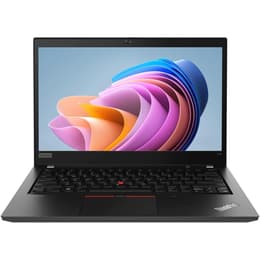
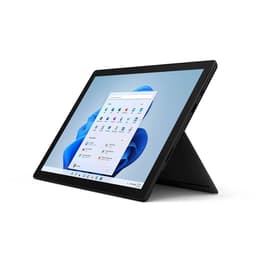


Lenovo ThinkPad T14 G1 14" Vs Microsoft Surface Pro 7 12"

Lenovo ThinkPad T14 G1 14"
Starting at

Refurbished price:262.00

Versus €612.00 new

See options
Microsoft Surface Pro 7 12"
Starting at

Refurbished price:334.00

Versus €1,399.00 new

See options

Ratings

The Lenovo ThinkPad T14 Gen 1, released in 2020, is a traditional business-oriented laptop, while the Microsoft Surface Pro 7, launched in late 2019, is a versatile 2-in-1 detachable tablet. These devices cater to different user preferences, with the ThinkPad T14 prioritizing a conventional laptop experience and robust connectivity, and the Surface Pro 7 offering a highly portable, tablet-first design with touch and pen input capabilities. Both run on the Windows operating system, providing a familiar software environment for users.

Scores

Durability

The longevity of a device is influenced by its release timeline, software support, and ease of repair. These two devices, while both running Windows, present different profiles in these areas.

  • Release Timeline and Software Support: The Lenovo ThinkPad T14 Gen 1 was released in Q2 2020, typically receiving 4-5 years of BIOS and driver updates from Lenovo, extending its practical software lifespan. The Microsoft Surface Pro 7, released in October 2019, also benefits from Microsoft's long-term Windows support, allowing it to run current operating system versions.
  • Repairability: The ThinkPad T14 Gen 1 is generally considered more repairable, with components like RAM and storage often being user-upgradable or replaceable, contributing to a longer potential service life. In contrast, the Surface Pro 7 received a very low repairability score from iFixit (1 out of 10), primarily due to its heavily glued components, such as the display and battery, and soldered RAM and SSD, making repairs and upgrades challenging and costly.
  • Practical Lifespan: For users who value the ability to maintain or upgrade their device's internal components, the ThinkPad T14 Gen 1 offers a more flexible and potentially longer practical lifespan. The Surface Pro 7, while durable in its build, is less amenable to internal servicing, meaning its lifespan is more tied to the longevity of its original, non-replaceable components.

Year of Release

2019

2019

OS

Windows 11

Windows 11

Performance

Performance in these devices is shaped by their internal components and how they handle various tasks, from everyday computing to more demanding applications.

  • Processor Capabilities: The ThinkPad T14 Gen 1 comes with options for either 10th Generation Intel Core or AMD Ryzen Pro 4000 series processors, providing strong performance for multitasking, productivity software, and moderate computational tasks. The Surface Pro 7 features 10th Generation Intel Core processors, which deliver responsive performance for web browsing, office applications, and media consumption.
  • System Responsiveness and Multitasking: The ThinkPad T14 Gen 1, with its configurable RAM up to 48GB (combining soldered and SO-DIMM memory), offers substantial headroom for heavy multitasking and running multiple demanding applications simultaneously. The Surface Pro 7, available with up to 16GB of soldered RAM, handles typical daily workloads smoothly, but its fixed memory configuration limits future expansion for increasingly memory-intensive tasks.
  • Storage Options: Both devices offer solid-state drive (SSD) storage, providing fast boot times and quick application loading. The ThinkPad T14 Gen 1 supports up to 2TB M.2 PCIe NVMe SSDs, offering ample space for large files and applications, and in some configurations, the SSD is user-replaceable. The Surface Pro 7 offers SSD options up to 1TB, but its storage is soldered and not user-removable in the standard Pro 7 model.

Memory (GB)

16 GB

8 GB

Processor

Core i5 - Gen 10 (U)

Core i5 - Gen 10 (G4)

Graphic card

Intel HD Graphics

Integrated Graphics

Screen quality

The visual experience on these devices differs significantly due to their display technologies, sizes, and aspect ratios, impacting how content is viewed and interacted with.

  • Display Technology and Resolution: The Lenovo ThinkPad T14 Gen 1 offers a 14-inch display with various options, including Full HD (1920x1080) IPS panels and even a 4K UHD (3840x2160) IPS option, providing clear and detailed visuals. The Microsoft Surface Pro 7 features a 12.3-inch PixelSense display with a resolution of 2736 x 1824, offering a sharp and vibrant image quality.
  • Brightness and Clarity: The ThinkPad T14 Gen 1's IPS panels can reach up to 500 nits of brightness in some configurations, making them suitable for various lighting conditions, including outdoor use. The Surface Pro 7's display typically achieves around 395-408 nits of brightness, providing good visibility indoors and in moderately bright environments.
  • Aspect Ratio and Viewing Experience: The ThinkPad T14 Gen 1 utilizes a 16:9 aspect ratio, which is common for laptops and well-suited for media consumption and side-by-side document viewing. The Surface Pro 7's 3:2 aspect ratio offers more vertical screen real estate, which can be beneficial for productivity tasks like document editing and web browsing, providing a more expansive view of content.

Resolution

1920 x 1080

2736 x 1824

Audiovisual

For communication and media, the camera, microphone, and speaker systems play a crucial role, and these devices offer distinct setups tailored to their primary use cases.

  • Camera System Capabilities: The ThinkPad T14 Gen 1 includes an HD 720p webcam with a ThinkShutter privacy cover, suitable for standard video conferencing. The Surface Pro 7 features a 5.0MP front-facing camera with 1080p Full HD video, optimized for clear video calls and Windows Hello facial authentication, alongside an 8.0MP rear-facing camera with autofocus for capturing photos and videos.
  • Microphone Quality: Both devices are equipped with dual array microphones designed for clear voice pickup during calls. The ThinkPad T14 Gen 1's far-field microphones aim to capture audio effectively even from a distance. The Surface Pro 7's dual far-field Studio Mics are specifically highlighted for ensuring clear audio in virtual meetings, even with some background noise.
  • Speaker Output: The ThinkPad T14 Gen 1 features stereo speakers with Dolby Audio, providing a balanced sound experience for general use and media. The Surface Pro 7 also includes 1.6W stereo speakers with Dolby Audio, which are noted for delivering clear and undistorted sound, particularly useful for media consumption and virtual meetings.

Miscellaneous

Beyond core performance and display, practical elements like connectivity, ports, and physical design contribute significantly to the overall user experience.

  • Connectivity Options: Both devices support modern wireless standards. The ThinkPad T14 Gen 1 and Surface Pro 7 both feature Wi-Fi 6 (802.11ax) and Bluetooth 5.0/5.1, ensuring fast and reliable wireless connections. The ThinkPad T14 Gen 1 also offers optional WWAN (4G LTE) for mobile connectivity.
  • Port Selection: The ThinkPad T14 Gen 1 provides a comprehensive array of ports, including multiple USB-A and USB-C ports (with Thunderbolt 3 on Intel models), HDMI, an Ethernet port, and a microSD card reader, catering to a wide range of peripherals and external displays. The Surface Pro 7 includes a USB-C port (supporting data transfer, power delivery, and DisplayPort, but not Thunderbolt 3), a USB-A port, a 3.5mm headphone jack, and a Surface Connect port, offering essential connectivity in a more compact form factor.
  • Weight and Dimensions: The ThinkPad T14 Gen 1, starting at 1.46 kg (3.23 lbs), is a portable laptop designed for traditional desk and on-the-go use. The Surface Pro 7, weighing between 775-790g (1.7-1.74 lbs) without its Type Cover, is significantly lighter and designed for ultimate portability and tablet-like handling.

Weight

2500 g

775 g

Screen size

14

12

Choosing between the Lenovo ThinkPad T14 Gen 1 and the Microsoft Surface Pro 7 depends heavily on individual priorities and usage scenarios. User feedback often praises the ThinkPad T14 Gen 1 for its robust build quality, comfortable keyboard, and extensive port selection, making it a reliable workhorse for professionals and students who require a traditional laptop experience with strong performance and upgradability. Common criticisms sometimes point to its more conventional design compared to newer, sleeker devices.

The Surface Pro 7 is frequently lauded for its exceptional portability, vibrant touchscreen display, and versatility as a 2-in-1 device, appealing to users who need a tablet that can also function as a laptop. However, users often express concerns about its battery life, which some found to be a step back from previous models, and its limited repairability due to soldered components.

Users prioritizing a highly customizable and repairable traditional laptop with a wide range of connectivity options and strong performance for demanding tasks may find the Lenovo ThinkPad T14 Gen 1 better suited to their needs. Conversely, individuals who value extreme portability, a high-resolution touch display for creative work or note-taking, and the flexibility of a tablet-laptop hybrid will likely lean towards the Microsoft Surface Pro 7. Both devices offer a quality-assured refurbished option, providing an eco-friendly alternative for those seeking reliable technology.


See all articles

Our recent comparisons