


Compare models
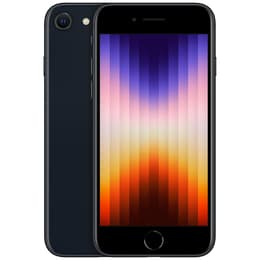
iPhone Air Vs iPhone SE (2022)
- 1-year minimum warranty
- Free delivery on all orders
- Free 30-day returns
Differences at a glance
The iPhone Air (2025) and the iPhone SE (2022) represent distinctly different eras, engineering priorities, and form factors within Apple's smartphone lineup. While the iPhone Air showcases a modern ultra-slim chassis with an edge-to-edge display and contemporary software architecture, the iPhone SE utilizes a classic compact footprint anchored by physical navigation controls.
These two devices diverge sharply in their approach to daily computing, offering contrasting paths for users depending on whether they favor minimalist physical dimensions or expansive viewing areas.
Available Models
Colour
Storage
Scores
Durability
Device longevity depends heavily on release schedules, hardware architecture, and the duration of official operating system support provided by the manufacturer.
- Release timeline and update support: The iPhone Air launched in late 2025 with modern system architecture, positioning it to receive software feature updates for many years. The iPhone SE debuted in early 2022 and relies on an older generation foundation, meaning its window for receiving major operating system updates will naturally conclude sooner.
- Repairability and physical resilience: The iPhone Air incorporates a reinforced titanium frame and advanced glass protection designed to withstand daily wear. Conversely, the iPhone SE uses a traditional aluminum and glass build with standard water and dust resistance ratings, making both models straightforward to service through standard maintenance channels.
- Expected practical lifespan: Users investing in the iPhone Air can anticipate extended hardware viability for demanding applications. Opting for a quality-assured refurbished option provides a sustainable choice that extends device lifecycles while delivering reliable day-to-day functionality.
Year of Release
2025
2022
Compatible with latest Update
Yes
Yes
OS
iOS
iOS
Foldable
No
No
Performance
Processing capabilities and day-to-day responsiveness vary significantly between these two models due to generational leaps in internal hardware and memory configurations.
- System speed and multitasking: The iPhone Air handles intensive applications, heavy graphics, and rapid multitasking seamlessly thanks to its current-generation processor and high random access memory capacity. The iPhone SE manages everyday tasks like messaging and web browsing reliably, though resource-heavy gaming or complex background processes will push its older hardware limits faster.
- Storage tiers: The iPhone Air starts with larger baseline storage capacities suited for extensive media libraries, whereas the iPhone SE offers more modest entry-level storage configurations geared toward lighter usage habits.
- Battery behavior: The iPhone Air balances its thin profile with efficient power management to last through standard daily use. The iPhone SE features a smaller physical battery capacity, resulting in more frequent charging requirements for users who spend extended periods away from a power source.
Screen quality
Display technology creates a major divergence in visual immersion, outdoor legibility, and overall media consumption experiences.
- Panel technology and clarity: The iPhone Air features an expansive OLED display with deep contrast levels, sharp resolution, and high pixel density. The iPhone SE utilizes a smaller traditional liquid crystal display surrounded by prominent bezels.
- Brightness and outdoor visibility: The iPhone Air achieves high peak outdoor brightness levels, ensuring content remains legible under direct sunlight. The iPhone SE provides adequate brightness for standard indoor environments, though bright outdoor settings require manual adjustments to view content comfortably.
- Refresh rate and smoothness: The iPhone Air supports high refresh rate technology for fluid scrolling and animations, while the iPhone SE operates at a standard fixed refresh rate.
Resolution
2736x1260
750 x 1334
Screen type
Super Retina XDR
Retina IPS LCD
Audiovisual
Optics and media playback hardware reflect the chronological gap between the two releases, shaping photography and audio capabilities.
- Camera versatility: The iPhone Air is equipped with a high-resolution main camera system backed by advanced computational photography features for crisp low-light and everyday imagery. The iPhone SE relies on a single traditional rear lens that captures clear daylight photos but lacks advanced night-shooting modes and ultra-wide perspectives.
- Video and audio output: The iPhone Air records detailed high-definition video with advanced stabilization features and clear microphone arrays. The iPhone SE handles basic video recording adequately, though its speaker output is optimized primarily for mono voice calls rather than immersive media consumption.
- Front-facing optics: Selfies and video calls benefit from higher resolution sensors and centering capabilities on the iPhone Air, whereas the iPhone SE utilizes a more basic front camera setup.
Main camera
48 megapixels
12 megapixels
Front camera
18 megapixels
7 megapixels
Miscellaneous
Physical handling, connectivity standards, and daily conveniences differ notably based on the physical architecture of each device.
- Connectivity and ports: The iPhone Air utilizes modern universal USB-C connectivity alongside advanced wireless and cellular networking standards. The iPhone SE relies on a legacy proprietary charging port and earlier generation wireless protocols.
- Security and authentication: The iPhone Air depends entirely on facial recognition technology for secure unlocking, while the iPhone SE retains a physical home button equipped with a traditional fingerprint sensor.
- Dimensions and handling: The iPhone Air offers a large screen area within a remarkably thin and lightweight frame. In contrast, the iPhone SE provides a pocket-friendly, highly compact body that appeals directly to users who prefer operating their phone comfortably with one hand.
Weight
165 g
144 g
Screen size (in)
6.5
4.7
Network
5G
5G
SIM card
eSIM
Physical SIM + eSIM
Carrier compatibility
Unlocked
Unlocked
Connector
USB-C
Lightning
What the community thinks
Real-world user discussions highlight distinct patterns of praise and criticism for both devices. Owners of the iPhone Air frequently commend its remarkably thin profile, vibrant display quality, and smooth multitasking performance, though some note that its single-lens rear camera setup feels restrictive given its modern class. Meanwhile, supporters of the iPhone SE often praise its familiar compact footprint, physical fingerprint reader, and straightforward utility, while expressing common frustrations regarding its limited battery longevity and dated screen bezels.
Users prioritizing an expansive viewing area, modern software longevity, and swift app switching will find the iPhone Air well-suited to their daily routines. Conversely, users preferring a smaller, traditional phone shape with physical navigation buttons and basic functionality will lean toward the iPhone SE. Selecting an eco-friendly alternative through a quality-assured refurbished option provides a sensible way to acquire either device while supporting sustainable consumption habits. Ultimately, the right choice depends entirely on whether physical compactness or contemporary multimedia performance aligns better with individual preferences.









