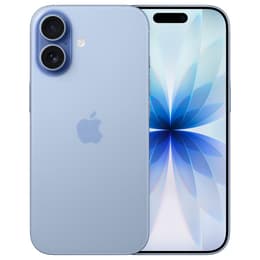



iPhone 17 Vs Xiaomi Redmi Note 12 Pro

iPhone 17
iPhone 17
Starting at

Refurbished price:700.00

Versus €979.00 new

See options
Xiaomi Redmi Note 12 Pro
Starting at

Refurbished price:106.00

Versus €399.00 new

See options

Ratings

The iPhone 17, anticipated for release in late 2025, represents Apple's latest iteration in its flagship smartphone series, building upon years of design and technological refinement. In contrast, the Xiaomi Redmi Note 12 Pro 5G, launched in late 2022 and early 2023, offers a comprehensive Android experience. These devices cater to different user preferences, primarily distinguished by their operating systems and the performance expectations associated with their respective release timelines. While the iPhone 17 is expected to push boundaries with advanced features, the Redmi Note 12 Pro 5G provides a well-rounded set of capabilities within the Android ecosystem.

Scores

Durability

When considering the practical lifespan of a smartphone, factors such as release date, software support, and physical resilience play a crucial role. The iPhone 17, as a newer device, is expected to benefit from an extended period of software updates and security patches compared to the Redmi Note 12 Pro 5G.

  • Release Timeline: The iPhone 17 is an anticipated late 2025 release, positioning it significantly newer than the Redmi Note 12 Pro 5G, which debuted in late 2022 and early 2023. This difference in launch dates inherently grants the iPhone 17 a longer potential support window.
  • Software Longevity: Apple typically provides 6-7 years of major iOS updates for its devices, meaning the iPhone 17 is expected to receive software support well into the early 2030s. The Redmi Note 12 Pro 5G, running on Android 12 with MIUI 13 or 14, generally receives fewer major Android version updates and security patches over a shorter period, typically 2-3 major OS updates and 3-4 years of security updates.
  • Physical Durability: The iPhone 17 is expected to feature an enhanced Ceramic Shield 2 front cover, rumored to offer three times better scratch resistance than previous generations, alongside an improved IP rating for water and dust resistance. The Redmi Note 12 Pro 5G comes with an IP53 rating for dust and splash resistance and Gorilla Glass 5 protection for its display.

Year of Release

2025

2022

Compatible with latest Update

Yes

No

OS

iOS

Android

Foldable

No

No

Performance

The performance capabilities of these two smartphones are shaped by their respective hardware and software optimizations, leading to distinct user experiences in daily tasks and demanding applications.

  • System Responsiveness: The iPhone 17 is anticipated to house Apple's next-generation A19 chip, which is expected to deliver substantial improvements in processing power and graphical rendering. This translates to exceptionally fluid navigation, rapid app launches, and seamless multitasking, even with resource-intensive applications. The Redmi Note 12 Pro 5G, powered by the MediaTek Dimensity 1080 chipset, offers smooth performance for everyday tasks and moderate gaming, handling multitasking efficiently.
  • Multitasking and Storage: The iPhone 17 is expected to feature increased RAM, contributing to more efficient background app management and smoother transitions between applications. It is also anticipated to start with a base storage of 256GB, with a 512GB option. The Redmi Note 12 Pro 5G is available with 6GB, 8GB, or 12GB of RAM and 128GB or 256GB of internal storage, utilizing UFS 2.2 technology. It does not offer expandable storage.
  • Battery Behavior: The iPhone 17 is expected to provide all-day battery life, potentially with faster charging capabilities. The Redmi Note 12 Pro 5G features a 5000mAh battery, generally offering good endurance for a full day of moderate use, though some users note above-average standby drain. It supports 67W fast charging, capable of reaching a significant charge level in under an hour.

Memory (GB)

8 GB

8 GB

Screen quality

The visual experience on a smartphone is largely defined by its display technology, resolution, and refresh rate, with both devices offering compelling screen qualities tailored to different user expectations.

  • Display Technology and Clarity: The iPhone 17 is expected to feature a 6.3-inch Super Retina XDR OLED display, offering deep blacks, vibrant colors, and high contrast. The Redmi Note 12 Pro 5G boasts a 6.67-inch AMOLED display, also providing vibrant colors and deep contrasts, with a resolution of 1080x2400 pixels.
  • Smoothness and Brightness: The iPhone 17 is anticipated to incorporate ProMotion technology, enabling an adaptive refresh rate up to 120Hz for exceptionally smooth scrolling and responsive interactions, along with Always-On display functionality. The Redmi Note 12 Pro 5G also features a 120Hz refresh rate, contributing to a fluid visual experience, and supports Dolby Vision and HDR10+ for enhanced media consumption. It offers a peak brightness of 900 nits, making it suitable for outdoor visibility.
  • Viewing Experience: The slightly larger screen of the Redmi Note 12 Pro 5G may offer a more expansive viewing area for media and gaming. The iPhone 17's expected display advancements, including improved scratch resistance and potentially reduced bezels, aim to enhance both durability and immersion.

Resolution

2622x1206

1080 x 2400

Screen type

Super Retina XDR

AMOLED

Audiovisual

Photography and videography capabilities are key considerations for many users, and both the iPhone 17 and Redmi Note 12 Pro 5G offer distinct approaches to capturing moments.

  • Rear Camera Systems: The iPhone 17 is expected to feature a dual-lens camera system, including two 48-megapixel lenses for its main and ultrawide cameras, alongside advanced computational photography. The Redmi Note 12 Pro 5G is equipped with a triple camera setup: a 50-megapixel main sensor with optical image stabilization (OIS), an 8-megapixel ultrawide lens, and a 2-megapixel macro lens. The main sensor on the Redmi Note 12 Pro 5G performs well in good lighting conditions, capturing images with good detail and dynamic range.
  • Front Camera and Video: The iPhone 17 is anticipated to include an upgraded 24-megapixel front-facing TrueDepth camera, designed for sharper selfies and improved video calls. It is also rumored to support dual video recording, allowing simultaneous capture from front and rear cameras. The Redmi Note 12 Pro 5G features a 16-megapixel front camera, capable of producing solid selfies. For video recording, the Redmi Note 12 Pro 5G supports up to 4K resolution at 30 frames per second.
  • Low-Light and Specialized Shots: The iPhone 17's expected advancements in sensor technology and computational photography are likely to enhance low-light performance across its camera system. While the Redmi Note 12 Pro 5G's main camera with OIS performs adequately in low light, its ultrawide and macro lenses are generally considered less capable, particularly in challenging lighting conditions.

Main camera

48 megapixels

50 megapixels

Front camera

18 megapixels

16 megapixels

Miscellaneous

Beyond core performance and display, several practical features and design elements contribute to the overall user experience and differentiate these two devices.

  • Connectivity and Ports: The iPhone 17 is expected to support the latest wireless standards, including Wi-Fi 7 and enhanced 5G capabilities, along with newer Bluetooth versions. It is also highly anticipated to feature a USB-C port. The Redmi Note 12 Pro 5G supports 5G connectivity, Wi-Fi 6, and Bluetooth 5.2, and includes a USB-C port. A notable difference is the Redmi Note 12 Pro 5G's inclusion of a 3.5mm headphone jack, which is absent on iPhones.
  • Biometrics and Sensors: The iPhone 17 will continue to rely on Face ID for secure facial recognition and is expected to feature a customizable Action button. The Redmi Note 12 Pro 5G offers a side-mounted fingerprint sensor and AI Face unlock for biometric authentication, along with an IR blaster for controlling home appliances.
  • Design and Handling: The iPhone 17 is expected to feature an aluminum frame and a frosted glass back, with a slightly larger display leading to minor increases in dimensions and weight compared to its predecessor, though with reduced bezels. The Redmi Note 12 Pro 5G has dimensions of 162.9mm in height, 76mm in width, and 7.9mm in thickness, weighing 187g, with some variants featuring a glass back and a plastic frame.

Weight

177 g

187 g

Screen size (in)

6.3

6.67

Network

5G

5G

SIM card

eSIM

Dual Physical SIM

Carrier compatibility

Unlocked

Unlocked

Connector

USB-C

USB-C

The iPhone 17 and the Xiaomi Redmi Note 12 Pro 5G cater to different segments of the smartphone market, each with its own strengths and user appeal. User sentiment for the Redmi Note 12 Pro 5G generally highlights its strong performance for its category, a vibrant display, and efficient fast charging as praise points. Criticisms often revolve around the performance of its secondary cameras, potential bloatware in the MIUI software, and some reports of above-average standby battery drain or occasional overheating with specific variants.

For the iPhone 17, anticipated user praise centers on its expected advancements in processing power, camera capabilities, and display technology, along with the consistent and long-term software support characteristic of Apple devices. Potential concerns, based on historical trends, might include the absence of a headphone jack and the reliance on a closed ecosystem, which some users find restrictive.

Users prioritizing a device with the latest technological advancements, a premium ecosystem, and extended software longevity may find the iPhone 17 well-suited to their needs. Its expected performance gains and camera enhancements are likely to appeal to those who demand high-end capabilities and a seamless user experience. Conversely, users who value a feature-rich Android experience, a high refresh rate OLED display, and fast charging without a premium price point may lean toward the Redmi Note 12 Pro 5G. It offers a balanced set of features for everyday use, media consumption, and moderate gaming.

Ultimately, the choice between these two devices depends on individual priorities regarding operating system preference, performance demands, and long-term software commitment. Both devices, whether new or as quality-assured refurbished options, enable informed and sustainable choices for consumers.


See all articles

Our recent comparisons