

iPhone 16 Pro Max Vs Xiaomi 13T

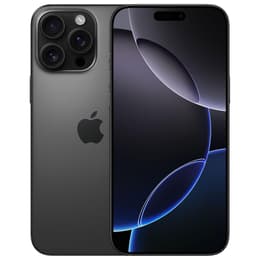
iPhone 16 Pro Max
iPhone 16 Pro Max
Starting at

Refurbished price:821.00

Versus €1,489.00 new

See options
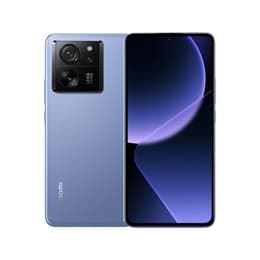
Xiaomi 13T
Xiaomi 13T
Starting at

Refurbished price:183.00

Versus €630.00 new

See options

Ratings

The iPhone 16 Pro Max (released September 2024) and the Xiaomi 13T (released September 2023) represent different approaches to high-performance smartphones. While the iPhone 16 Pro Max focuses on delivering Apple's latest innovations within its ecosystem, the Xiaomi 13T offers a compelling Android experience with a strong emphasis on camera capabilities and display technology. Both devices run on their respective advanced operating systems, iOS 18 for the iPhone and Android 13 (upgradable to Android 16) for the Xiaomi, providing distinct user interfaces and app ecosystems.

Scores

Durability

When considering the long-term usability of these devices, their release timelines and software support policies are key differentiators.

  • Software Longevity: The iPhone 16 Pro Max, released in September 2024, benefits from Apple's typically long software support, often extending for 5-7 years from its launch. This means users can expect regular iOS updates and security patches for an extended period. The Xiaomi 13T, launched in September 2023, has a strong commitment from Xiaomi for four generations of Android OS updates and five years of security patches, with Android 16 being its last major OS upgrade.
  • Physical Durability: Both devices offer robust build quality. The iPhone 16 Pro Max features a titanium design with a Ceramic Shield front, providing enhanced resistance to drops and scratches, and is rated IP68 for water and dust resistance. The Xiaomi 13T also boasts an IP68 rating for dust and water resistance and uses Gorilla Glass 5 for screen protection, with some variants offering a vegan leather back for a different tactile experience.
  • Expected Practical Lifespan: Users can expect the iPhone 16 Pro Max to remain fully functional and receive critical updates for a longer duration due to Apple's extended support cycle. The Xiaomi 13T offers a commendable lifespan for an Android device, with its update policy ensuring several years of current software and security.

Year of Release

2024

2023

Compatible with latest Update

Yes

Yes

Foldable

No

No

Performance

The performance of both the iPhone 16 Pro Max and the Xiaomi 13T is designed to handle demanding tasks, though they achieve this through different hardware architectures.

  • Processing Power: The iPhone 16 Pro Max is equipped with Apple's A18 Pro chip, which provides significant enhancements in processing speed and graphics performance, particularly for AI-related tasks and intensive applications. The Xiaomi 13T utilizes a MediaTek Dimensity 8200-Ultra processor, which delivers strong performance for everyday use, multitasking, and gaming.
  • System Responsiveness: Users of the iPhone 16 Pro Max will experience exceptionally smooth app loading, fluid multitasking, and high frame rates in graphically demanding games due to its optimized hardware and software integration. The Xiaomi 13T also offers a responsive user experience, handling multiple applications and moderate gaming without noticeable lag.
  • Storage and Memory: The iPhone 16 Pro Max is available with storage options ranging from 256GB to 1TB, paired with 8GB of memory. The Xiaomi 13T typically comes with 256GB of internal storage and 8GB or 12GB of RAM, providing ample space and memory for most users.

Memory (GB)

8 GB

8 GB

Screen quality

Both devices offer high-quality displays that provide vibrant visuals and smooth interactions, though with some distinctions in their specifications.

  • Display Technology and Clarity: The iPhone 16 Pro Max features a 6.9-inch Super Retina XDR OLED display, offering deep blacks, vibrant colors, and a resolution of 2868 x 1320 pixels at 460 pixels per inch. The Xiaomi 13T comes with a 6.67-inch AMOLED CrystalRes display with a resolution of 2712 x 1220 pixels, resulting in a pixel density of 446 PPI.
  • Brightness and Outdoor Visibility: The iPhone 16 Pro Max's display can reach a typical brightness of 1000 nits and a peak brightness of 2000 nits, ensuring good visibility even in bright outdoor conditions. The Xiaomi 13T boasts a peak brightness of 2600 nits, making it highly readable under direct sunlight.
  • Refresh Rate and Smoothness: Both phones feature adaptive refresh rates for a smoother viewing experience. The iPhone 16 Pro Max includes ProMotion technology, offering dynamic refresh rates up to 120Hz. The Xiaomi 13T supports a refresh rate of up to 144Hz, which can dynamically adjust based on content for optimal smoothness and power efficiency.

Resolution

1320 x 2868

1220 x 2712

Screen type

LTPO Super Retina XDR OLED

AMOLED

Audiovisual

Both the iPhone 16 Pro Max and the Xiaomi 13T offer advanced camera systems, each with its own strengths and unique features for photography and videography.

  • Rear Camera System: The iPhone 16 Pro Max features a Pro camera system with a 48MP main wide-angle camera, a 48MP ultra-wide camera, and a 12MP 5x telephoto lens. It is designed for high-resolution photos and enhanced low-light performance. The Xiaomi 13T includes a triple camera setup co-engineered with Leica, featuring a 50MP wide-angle camera, a 50MP telephoto lens, and a 12MP ultra-wide-angle camera.
  • Photography Performance: The iPhone 16 Pro Max excels in capturing detailed and color-accurate images across various lighting conditions, with advanced features like Apple ProRAW and improved computational photography. The Xiaomi 13T offers distinct Leica photographic styles (Authentic and Vibrant) and strong performance in everyday photography, with its main sensor performing well in good lighting.
  • Video Recording Capabilities: The iPhone 16 Pro Max supports 4K Dolby Vision video recording at up to 120 frames per second, along with cinematic mode and advanced stabilization. The Xiaomi 13T supports 4K video recording at all focal lengths, with features for fast editing, though the standard 13T model caps out at 4K 30fps for video.

Main camera

48 megapixels

50 megapixels

Front camera

12 megapixels

20 megapixels

Miscellaneous

Beyond core performance and display, several practical elements contribute to the overall user experience of these smartphones.

  • Connectivity and Ports: The iPhone 16 Pro Max supports Wi-Fi 7 and features a USB-C connector for charging and data transfer, including DisplayPort support. The Xiaomi 13T supports Wi-Fi 6 and includes a USB Type-C port for charging and data. Both devices offer 5G connectivity and Bluetooth.
  • Biometric Security: The iPhone 16 Pro Max relies on Face ID for secure facial recognition. The Xiaomi 13T features an in-screen fingerprint sensor for biometric authentication, alongside AI face unlock.
  • Design and Handling: The iPhone 16 Pro Max has a titanium frame and a Ceramic Shield front, with dimensions of 163.0 x 77.6 x 8.25 mm and a weight of 227 grams. The Xiaomi 13T has a metal and glass construction, with dimensions of 162.2 x 75.7 x 8.49mm and a weight of 197 grams (glass back) or 193 grams (vegan leather back). The iPhone 16 Pro Max also introduces a new Camera Control button for quick access to camera functions.

Weight

227 g

193 g

Screen size (in)

6.9

6.67

Network

5G

5G

SIM card

Physical SIM + eSIM

Dual Physical SIM

Carrier compatibility

Unlocked

Unlocked

Connector

USB-C (USB 3)

USB-C

Users often praise the iPhone 16 Pro Max for its seamless integration within the Apple ecosystem, its powerful and efficient processor, and its consistently high-quality camera system, particularly for video recording. Common feedback highlights its robust build and long-term software support as significant advantages. Some users, however, may find its larger size and weight a consideration for one-handed use. The Xiaomi 13T is frequently lauded for its vibrant and bright display, its capable Leica-tuned camera system offering distinct photographic styles, and its competitive performance for an Android device. User discussions sometimes point to its battery life being average for power users, despite a large capacity, and the MIUI interface can be a matter of personal preference.

Users prioritizing a device with a very long software support lifespan, top-tier video capabilities, and integration into the Apple ecosystem will find the iPhone 16 Pro Max well-suited to their needs. Those who value a high-refresh-rate display, a versatile camera system with unique photographic modes, and the flexibility of the Android operating system may lean toward the Xiaomi 13T. Both devices offer compelling features for different user profiles, and for those seeking an eco-friendly alternative, quality-assured refurbished options are available for both models, providing a sustainable choice.


See all articles

Our recent comparisons