

Google Pixel 9 Pro XL Vs iPhone 16 Pro Max

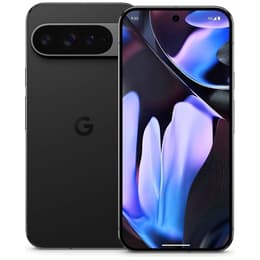
Google Pixel 9 Pro XL
Starting at

Refurbished price:424.00

Versus €1,298.07 new

See options
iPhone 16 Pro Max
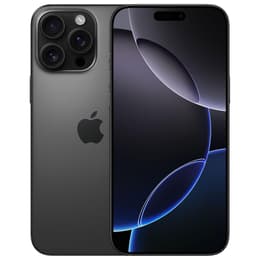
iPhone 16 Pro Max
Starting at

Refurbished price:821.00

Versus €1,489.00 new

See options

Ratings

The Google Pixel 9 Pro XL and the iPhone 16 Pro Max represent the pinnacle of their respective operating systems, Android and iOS, offering advanced features and robust performance. Released in August 2024, the Pixel 9 Pro XL focuses on deep AI integration and a versatile camera system, while the iPhone 16 Pro Max, launched in September 2024, emphasizes refined performance, enhanced display technology, and a powerful video-centric camera. Both devices aim to deliver a premium smartphone experience, but they cater to slightly different user priorities through their distinct approaches to hardware and software.

Scores

Durability

When considering the long-term usability of a smartphone, software support and physical durability are key factors. Both the Google Pixel 9 Pro XL and the iPhone 16 Pro Max are designed for extended lifespans, though their approaches to software updates and physical resilience differ.

  • Software Longevity: The Google Pixel 9 Pro XL is projected to receive seven years of software updates, extending its support until Android 22 [6, 14]. The iPhone 16 Pro Max is also expected to receive approximately seven years of iOS updates, with support anticipated until 2031 [19, 39]. This commitment from both manufacturers ensures that users will have access to the latest features and security patches for a considerable period.
  • Physical Durability: The iPhone 16 Pro Max features a titanium frame and a Ceramic Shield front, contributing to its overall resilience [1, 13, 31]. The Pixel 9 Pro XL incorporates Gorilla Glass Victus 2 on both its front and back, along with a matte aluminum frame [9, 35, 38]. Both devices are rated for water and dust resistance, providing protection against environmental elements.
  • Practical Lifespan: Users of both devices can expect a practical lifespan that extends well beyond typical upgrade cycles, supported by consistent software updates and durable construction. The choice between them may depend on a preference for either the Android or iOS ecosystem's long-term support model.

Year of Release

2024

2024

Compatible with latest Update

Yes

Yes

Foldable

No

No

Performance

The performance of a smartphone is crucial for handling daily tasks, demanding applications, and multitasking. Both the Google Pixel 9 Pro XL and the iPhone 16 Pro Max are equipped with advanced internal components designed to deliver a responsive and efficient user experience.

  • Processing Capabilities: The iPhone 16 Pro Max is powered by a current-generation processor that provides smooth operation across various applications and demanding tasks, often outperforming its competitors in benchmark tests [30, 34]. The Pixel 9 Pro XL features a powerful processor that handles multitasking with ease and maintains responsiveness, though some comparisons suggest its raw computing power might be closer to previous-generation flagship devices [10, 29, 30].
  • Multitasking and Responsiveness: With 16GB of RAM, the Pixel 9 Pro XL is well-suited for extensive multitasking and running numerous applications simultaneously without slowdowns [3, 34]. The iPhone 16 Pro Max, with 8GB of RAM, manages multitasking efficiently due to iOS's optimized memory management, ensuring a fluid user experience even with fewer gigabytes [34].
  • Storage and Battery Behavior: Both devices offer a range of storage options, typically starting from 256GB for the iPhone 16 Pro Max and 128GB for the Pixel 9 Pro XL, extending up to 1TB [1, 3, 4, 12, 34]. The iPhone 16 Pro Max generally provides excellent battery endurance, with users reporting it can last through a full day of heavy use and offering up to 33 hours of video playback [7, 27, 28, 31]. The Pixel 9 Pro XL also offers solid all-day battery life, with a larger battery capacity that supports extended usage [6, 10, 14, 17, 29].

Memory (GB)

16 GB

8 GB

Screen quality

The display is a primary interface for smartphone interaction, and both the Google Pixel 9 Pro XL and the iPhone 16 Pro Max offer high-quality screens designed for immersive viewing experiences.

  • Display Technology and Clarity: The iPhone 16 Pro Max features a 6.9-inch Super Retina XDR OLED display, known for its deep blacks, vibrant colors, and high contrast [1, 13, 24]. The Pixel 9 Pro XL comes with a 6.8-inch QHD+ OLED display, which also delivers a bright and colorful viewing experience [3, 6, 29, 34]. Both displays offer sharp visuals suitable for detailed content.
  • Brightness and Outdoor Visibility: The Pixel 9 Pro XL boasts a peak brightness of 3000 nits, providing exceptional visibility even in bright outdoor conditions [6, 25, 29]. The iPhone 16 Pro Max offers a peak brightness of 2000 nits, which is still very bright and performs well outdoors, though it may not reach the same extreme levels as the Pixel [13, 25, 30].
  • Refresh Rate and Viewing Experience: Both devices feature adaptive refresh rates up to 120Hz, ensuring smooth scrolling, fluid animations, and a responsive touch experience [2, 13, 25]. The iPhone 16 Pro Max also features thinner bezels, maximizing the screen-to-body ratio for a more expansive viewing area [2, 24, 43].

Resolution

1344 x 2992

1320 x 2868

Screen type

LTPO OLED

LTPO Super Retina XDR OLED

Audiovisual

The camera systems on the Google Pixel 9 Pro XL and the iPhone 16 Pro Max are central to their appeal, each offering advanced capabilities for photography and videography.

  • Rear Camera System: The Pixel 9 Pro XL features a triple camera setup, including a 50MP main sensor, a 48MP ultrawide lens with macro autofocus, and a 48MP telephoto lens offering 5x optical zoom [9, 12, 18, 38]. The iPhone 16 Pro Max also has a triple-lens Pro camera system, with a 48MP main sensor, a 48MP ultrawide lens, and a 12MP 5x telephoto lens [1, 11, 13, 22]. Both are capable of capturing detailed images across various focal lengths.
  • Photography Performance: The Pixel 9 Pro XL is often praised for its computational photography, delivering excellent color accuracy, dynamic range, and exposure, particularly in low light with features like Night Sight [29, 34]. The iPhone 16 Pro Max also produces consistently great photos with good detail and dynamic range, and its 48MP ultrawide lens is an improvement over previous generations [15, 22, 26].
  • Video Recording and Audio: The iPhone 16 Pro Max excels in video recording, offering 4K Dolby Vision video up to 120fps, Cinematic mode, and Spatial video capabilities, making it a strong choice for videographers [1, 13, 31]. The Pixel 9 Pro XL supports 4K video recording up to 60fps on-device, with an option for cloud-based 8K 30fps video upscaling via Video Boost, and includes features like Audio Magic Eraser [9, 18, 38].

Main camera

50 megapixels

48 megapixels

Front camera

42 megapixels

12 megapixels

Miscellaneous

Beyond core performance and display, several practical elements contribute to the overall user experience of these flagship smartphones.

  • Connectivity and Ports: Both devices support 5G connectivity for fast mobile data speeds. The iPhone 16 Pro Max includes Wi-Fi 7 and Bluetooth 5.3, ensuring advanced wireless connectivity [2, 13]. The Pixel 9 Pro XL also supports modern Wi-Fi standards and features a USB-C port, which is also present on the iPhone 16 Pro Max for charging and data transfer [34, 38].
  • Biometric Security and User Interface: The iPhone 16 Pro Max relies on Face ID for secure facial recognition [13]. The Pixel 9 Pro XL offers an under-display ultrasonic fingerprint scanner, which users report as fast and consistent, alongside face unlock [6, 17]. The iPhone 16 Pro Max also introduces a new Camera Control button for quick camera access and settings adjustments [2, 22, 31].
  • Design and Handling: The iPhone 16 Pro Max measures 163 x 77.6 x 8.25mm and weighs 227g, featuring a titanium frame [1, 13, 25]. The Pixel 9 Pro XL is slightly smaller and lighter at 162.8 x 76.6 x 8.5mm and 221g, with a refined design that some users find comfortable to hold despite its size [6, 25, 31, 35]. Both phones are large, and some users find them challenging for one-handed use [29, 34, 42].

Weight

221 g

227 g

Screen size (in)

6.8

6.9

Network

5G

5G

SIM card

Physical SIM + eSIM

Physical SIM + eSIM

Carrier compatibility

Unlocked

Unlocked

Connector

USB-C

USB-C (USB 3)

User feedback for the Google Pixel 9 Pro XL often highlights its exceptional camera capabilities, particularly its computational photography and AI-enhanced features, which consistently deliver high-quality images with minimal effort [10, 29, 34]. Its bright and vibrant display, along with a clean Android experience and long-term software support, are also frequently praised [10, 23, 29]. Some users, however, note that while its real-world performance is strong, its raw processing power might not match the absolute top tier in benchmarks, and its size can be a concern for one-handed use [23, 29, 30].

The iPhone 16 Pro Max receives acclaim for its smooth and dependable performance, excellent video recording quality, and robust build with a premium feel [15, 24, 28]. Its stunning display and the longevity of iOS updates are consistent positives [15, 24]. Criticisms sometimes point to the Camera Control button's usability for in-depth adjustments and occasional reports of the device running warm under heavy load [15, 21, 22]. Some users also perceive it as an incremental update over its predecessor, with fewer groundbreaking new features [28].

Users prioritizing a highly intuitive and powerful video recording experience, coupled with a consistently smooth operating system and a strong ecosystem, may find the iPhone 16 Pro Max well-suited to their needs. Its robust build and extended software support also make it a reliable long-term device. Conversely, users who value cutting-edge computational photography, deep AI integration for everyday tasks, and a highly customizable Android experience might lean towards the Google Pixel 9 Pro XL. Its impressive display brightness and extensive software update commitment also make it a compelling choice. Both devices offer a premium experience, and choosing between them often comes down to individual preferences for their distinct strengths in camera processing, operating system philosophy, and specific feature sets. Exploring quality-assured refurbished options for either model can provide an eco-friendly alternative for those seeking these advanced features.


See all articles

Our recent comparisons