

Compare models

iPhone 11 Pro Max Vs iPhone 14 Pro Max

  • 1-year minimum warranty
  • Free delivery on all orders
  • Free 30-day returns
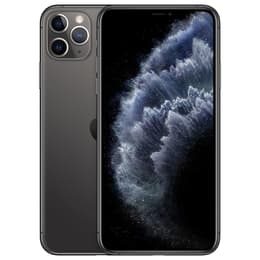
iPhone 11 Pro Max
iPhone 11 Pro Max
Starting at

Refurbished price:224.00

Versus €939.00 new

See options
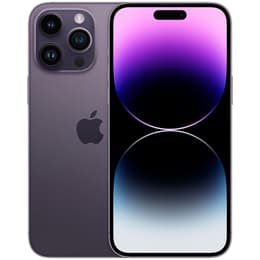
iPhone 14 Pro Max
iPhone 14 Pro Max
Starting at

Refurbished price:446.00

Versus €1,489.00 new

See options

Differences at a glance

The iPhone 11 Pro Max, released in September 2019, and the iPhone 14 Pro Max, launched in September 2022, represent different generations of Apple's premium large-screen smartphones. While both devices offer a high-end user experience, the iPhone 14 Pro Max introduces significant advancements in camera technology, display capabilities, and overall processing power. Both operate on Apple's iOS platform, ensuring a consistent software ecosystem, but the newer model benefits from more recent software optimizations and features.

Scores

Durability

The expected lifespan of a smartphone is influenced by its release date, software support, and physical durability. The iPhone 11 Pro Max, being an older model, has fewer years of major iOS updates remaining compared to its newer counterpart.

  • Release Timeline: The iPhone 11 Pro Max debuted in September 2019, while the iPhone 14 Pro Max was released three years later in September 2022. This age difference directly impacts their remaining software support window.
  • Software Longevity: Historically, iPhones receive major iOS updates for approximately 5-7 years. The iPhone 11 Pro Max, having launched with iOS 13, is expected to receive major updates until around iOS 19 or iOS 20, likely ending around 2024 or 2025, with security updates potentially extending for another year or two. The iPhone 14 Pro Max, starting with iOS 16, is anticipated to receive major updates for several more years, potentially until 2029 or 2030, offering a longer period of new features and security patches.
  • Durability Features: Both models feature a stainless steel frame and glass construction. The iPhone 14 Pro Max introduces Ceramic Shield front cover, which offers enhanced drop performance compared to the glass on the iPhone 11 Pro Max. Both devices carry an IP68 rating for water and dust resistance, though the iPhone 14 Pro Max is rated for a greater depth (6 meters for 30 minutes) than the iPhone 11 Pro Max (4 meters for 30 minutes).

Year of Release

2019

2022

Compatible with latest Update

Yes

Yes

OS

iOS

iOS

Foldable

No

No

Performance

Performance is a key differentiator between these two generations, impacting everything from app responsiveness to demanding tasks like gaming and video editing. The newer iPhone 14 Pro Max offers a notable upgrade in processing capabilities and efficiency.

  • Processing Power: The iPhone 14 Pro Max features a significantly more advanced internal processor, enabling smoother operation for demanding applications, faster app loading times, and more efficient multitasking. This translates to a more fluid user experience, especially with graphically intensive games or complex productivity tools.
  • Multitasking and Responsiveness: The iPhone 14 Pro Max benefits from increased RAM, contributing to improved multitasking capabilities. Users can switch between multiple open applications more seamlessly, with apps remaining active in the background for longer periods without needing to reload.
  • Battery Performance: While the iPhone 11 Pro Max was praised for its excellent battery life at its release, often lasting a full day or more for many users, the iPhone 14 Pro Max generally offers extended endurance due to a larger battery capacity and a more power-efficient processor and display technology. Users of the iPhone 14 Pro Max frequently report exceptional battery longevity, often exceeding a full day of heavy use.

Memory (GB)

4 GB

6 GB

Screen quality

The display is a primary interface for smartphone interaction, and both devices offer high-quality viewing experiences, though the iPhone 14 Pro Max introduces several key enhancements.

  • Display Technology and Clarity: Both phones feature Super Retina XDR OLED displays, providing deep blacks, high contrast, and vibrant colors. The iPhone 14 Pro Max has a slightly larger 6.7-inch display compared to the 6.5-inch screen on the iPhone 11 Pro Max, both with similar pixel densities for sharp visuals.
  • Brightness and Outdoor Visibility: The iPhone 14 Pro Max offers significantly higher peak brightness levels, especially for HDR content and outdoor viewing, making it easier to see the screen in bright sunlight. The iPhone 11 Pro Max also provides strong brightness, but the newer model surpasses it in challenging lighting conditions.
  • Refresh Rate and Smoothness: A major upgrade on the iPhone 14 Pro Max is its ProMotion technology, which allows for an adaptive refresh rate up to 120Hz. This results in noticeably smoother scrolling, more fluid animations, and a more responsive feel compared to the iPhone 11 Pro Max's standard 60Hz refresh rate. The iPhone 14 Pro Max also features an Always-On Display, a capability not present on the iPhone 11 Pro Max.

Resolution

1242 x 2688

1290 x 2796

Screen type

Super Retina XDR OLED

LTPO Super Retina XDR OLED

Audiovisual

Camera capabilities have seen substantial evolution between these generations, with the iPhone 14 Pro Max bringing significant advancements in sensor technology and computational photography.

  • Main Camera System: The iPhone 11 Pro Max features a versatile triple 12MP camera system (wide, ultra-wide, and telephoto) capable of capturing detailed photos and 4K video. The iPhone 14 Pro Max elevates this with a 48MP main camera that uses a quad-pixel sensor, allowing for more detailed images and improved low-light performance, alongside its 12MP ultra-wide and telephoto lenses.
  • Low-Light and Advanced Features: Both models offer Night mode for improved low-light photography. However, the iPhone 14 Pro Max benefits from the Photonic Engine, which enhances image quality in mid-to-low light conditions across all cameras. It also introduces advanced video features like Cinematic Mode (up to 4K HDR at 30fps) and Action Mode for highly stabilized video, which are not available on the iPhone 11 Pro Max.
  • Front Camera and Video Quality: Both devices feature 12MP front cameras. The iPhone 14 Pro Max's front camera includes autofocus, enhancing clarity for selfies and video calls. Both are capable of high-quality video recording, with the iPhone 14 Pro Max offering more advanced stabilization and cinematic options.

Main camera

12 megapixels

48 megapixels

Front camera

12 megapixels

12 megapixels

Miscellaneous

Beyond core performance and display, several practical elements contribute to the overall user experience, where the newer model often integrates more modern standards.

  • Connectivity and Ports: The iPhone 11 Pro Max supports 4G LTE and Wi-Fi 6, providing fast wireless connectivity. The iPhone 14 Pro Max upgrades to 5G connectivity, offering faster cellular data speeds where available, and supports newer Wi-Fi 6E and Bluetooth 5.3 standards for improved wireless performance and efficiency. Both devices utilize the Lightning port for charging and data transfer.
  • Biometric Security and Design: Both models rely on Face ID for secure authentication. The iPhone 14 Pro Max introduces the Dynamic Island, an interactive area around the front camera and sensors that adapts to display alerts, notifications, and background activities, replacing the traditional notch found on the iPhone 11 Pro Max.
  • Physical Characteristics: The iPhone 11 Pro Max weighs 226 grams and measures 158 x 77.8 x 8.1 mm. The iPhone 14 Pro Max is slightly heavier at 240 grams and has dimensions of 160.7 x 77.6 x 7.85 mm. While both are large devices, the iPhone 14 Pro Max is marginally taller and heavier, which can impact one-handed use for some individuals.

Weight

226 g

120 g

Screen size (in)

6.5

6.7

Network

4G

5G

SIM card

Physical SIM + eSIM

Physical SIM + eSIM

Carrier compatibility

Unlocked

Unlocked

Connector

Lightning

Lightning

What the community thinks

The iPhone 11 Pro Max, despite its age, is frequently praised by users for its robust build, reliable performance, and particularly its exceptional battery life, which was a standout feature at its release. Many users still find its camera system to be highly capable for everyday photography. Common criticisms, however, often revolve around its lack of 5G connectivity and the absence of a high refresh rate display, which have become standard in newer premium smartphones. Its size and weight can also be a point of contention for those preferring a more compact device.

The iPhone 14 Pro Max garners significant praise for its advanced camera system, especially the 48MP main sensor and improved low-light capabilities, as well as its vibrant ProMotion display and the innovative Dynamic Island. Users consistently highlight its impressive battery life and overall smooth performance. Some users, however, note its considerable weight and size, which can make one-handed operation challenging. The Lightning port, while familiar, is also sometimes mentioned as a point of criticism given the industry's shift towards USB-C.

Users prioritizing a device with a long remaining software support window, cutting-edge camera technology, a highly fluid display, and the latest performance enhancements will find the iPhone 14 Pro Max well-suited to their needs. Those seeking a still-capable, reliable large-screen iPhone for general use, and who do not require the absolute latest features or 5G connectivity, may find the iPhone 11 Pro Max to be a suitable option. For consumers considering either model, exploring quality-assured refurbished options can provide an eco-friendly alternative to extend the life cycle of these devices.







