

Galaxy A23 5G Vs Xiaomi Redmi 14C

Galaxy A23 5G
Galaxy A23 5G
Starting at

Refurbished price:112.00

Versus €300.00 new

See options
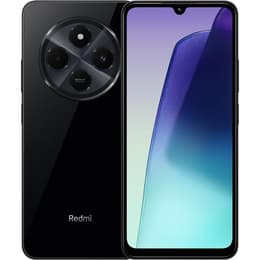
Xiaomi Redmi 14C
Xiaomi Redmi 14C
Starting at

Refurbished price:128.20

Versus €189.00 new

See options

Ratings

The Samsung Galaxy A23 5G, released in late 2022, and the Xiaomi Redmi 14C, launched in late 2024 or early 2025, represent two distinct generations of smartphones designed for everyday use. While both devices offer 5G connectivity and aim to provide a balanced user experience, the Redmi 14C benefits from a more recent release, bringing updated software and a slightly different approach to display and camera features. Both operate on the Android platform, with the Redmi 14C featuring Xiaomi's HyperOS overlay.

Scores

Durability

The practical lifespan of a smartphone is influenced by its release date, software support, and physical resilience.

  • Release Timeline: The Galaxy A23 5G was introduced in late 2022, while the Redmi 14C arrived in late 2024 or early 2025. This two-year difference means the Redmi 14C will likely receive software updates for a longer duration, extending its functional life.
  • Software Longevity: The Galaxy A23 5G launched with Android 12 and has received updates, typically offering two major OS upgrades and four years of security patches from its release. The Redmi 14C, launching with Android 14 and HyperOS, is positioned to receive more future Android version updates and security support, potentially making it a more future-proof option for users who keep their devices for several years.
  • Physical Durability: The Galaxy A23 5G features Gorilla Glass 5 for screen protection, offering a degree of resistance against drops and scratches. The Redmi 14C 5G, on the other hand, includes an IP52 rating, indicating some protection against dust and splashing water, which can contribute to its longevity in various environments.

Year of Release

2022

2024

Compatible with latest Update

Yes

Yes

OS

Android

Android

Foldable

No

No

Performance

Performance in daily tasks and demanding applications varies between these two devices due to their internal components and software optimization.

  • Everyday Responsiveness: The Galaxy A23 5G is powered by a capable processor that handles common applications, web browsing, and light multitasking smoothly. Users generally report a fluid experience for typical daily usage.
  • Demanding Tasks and Gaming: The Redmi 14C, featuring a newer generation processor, offers improved efficiency and slightly better performance for more demanding applications and mobile gaming. While neither device is designed for high-end gaming, the Redmi 14C may provide a more consistent frame rate in graphically intensive titles and quicker app loading times.
  • Storage and Multitasking: Both phones offer various RAM configurations, typically ranging from 4GB to 8GB, which impacts multitasking capabilities. They also provide ample internal storage options (64GB, 128GB, and 256GB for the Redmi 14C) and support expandable storage via a microSD card, allowing users to store a large number of apps, photos, and videos.
  • Battery Behavior: Both devices are equipped with large battery capacities, around 5000 mAh for the Galaxy A23 5G and 5160 mAh for the Redmi 14C, designed to provide extended usage on a single charge. The Galaxy A23 5G supports faster charging at 25W, compared to the Redmi 14C's 18W, meaning the Galaxy A23 5G can replenish its battery more quickly.

Memory (GB)

4 GB

4 GB

Screen quality

The visual experience on these smartphones is shaped by their display technology, resolution, and refresh rates.

  • Display Technology and Clarity: The Galaxy A23 5G features a 6.6-inch PLS LCD display with a Full HD+ resolution (1080 x 2408 pixels), offering sharp images and clear text. The Redmi 14C comes with a larger 6.88-inch IPS LCD panel, but with a lower HD+ resolution (720 x 1640 pixels), which results in a less pixel-dense image.
  • Smoothness and Brightness: Both devices boast a 120Hz refresh rate, contributing to smoother scrolling and a more fluid visual experience, particularly noticeable in compatible apps and games. For outdoor visibility, the Redmi 14C offers a peak brightness of 600 nits, which is generally sufficient for indoor use but may be less ideal under direct sunlight.
  • Viewing Experience: The Galaxy A23 5G's higher resolution provides a more detailed viewing experience for media consumption and fine text. The Redmi 14C's larger screen size offers more screen real estate, which can be beneficial for users who prefer a more expansive display for browsing or watching videos, despite the lower resolution.

Resolution

1080 x 2408

720 x 1640

Screen type

PLS LCD

IPS LCD

Audiovisual

The camera systems on both phones are designed to capture everyday moments, with some key differences in their capabilities.

  • Rear Camera System: Both the Galaxy A23 5G and the Redmi 14C feature a 50-megapixel main camera. The Galaxy A23 5G distinguishes itself with Optical Image Stabilization (OIS) on its main sensor, which helps reduce blur in photos and videos, especially in challenging lighting conditions. It also includes a 5-megapixel ultrawide lens, a 2-megapixel macro lens, and a 2-megapixel depth sensor. The Redmi 14C typically pairs its 50-megapixel main sensor with an auxiliary lens, often a 2-megapixel depth sensor, and lacks an ultrawide option.
  • Photography Performance: In well-lit conditions, both phones can produce detailed images. The Galaxy A23 5G's OIS can lead to clearer shots in lower light and more stable video recording. The Redmi 14C's camera is noted for reliable daylight performance.
  • Front Camera and Video: The Redmi 14C features a 13-megapixel front camera, offering higher resolution selfies compared to the Galaxy A23 5G's 8-megapixel front camera. Both devices are capable of recording Full HD video at 30 frames per second.
  • Audio Experience: Both phones include a 3.5mm headphone jack for wired audio. Speaker output for media consumption and microphone quality for calls are generally adequate for their segment.

Main camera

50 megapixels

50 megapixels

Front camera

8 megapixels

13 megapixels

Miscellaneous

Beyond core features, several practical elements contribute to the overall user experience of these smartphones.

  • Connectivity and Ports: Both the Galaxy A23 5G and the Redmi 14C support 5G networks, ensuring access to faster mobile data speeds. They also include Wi-Fi (802.11 a/b/g/n/ac for A23 5G, dual-band for 14C), Bluetooth (v5.1 for A23 5G, v5.4 for 14C), and USB Type-C ports for charging and data transfer. Both retain a 3.5mm headphone jack.
  • Sensors and Security: Both devices offer fingerprint sensors for secure unlocking, with the Galaxy A23 5G typically featuring a side-mounted sensor and the Redmi 14C also having a side-mounted sensor. The Redmi 14C also supports face unlock. Both include essential sensors like accelerometers and proximity sensors.
  • Design and Handling: The Galaxy A23 5G has dimensions of 165.4 x 76.9 x 8.4 mm, while the Redmi 14C is slightly larger at 171.88 x 77.8 x 8.22 mm. The Redmi 14C is also slightly heavier, ranging from 204g to 211g, compared to the A23 5G's typical weight around 197g. Both phones feature plastic frames and backs, with the Redmi 14C offering some variants with an eco-leather back.

Weight

197 g

207 g

Screen size (in)

6.6

6.88

Network

5G

4G

SIM card

Dual Physical SIM

Dual Physical SIM

Carrier compatibility

Unlocked

Unlocked

Connector

USB-C + Jack 3.5mm

USB-C

The Samsung Galaxy A23 5G and the Xiaomi Redmi 14C cater to users seeking reliable smartphone functionality, each with distinct strengths. User feedback for the Galaxy A23 5G often praises its consistent performance for daily tasks and the inclusion of Optical Image Stabilization in its main camera, which is a notable feature in its segment. Some users have noted occasional performance stutters or heating under heavy load. The Redmi 14C, being a newer release, is frequently commended for its updated software experience with Android 14 and HyperOS, its large display, and generally smooth performance for entry-level users. Criticisms sometimes point to the lower HD+ resolution of its large screen.

Users prioritizing a sharper display with Full HD+ resolution and the added benefit of OIS for photography may find the Galaxy A23 5G more aligned with their needs. Its established software update policy from Samsung also provides a clear expectation for longevity. Conversely, those who value a larger screen, a more recent Android version with potentially longer software support, and a higher-resolution front camera might lean towards the Redmi 14C. Its IP52 rating for dust and splash resistance also adds a layer of practical durability. Both devices offer a solid foundation for everyday smartphone use, and considering a quality-assured refurbished option for either model can be an eco-friendly alternative for making an informed choice.


See all articles

Our recent comparisons